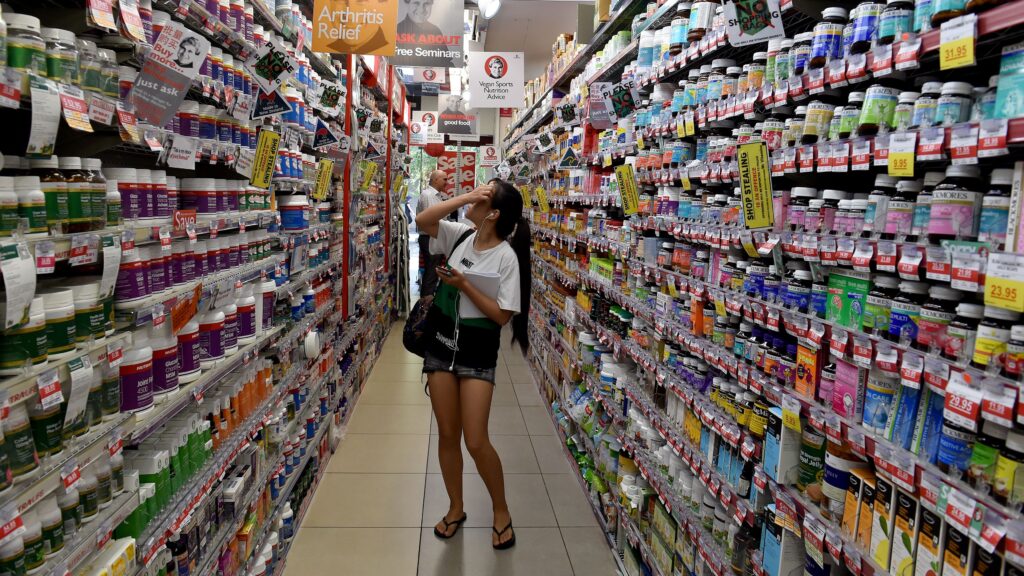
Get your daily dose of health and medicine every weekday with STAT’s free newsletter Morning Rounds. Sign up here. Good morning. In a search for silver linings yesterday, I found this: I can finally spell the word “diarrhea” confidently! The latest on cyclosporiasis, measles, and more below. Mostly wins for peptides at FDA advisory meeting After two days of meetings last week, an FDA advisory panel has recommended to ease access to six out of seven peptides it considered. In narrow, contested votes, panelists voted to allow compounding pharmacies to manufacture the peptides, despite scant evidence on safety and efficacy. Each peptide has a specific indication, but if the recommendations become policy, they would effectively become available for a range of conditions. The FDA does not need to follow the panel’s recommendations, and in fact, agency staffers said they were against easing access for any of the peptides. Normally, the final decision would be made by those same employees, but it’s possible that Trump administration leaders could overrule them. Read more from STAT’s Lizzy Lawrence on where the final votes landed and what comes next. Updates on measles, cyclosporiasis You may recall that, in the U.S., 2025 was the worst year for measles in decades. By July, we’d already recorded more cases than every year since 1992, and by the end of the year, we’d reached a confirmed count of 2,289. Now, just over halfway through 2026, we have once again broken a record. The CDC has logged 2,318 cases of measles as of Thursday, according to an agency update on Friday. And that’s almost certainly an undercount as major outbreaks spread in South Carolina, Utah, and Arizona, along with small clusters in other states. The AP has more details. At the same time, the agency is investigating the country’s largest outbreak of cyclospora, the diarrhea-causing parasite. The list of affected states now includes Illinois, Kansas, Oklahoma, and Pennsylvania, along with the original five: Indiana, Kentucky, Michigan, Ohio, and West Virginia. In a new First Opinion essay, a former FDA food safety official argues for the importance of microbial food safety when promoting, as the Trump administration does, an “Eat Real Food” agenda. Read more. A trend that isn’t fading, ultra-processed baby foods And yet, speaking of real food: Over 80% of toddler foods found in grocery stores across Austin, Texas, were ultra-processed, researchers reported in a new study presented at the Nutrition 2026 conference over the weekend. The study looked at a total of 2,783 food products marketed specifically toward children ages 6-36 months, including fruit pouches, granola bars, and different types of “puff” foods. Almost 50% of foods in this study failed to meet at least one of the World Health Organization’s standards for children’s food products, which focus on limiting excessive sugar, sodium, fat, and calories. Ultra-processed foods failed the standards for sugar content most frequently. Ultra-processed infant and toddler foods have dominated children’s food for years, as STAT’s Sarah Todd previously reported. Read more from Sarah on the call from nutrition experts for more policies around reformulating products, improved nutrition labeling, and honest marketing to help families identify healthier food choices. — Lauren Chan How RFK Jr.’s nutrition push will play out in med schools About a third of MD programs and nearly 40% of DO programs have pledged to prioritize nutrition as part of a new HHS initiative that aims to enhance doctors’ understanding of how food impacts our health. The agency recommended 71 wide-ranging topics for medical schools to consider adding to curriculums. But experts say that some MAHA favorites, like individual biomonitoring with wearables, have little-to-no evidence behind them. STAT’s Lauren Chan spoke with medical school leaders about how they’re embracing the administration’s nutrition push while sidestepping content they see as questionable, or simply irrelevant. “If it all becomes a ‘green juices and turmeric and low-carb diet wellness pipeline’ sort of thing, it’s just taking us away from recognizing real nutrition issues,” nutrition professor Kevin Klatt told her. Read more on how schools are preparing for the year ahead. Wildfires are dangerous — and a headache When wildfires spread fine particulate matter through the air, emergency department visits for migraines and other headache symptoms go up, according to a study published Friday in JAMA Network Open. Researchers analyzed the association between daily concentration of fine particulate matter (PM 2.5) during wildfire season and emergency department visits in Alberta and Ontario, Canada. PM 2.5 from wildfires was linked with a 6% increase in ED visits. Notably, that association wasn’t as strong in areas that were less “materially and socially deprived,” though they were still statistically significant. The study resonated for many STAT staffers based in the northeast U.S., after our own exposure to Canadian wildfire smoke earlier this month. Headaches abounded! (And if you haven’t seen the apocalyptic photo of wildfires in France at the top of this New York Times story, I recommend you take a look.) What we’re reading How an Illinois prison drove desperate men to set themselves on fire, The Marshall Project Trump administration admits canceling grants to states that did not vote for him, New York Times Opinion: How midwives like me can help fight medical misinformation, STAT Why lettuce is always making people sick, Wired Opinion: E-bikes, e-scooters are a burgeoning pediatric public health emergency, STAT
A trend that isn’t fading, ultra-processed baby foods
Full Article
Original Source
Read the full article at Statnews →KhanList aggregates and links to publicly available news content. We do not host full articles from third-party sources. Always verify important information with original sources.