
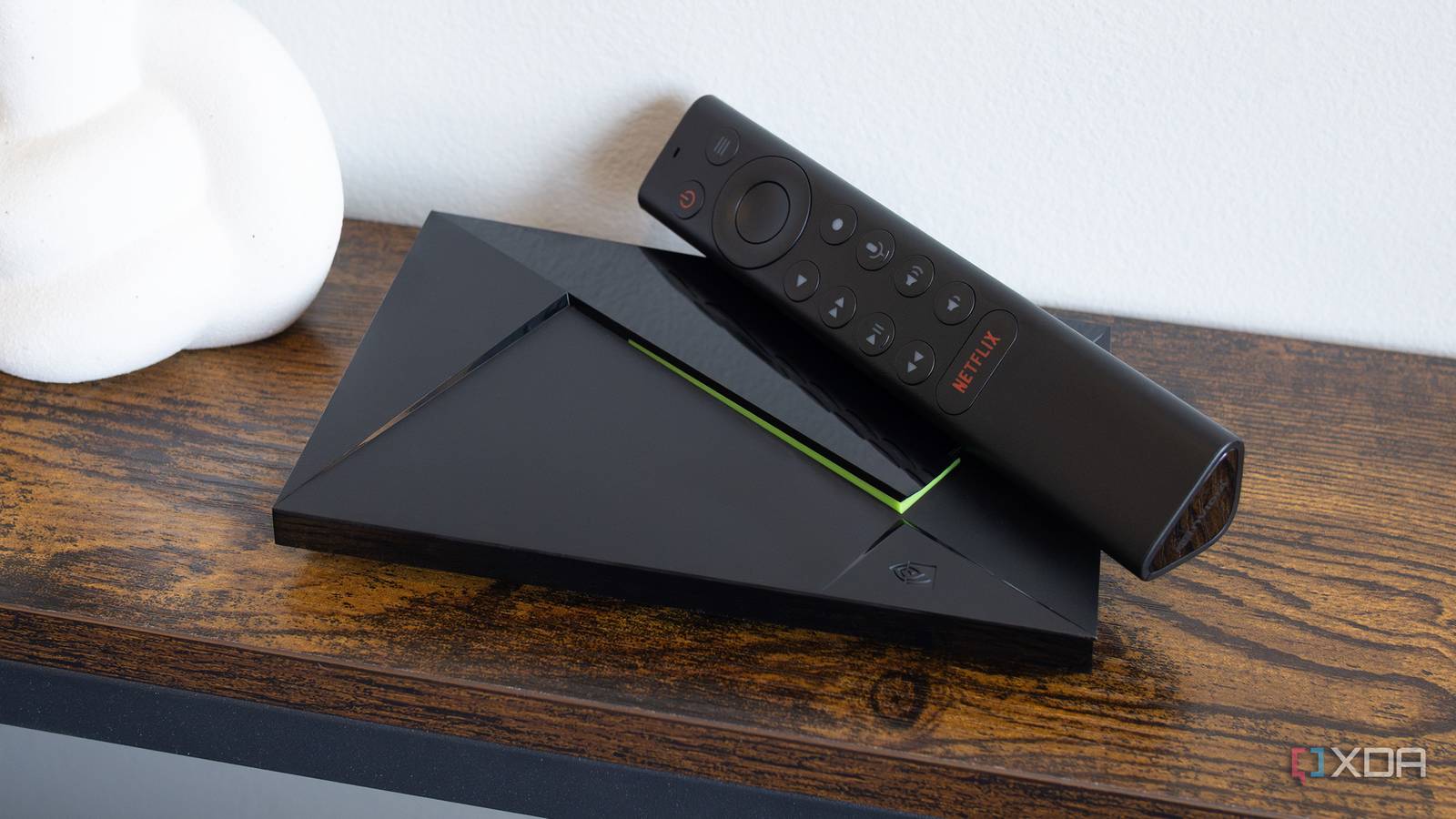
Published Oct 3, 2026, 6:00 PM EDT Anurag is an experienced journalist and author who’s been covering tech for the past 5 years, with a focus on Windows, Android, and Apple. He’s written for sites like Android Police, Neowin, Dexerto, and MakeTechEasier. Anurag’s always pumped about tech and loves getting his hands on the latest gadgets. When he's not procrastinating, you’ll probably find him catching the newest movies in theaters or scrolling through Twitter from his bed. Amazon recently bumped the price of the Fire TV Cube to $200. That change came quietly in August: the device, which once retailed for $140, suddenly saw a $60 price increase while still offering the same basic hardware. I was particularly shocked by this increase, although I shouldn't say it was that unexpected because RAMageddon has been affecting every industry that uses memory technology. Still, I was surprised to see a $200 price tag on a device that is worse than the one I purchased about seven years ago. I'm talking about my Nvidia Shield TV, which is now almost seven years old. Compared with the Fire TV Cube, which is now $200, the Nvidia Shield TV still does more. Nvidia Shield TV still smokes the Fire TV Cube any day It's not even close Credit: Amazon On paper, the Fire TV Cube looks more modern. It supports newer codecs such as AV1 and VP9 Profile 2, comes with Wi-Fi 6E, and includes HDMI 2.1 input and output. But once you move beyond basic streaming and start looking at what these devices can actually do, my seven-year-old Nvidia Shield TV still pulls ahead. The biggest advantage is lossless audio passthrough. The Shield TV can pass through Dolby TrueHD, Dolby Atmos, DTS:X, and DTS-HD Master Audio directly to a receiver, making it the better device for a proper home theater setup. The Fire TV Cube still struggles with true lossless passthrough for several high-end Blu-ray audio formats, which is difficult to excuse now that it costs $200. The Shield TV Pro can also function as a full Plex Media Server, thanks to its 64-bit architecture. That means I can connect storage, host my media library, and stream it to other devices without needing a separate computer or NAS. The Fire TV Cube uses a more restrictive 32-bit architecture, so it can't fill the same role. It may be a capable Plex client, but the Shield TV can run the entire show. Also, I wouldn't say the Shield TV is faster than the Fire TV Cube, because the latter has an octa-core processor that makes navigation smoother. However, when you compare the two devices side by side, the difference isn't exactly huge. Given that my seven-year-old Shield TV can open Netflix, boot up, and scroll through apps and settings almost as quickly as the Fire TV Cube, which is supposed to feature the latest and greatest hardware, it's difficult to justify that $200 price tag. To be fair, the Shield TV is beginning to show its age. It's limited to Wi-Fi 5 and HDMI 2.0, while the Cube offers Wi-Fi 6E and HDMI 2.1. The Tegra X1+ also lacks hardware decoding for newer formats such as AV1 and VP9 Profile 2. Nvidia Shield TV even supports cloud gaming Amazon Luna can never match the experience The Nvidia Shield TV's gaming capabilities are another reason why this seven-year-old streaming box is still more capable than the Fire TV Cube. Nvidia's graphics background is baked into the Shield TV's DNA, and GeForce NOW effectively turns the device into a cloud-powered gaming console. I can stream demanding PC games from Steam, the Epic Games Store, and Xbox Game Pass at up to 4K resolution and 60 FPS without keeping an expensive gaming PC in my living room. Getting started is also fairly straightforward. I can pair almost any Bluetooth controller, including an Xbox or PlayStation controller, launch GeForce NOW, and begin playing. With a fast, stable internet connection, latency is low enough that many games feel surprisingly close to running locally. That is quite an achievement for a streaming device released in 2019. Amazon technically has an answer in Luna, but the experience on the Fire TV Cube is not nearly as complete. Luna is primarily limited to 1080p at 60 FPS, so it cannot match the sharper 4K streaming available through GeForce NOW on the Shield TV. Its smaller, rotating catalog and publisher-specific channels also feel more restrictive than a service that lets me stream hundreds of supported PC games I already own. The Nvidia Shield TV is still the undisputed king of streaming boxes Truly unprecedented hardware Credit: The Fire TV Cube is not the only device that struggles to beat the Nvidia Shield TV. You can put almost any streaming box next to it, regardless of whether it comes from Amazon, Google, Xiaomi, or another manufacturer, and the Shield TV still holds its own. In many cases, it will do far more than devices released years after it. That is because Nvidia did not build the Shield TV like an ordinary streaming box. It was massively overpowered when it launched, and that extra headroom is what has kept it relevant for so long. While other companies have spent years releasing cheaper devices with slightly faster processors or marginally better wireless connectivity, few have tried to match the Shield TV's combination of raw performance, physical connectivity, and software freedom. Just look at the ports. The Shield TV Pro gives me two USB 3.0 ports and proper Gigabit Ethernet, which means I can attach large external drives, transfer files at sensible speeds, and run a complete Plex Media Server directly from the box. Most modern streaming devices give you a single power connector and expect everything else to happen through the cloud. The Shield TV lets me build an entire local media setup around it.
A Fire TV Cube costs $200 now, and my 2019 Nvidia Shield TV still does more
Full Article
Original Source
Read the full article at Xda-developers →KhanList aggregates and links to publicly available news content. We do not host full articles from third-party sources. Always verify important information with original sources.