
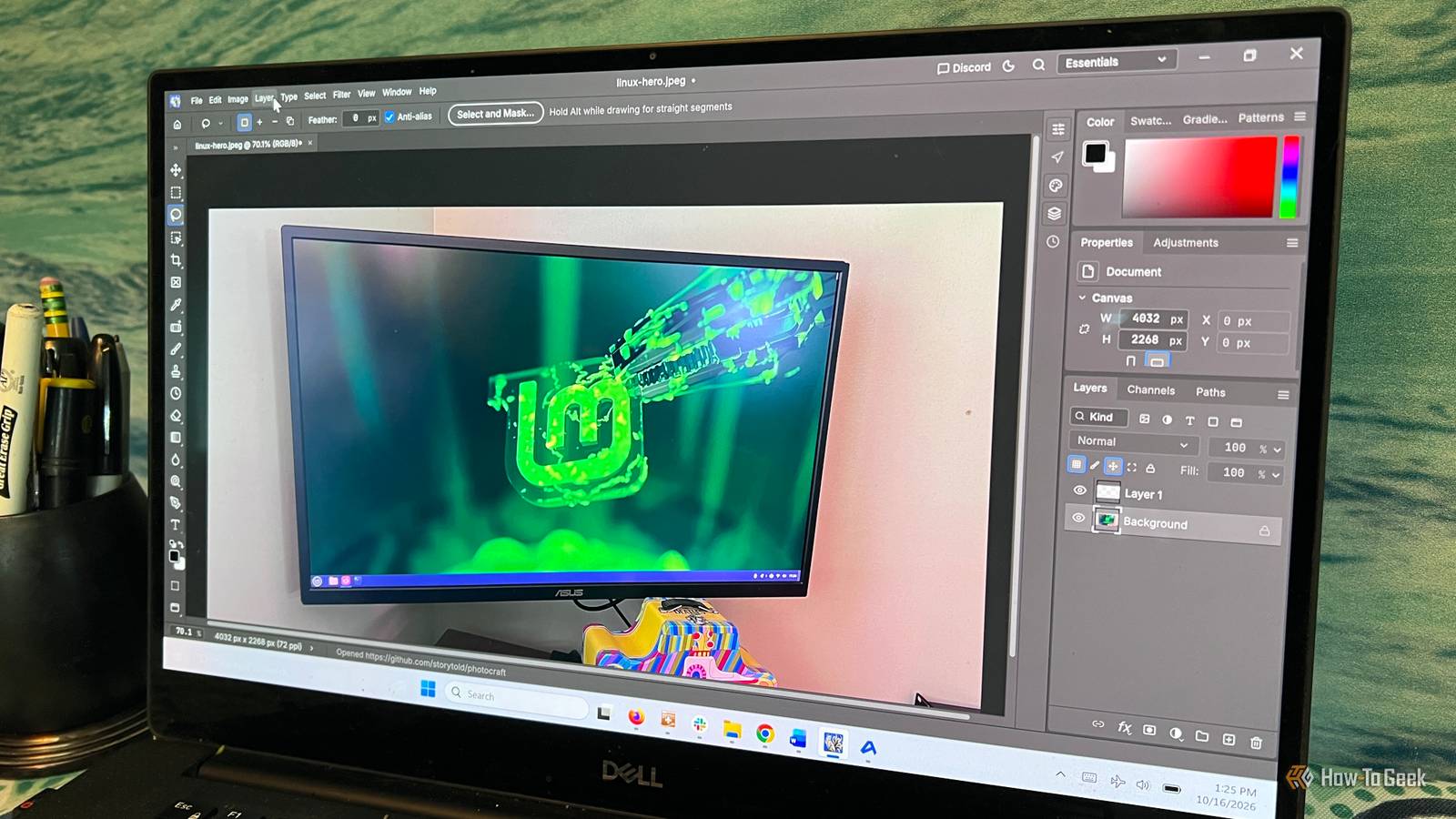
Published Oct 19, 2026, 1:30 PM EDT Rich Hein is a veteran technology journalist with more than two decades covering developer, consumer and enterprise topics. Rich's career has been dedicated to service journalism, connecting readers to content that informs and delights. Previously, Rich was vice president and editor-in-chief for Simpler Media Group, director of audience development for IDG and editor/writer for sites like CIO.com, ComputerWorld, CodeGuru and other tech-centric publications. He's received numerous accolades, including the IDG Summit and Azbee awards and has been covered by Medium for his work in audience development. When not at his desk, Rich lives in Daytona Beach with his wife and three dogs. He enjoys playing guitar, surfing and staying abreast of the latest in tech. By now you’ve probably heard of ArtCraft and developer Brandon Thomas, who created open-source alternatives to seven applications in Adobe's Creative Cloud suite. Thomas said on Hacker News that he was motivated by Adobe’s dark pattern cancellation policy. If you're not familiar, Adobe's annual plans billed monthly can carry an early termination fee, something many customers may not realize when signing up. He also expressed his frustration with existing Linux alternatives, writing, “I'm sick of GIMP, Krita, and Inkscape being the best Linux and open source have to offer.” With this in mind, Thomas decided to do something about it. What I find most surprising is that Thomas and a small team of developers were able to use AI and Rust to create recognizable versions of seven Adobe applications in a matter of days. Thomas acknowledges that the apps are far from finished, describing them as early alpha software. Still, he expects the tools to reach feature parity with Adobe's applications within months. Regardless, they have made quite a splash in the GitHub and Reddit communities. This raises the question: What happens to subscription software like this when a small, motivated team can use AI to build credible competitors much faster and at lower costs? I don't think subscription software is going away, but developments like this could challenge a business model that has been a major source of revenue for some of the biggest technology companies. These Adobe clones look impressive, but they're far from finished Looking like Photoshop and replacing it are two very different things What Thomas and his team have accomplished in such a short amount of time is pretty impressive, but I wouldn't cancel your Adobe subscription just yet. I spent some time exploring PhotoCraft, and at first glance, it looks remarkably similar to Photoshop. The familiar menus and editing tools are there, along with support for layers, filters, and Photoshop files. But looking like Photoshop and doing everything Photoshop can do are two different things. Some of those differences are already showing up in testing. Users have reported problems with filters that don't produce the expected results, and the developers have acknowledged gaps in compatibility with Photoshop's effects. Some of those issues have already been fixed, but others remain. That's not surprising when you consider how little time these applications have been in development. On the other hand, Adobe has spent decades refining its software. Professionals depend on it to work reliably with complicated projects. ArtCraft still has a long way to go before it can offer that same level of confidence. AI could make it much cheaper to compete with big software companies Small development teams may no longer need big budgets to build serious alternatives Building software that competes with something like Photoshop has never been easy or cheap. It takes a lot of developers and years of work to create an application with that many features. That's part of what makes Adobe and Microsoft so difficult to compete with. Most smaller developers simply don't have the time or money to take on companies of that size. But AI is changing that. Tools like Claude can help developers write code and fix problems much faster than they could before. Just look at what Thomas and his team accomplished in a matter of days. These applications are far from finished, but they've already done work that would have taken considerably longer without the use of AI. Of course, someone still has to test everything, fix bugs, and keep the software updated. But if AI can reduce the time and money needed to get an application off the ground, it could open the door for a lot more developers to challenge the big software companies. Cheaper alternatives could make software subscriptions harder to justify Companies may have to give people better reasons to keep paying every month I've never been a big fan of paying a monthly subscription for software, especially when I only use it occasionally. For example, I do a fair amount of image editing for my job, but not enough to justify a subscription. GIMP does what I need just fine. I can understand why someone who uses Photoshop every day for work would be willing to pay for it. But if GIMP or another free application can do everything you need, why pay for a subscription? I think that's where Adobe and other software companies could run into trouble. If AI makes it easier and cheaper to build competing applications, we're probably going to see a lot more free alternatives. Some will be terrible, but others could be good enough that people no longer need the paid versions. That doesn't mean Adobe is going anywhere, but it could mean companies have to work harder to convince people to keep paying. After all, there's only so much people are willing to spend on subscriptions, especially when they have other options. I think ArtCraft has shown what's possible when an experienced developer leads a small team using AI. Thomas decided to make his applications open source, but the next developer might decide to sell theirs. Other experienced developers could use the same approach to build competing software in just about any category. Not every project will succeed, but developers who once needed a lot of money and a large team to get started may no longer face those same barriers. Adobe probably won't be the last company developers take on Thomas isn't stopping with Adobe. He's already working on alternatives to Microsoft Word, Excel, and PowerPoint called WordCraft, GridCraft, and DeckCraft. All three have working alpha versions, although they're nowhere near ready to replace Microsoft's applications. But that's not really the point. A few weeks ago, none of these applications existed, and now people can download and try them. If this approach works, there's no reason other experienced developers couldn't use AI to build alternatives to just about any commercial software they think is too expensive or doesn't meet their needs.
A developer used AI to build 7 free Adobe alternatives, and subscription software has a new problem
Full Article
Original Source
Read the full article at Howtogeek →KhanList aggregates and links to publicly available news content. We do not host full articles from third-party sources. Always verify important information with original sources.