
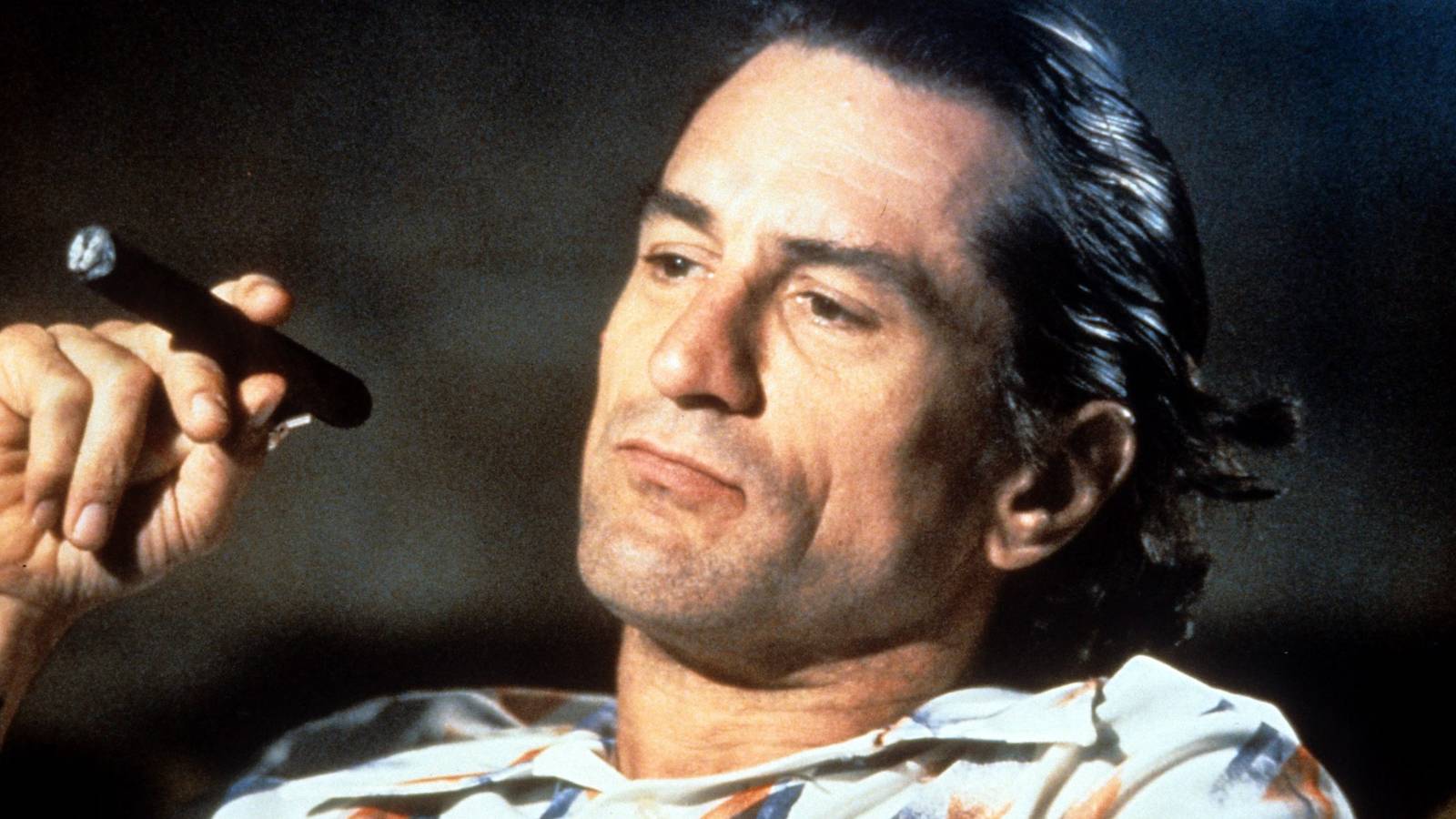
Sometimes, no matter how dynamic a protagonist is, the villain still steals the show. A great crime movie understands that a fascinating adversary is just as compelling as the hero, particularly if the criminal has the right personality, philosophy, or sheer screen presence. In many crime movies, the main character's determination to uphold the law makes them somewhat predictable. The person they're chasing, on the other hand, can be driven by something far more unusual. It’s particularly true of cult crime movies, where filmmakers often explore the psychology of criminals rather than presenting straightforward good versus evil narratives. Their antagonists can be charismatic, unpredictable, frighteningly intelligent, or even strangely sympathetic, making it difficult to look away whenever they appear. Some are larger-than-life personalities who dominate every scene, while others are quietly unsettling precisely because their motivations remain so difficult to understand. The heroes might provide the narrative's perspective, but it's the villains who give these crime classics much of their personality. Cape Fear (1991) Image courtesy of Everett Collection Martin Scorsese's remake of Cape Fear features Robert De Niro in one of his most flamboyant performances. He plays Max Cady, a newly released prisoner determined to exact revenge on Sam Bowden (Nick Nolte), the lawyer whose deliberately inadequate defense helped secure his conviction. De Niro makes Cady an almost cartoonishly theatrical psychopath while still being absolutely terrifying. He is also compellingly motivated to expose the hypocrisy beneath Bowden's respectable suburban life. Although Nolte gives an excellent performance, his lawyer is compromised by infidelity and professional dishonesty. Cady, meanwhile, understands precisely how to exploit those weaknesses. His extraordinary encounter with Bowden's teenage daughter Danielle (Juliette Lewis), in which he poses as her drama teacher, is particularly unsettling. Scorsese's Cape Fear deliberately complicates the original’s straightforward distinction between an innocent family and a dangerous criminal. Cady might be monstrous, but Bowden is hardly the uncomplicated hero he initially appears to be. To Live And Die In LA (1985) Outstanding crime thriller To Live and Die in L.A. benefits greatly from having the perpetually scene-stealing Willem Dafoe as its antagonist. Dafoe plays Rick Masters, an exceptionally talented counterfeiter whose criminal operation attracts the attention of reckless Secret Service agent Richard Chance (William Petersen). Chance is an entertaining protagonist, but his increasingly questionable methods make him difficult to distinguish from the criminals he pursues, particularly when he resorts to armed robbery to finance an undercover operation. Masters, by comparison, possesses an unusual combination of artistic ambition, professional discipline, and cold-blooded ruthlessness. He’s an artist that approaches counterfeiting as a creative discipline, taking enormous pride in reproducing currency with extraordinary precision. To Live And Die In LA is particularly interested in the similarities between Masters and Chance, but Dafo gave Masters so much personality that the Chance simply cannot match him. Point Break (1991) 1990s classic Point Break stars Patrick Swayze as Bodhi, the charismatic leader of a gang of surfers who finance their endless summer by robbing banks while wearing masks of former American presidents. Keanu Reeves, meanwhile, plays Johnny Utah, an FBI agent who infiltrates the group and gradually becomes fascinated by its unconventional leader. Bodhi is undoubtedly a criminal, but Swayze gives him an infectious enthusiasm that makes his philosophy surprisingly persuasive. He believes that society's obsession with money and conventional responsibilities prevents people from experiencing life fully. Bodhi presents himself as a spiritual free spirit, but his supposed rejection of materialism is financed by stealing from other people. His philosophy is therefore considerably more selfish than he would like to admit. Nevertheless, Johnny's attraction to Bodhi is entirely understandable. Bodhi is the existential hero of the film, while Johnny is busy struggling to understand what he actually wants from life. Sexy Beast (2000) Ben Kingsley's performance as Don Logan in Sexy Beast is so extraordinary that it almost overwhelms the entire film. Playing a volatile London gangster sent to persuade retired criminal Gary “Gal” Dove (Ray Winstone) to participate in another robbery, Kingsley creates one of British cinema's most memorable villains. Logan doesn't behave like the stereotypical cinematic gangster flaunting his wealth and luxury. Instead, he's a deeply unpleasant, psychologically manipulative bully whose entire personality seems designed to make everybody around him uncomfortable. Kingsley's performance is remarkable for its physical intensity. His rigid posture, piercing stare, clipped delivery, and sudden explosions of anger make even apparently ordinary conversations feel dangerous. He doesn't need to reach for a weapon to dominate a room because his greatest talent is making everybody else feel completely powerless. Gal is physically imposing but emotionally exhausted, and Gal's attempts to avoid violence make him increasingly vulnerable to Logan's bullying. King Of New York (1990) Christopher Walken gives one of his finest performances in Abel Ferrara's King of New York, playing Frank White, a powerful drug lord who returns to the city after serving a prison sentence. Although White is responsible for considerable violence, he also has an almost messianic vision of himself as somebody capable of transforming New York through his criminal wealth. He genuinely seems to believe that his generosity somehow compensates for the brutality required to maintain his position. This contradiction gives the character a fascinating complexity, particularly because Walken never plays him as somebody who recognizes the absurdity of his own moral reasoning. Walken's distinctive screen presence is essential to the character's appeal. White is remarkably calm, often speaking in a soft, almost hypnotic voice even when surrounded by people who would happily kill him. Walken's unusual delivery makes his occasional moments of violence particularly startling. The police officers pursuing him, particularly David Caruso's Dennis Gilley, provide a more conventional heroic perspective, but White is a much more intriguing figure because his ambitions extend beyond simple criminal survival. Manhunter (1986) Manhunter introduces audiences to cinema’s first Hannibal Lecter (Brian Cox), but its most compelling villain is arguably Francis Dollarhyde (Tom Noonan), the serial killer pursued by FBI profiler Will Graham (William Petersen). Known as the Tooth Fairy, Dollarhyde murders entire families while attempting to transform himself into the terrifying figure depicted in William Blake's painting The Great Red Dragon and the Woman Clothed with the Sun. While Graham’s investigative abilities make him an interesting protagonist, Dollarhyde is the more fascinating character because Manhunter devotes considerable attention to the psychological damage underlying his disturbing behavior. His relationship with Reba McClane (Joan Allen), a blind colleague at the film-processing laboratory where he works, gives him acceptance and intimacy for the first time. It's an unsettling contrast that makes him surprisingly sympathetic. Noonan's restraint makes Dollarhyde especially disturbing, giving Manhunter a villain whose vulnerability is every bit as unsettling as his violence. The Hitcher (1986) The Hitcher manages to make Rutger Hauer's villain utterly compelling without really providing any information about him. Hauer plays John Ryder, a mysterious hitchhiker picked up by young driver Jim Halsey (C. Thomas Howell) during a journey across the American Southwest. Almost immediately, Ryder reveals that he's a murderous psychopath, and Jim finds himself caught in an increasingly terrifying game of survival. Ryder offers no conventional explanation for his behavior, not interested in money, revenge, or any other familiar criminal motivation. Instead, he seems to derive satisfaction from tormenting Jim, repeatedly appearing wherever the unfortunate young driver happens to be. Hauer's performance makes this lack of explanation considerably more effective. He can be perfectly charming one moment and extraordinarily cruel the next. Although Howell effectively conveys Jim’s growing desperation, the character is deliberately less psychologically complicated than Ryder. Even when his behavior becomes completely reprehensible, it's difficult to look away. True Romance (1993) True Romance features several memorable criminals, but Gary Oldman's Drexl Spivey is arguably the most entertaining. Playing a pimp and drug dealer who becomes involved in the increasingly dangerous circumstances surrounding Clarence Worley (Christian Slater), Oldman delivers a wonderfully eccentric performance that makes an enormous impression despite having relatively little screen time. True Romance also boasts Christopher Walken as mobster Vincenzo Coccotti. His interrogation of Clarence's father, Clifford (Dennis Hopper), is one of the film's finest scenes, largely because Walken plays the character with such unnerving restraint. He allows an apparently casual conversation to become increasingly uncomfortable before revealing his true intentions. Both performances illustrate the film's strength as a crime story populated by distinctive personalities. Clarence and Alabama (Patricia Arquette) provide its romantic center, but the criminals surrounding them supply much of its dark humor and unpredictability. The Dark Knight (2008) Image via MovieStillsDB Although Christopher Nolan's The Dark Knight is a superhero film, its structure and organized crime narrative make it one of the most compelling crime thrillers of the 21st century. Heath Ledger's Joker is the obvious highlight, delivering a performance so commanding that Christian Bale's Batman frequently feels like a supporting character in his own film. Unlike conventional criminal masterminds, Joker is completely disinterested in accumulating wealth or establishing a sustainable criminal empire. He initially presents himself as somebody attempting to take control of Gotham's criminal underworld, but his real ambition is to demonstrate that society's moral principles are much more fragile than people would like to believe. Bruce Wayne believes that his mission is ultimately about protecting Gotham's citizens and preserving their faith in justice. The Joker wants to demonstrate that those principles disappear when ordinary people are placed under sufficient pressure. The two-ferry experiment is the clearest expression of this philosophy. Ledger's Oscar-winning performance makes that absence of conventional crime movie motive all the more fascinating.
9 Cult Classic Crime Movies Where The Villain Is More Compelling Than The Hero
Full Article
Original Source
Read the full article at Screenrant →KhanList aggregates and links to publicly available news content. We do not host full articles from third-party sources. Always verify important information with original sources.