
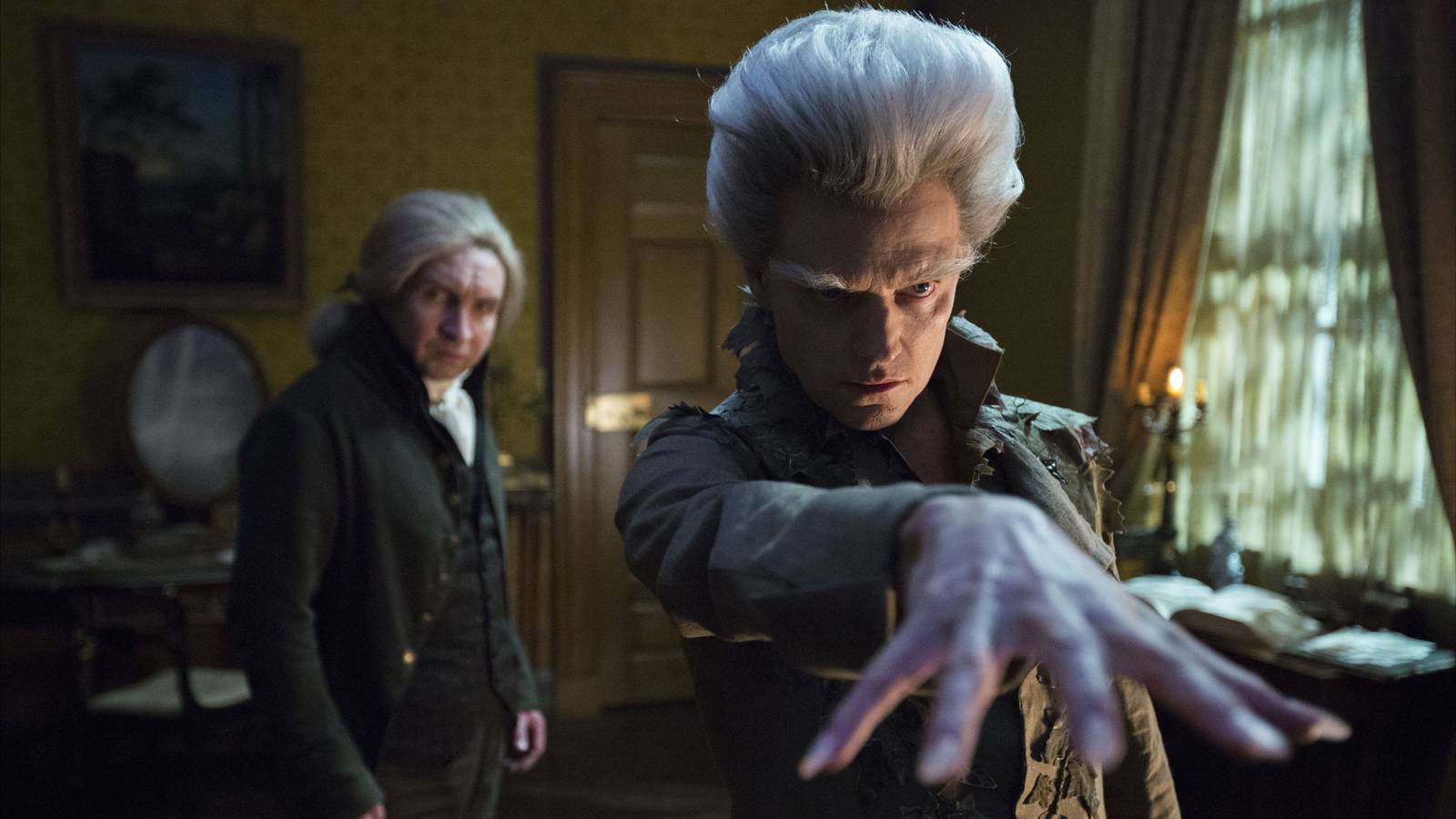
Published Sep 13, 2026, 9:30 PM EDT Memory Ngulube joined Screen Rant in April 2024 as part of the Movies and TV team. Since then, she has written for the Perennials and Streaming team, covering a wide range of topics from new releases to old movies and TV shows. Memory is currently a Classic TV writer. Before joining Screen Rant, Memory was a freelance copywriter who specialized in email marketing and social media management. While she enjoyed her job, her true passion was always movies and TV. When she isn’t writing for Screen Rant, Memory can be found reading, baking (which is one of her passions), or watching her favorite K-drama. More often than not, fantasy shows need several seasons to make their point, but many don't get the opportunity before they are unceremoniously canceled. Then there are those limited genre series that manage to pack a lot into just a few episodes. While some fantasy miniseries are still widely revered, others are nothing but footnotes in TV history. Despite the genre's narrative needs, the miniseries format has always suited fantasy. A great fantasy story can require generous world-building, but sometimes, the best shows don't need multiple seasons to tell their tale. A handful of carefully constructed episodes can establish an entire magical universe, introduce memorable characters, and bring the adventure to a satisfying conclusion. When a series takes too long to conclude, it risks dipping in quality, which is why the limited series format is so appealing. Some of these forgotten fantasy miniseries paved the way for shows still on the air today; it's a shame they have largely faded into obscurity. The Odyssey (1997) Christopher Nolan’s take on Homer’s tale is what is popular right now, so, of course, other adaptations of the fantasy story have faded into the background, but that doesn't mean they aren't worth revisiting. The Odyssey, NBC's 1997 two-part miniseries, adapts Homer's legendary Greek epic, following King Odysseus after the Trojan War as he attempts to make the perilous journey home to Ithaca. The miniseries reportedly had a $40 million budget, which was substantial for a television production of the period. However, given how vast Odysseus' journey is, it makes sense that the show needed so much money to bring it to life. Fortunately, the investment paid off, as the series won an Emmy Award for Outstanding Directing for a Miniseries or Special in 1997 and received generally positive reviews from audiences and critics alike. The Lost Room (2006) The Lost Room combines several genres, including sci-fi, mystery, and fantasy. It's almost like a shorter version of The X-Files. Still, The Lost Room has its own identity and mythology. The series follows Detective Joe Miller, who finds a motel room containing mysterious objects that don't seem to obey the normal laws of reality. The Lost Room is the perfect example of just how much can be accomplished with a relatively simple premise. Within six hours, audiences get a taste of a story that balances nearly every genre without once feeling overwhelmed. The Lost Room tells a complete story and is exactly the kind of series worth rediscovering, especially now when audiences are too scared to get attached to fantasy shows that might get canceled at any moment. Lost In Austen (2008) Pride and Prejudice’s impact on the literary world cannot be overstated. Jane Austen’s novel has been adapted into several "spinoff" books, movies, and TV shows. Yet, none have had as much fun with the source material as Lost in Austen. The four-part series follows Amanda Price, a modern-day Londoner and devoted Austen fan, who unexpectedly finds a secret doorway in her bathroom leading directly into the world of Pride and Prejudice. Pride and Prejudice is sacred to many people, to a point that even the thought of changing it in any way feels sacrilegious. That being said, Lost in Austen is a refreshing take on the love story. Amanda is an incredibly relatable protagonist; the series is mischievous in the best way possible, but it also doesn’t disregard its source material. The 10th Kingdom (2000) Fairy tales have always had a special place in storytelling. With hundreds of adaptations, including movies and TV shows based on these epic tales being brought to life, it's easy to get bored with watching essentially the same story over and over again. Thankfully, The 10th Kingdom adds a little pizzazz to straightforward fairy tales. The 10th Kingdom begins in modern-day New York, where Virginia Lewis and her father Tony are unexpectedly transported through a magical mirror into the Nine Kingdoms. There, they discover a world populated by characters who resemble familiar fairy tale figures, including princes, queens, trolls, witches, and talking animals. Obviously, shows like Once Upon a Time have reinvented fairy tales, but arguably, The 10th Kingdom created the space for shows like that to thrive. The fantasy series understands that fairy tales don't have to be treated as untouchable classics. It takes familiar characters and ideas, throws them into an enormous shared universe, and gives them room to become something completely different. Terry Pratchett's Going Postal (2010) Before fantasy television became synonymous with enormous budgets, Terry Pratchett's Going Postal proved that a great fantasy story could be built around something as ordinary as the postal service. Adapted from Pratchett's 2004 Discworld novel, Terry Pratchett’s Going Postal follows Moist von Lipwig, a con artist sentenced to death by the ruthless Lord Vetinari, ruler of Ankh-Morpork. Rather than letting him die, Vetinari appoints Moist to run the abandoned city Post Office. Although Going Postal is hilarious, its comedy disguises some surprisingly sharp social commentary. The conflict between the Post Office and the Clacks is essentially a story about old technology being challenged by something newer and faster. The Post Office represents traditional communication, while the Clacks represent a revolutionary technology that has transformed the way people communicate. Pratchett cleverly used this conflict to explore questions about corporate greed and monopolies. Merlin (1998) King Arthur is often seen as the hero of his story, but even a character as legendary as the wielder of Excalibur needs help every once in a while. Merlin, the 1998 miniseries — not to be confused with the BBC's five-season series Merlin, which premiered in 2008 — recognized that, despite playing a major role in the mythology, the wizard deserved more appreciation. So, the series remedied that by creating a tale that focuses solely on the famous wizard’s escapades. In the King Arthur movies and TV shows that debuted after the 1998 series, Merlin is often depicted as an eccentric and elderly wizard, but he is different in this interpretation. The late Sam Neill brings a seriousness to the role that works surprisingly well alongside the miniseries' more fantastical elements and never loses the charm that is often associated with this iconic mythological figure. Over the Garden Wall (2014) Cartoon Network Studios Over the Garden Wall is wonderfully strange. Before watching, someone might assume it's merely a charming children's cartoon about two brothers lost in the woods. However, beneath its colorful animation and whimsical characters is a dark, sophisticated story. Over the Garden Wall’s meaning isn't straightforward. Audiences have long debated what the show was trying to say, and that’s precisely what makes it so magical 12 years after its debut. Over the Garden Wall might be described as a children's series, but it doesn’t shy away from themes like death, depression, and isolation that aren’t typically part of what people expect from shows meant for a younger audience. Jonathan Strange & Mr Norrell (2015) Based on Susanna Clarke's acclaimed 2004 novel, Jonathan Strange & Mr Norrell is set in England during the Napoleonic Wars, in an alternate version of history where magic was once practiced openly but has largely disappeared. The fantasy series excels at treating magic like a science rather than something that can fix every problem with a simple wave of the hand. The fantasy series’ serious take on the mechanics and history of magic is great, but the titular characters' relationship is what makes Jonathan Strange and Mr Norrell exceptional. Norrell is conservative and obsessed with controlling magic, while Strange is his opposite, chaotic and impulsive. That personality clash creates a conflict that is constantly entertaining.
8 Near-Perfect Fantasy Miniseries That Nobody Remembers Today
Full Article
Original Source
Read the full article at Screenrant →KhanList aggregates and links to publicly available news content. We do not host full articles from third-party sources. Always verify important information with original sources.