
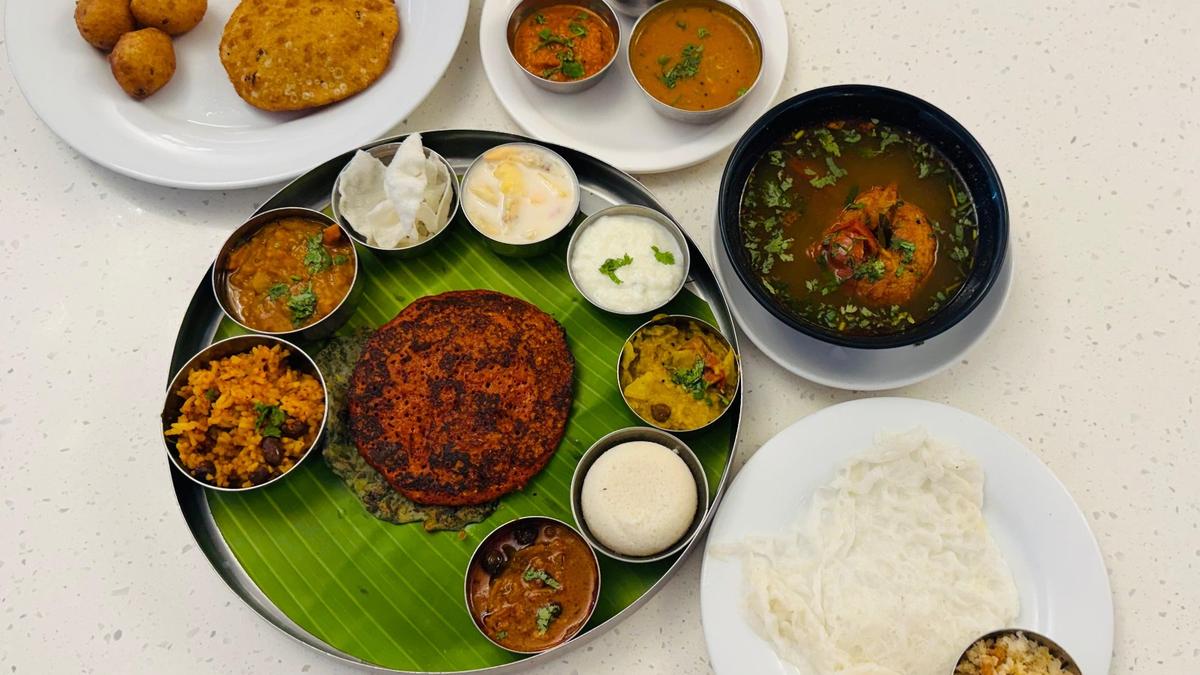
One sunny afternoon in October, we step into Matsya Restaurant, where the cosy interiors and friendly staff immediately make us feel at home. We order our favourites from the menu — items that have not changed in years — rasa vada and chilli cheese toast.As we wait for our order, Ram Bhat, a partner in the family-run establishment, walks in.The establishment marks 76 years since its beginnings as an Udupi home and the occasion is prompting the family running the restaurant to look back at its roots and bring its heritage menu back into focus. “We want the current generation to enjoy the Udupi fare that we are known for,” says Ram, before insisting that we try their ven pongal served with fruit pachadi. Rasa vada | Photo Credit: Special Arrangement The combination does not particularly appeal to me at first, but I end up relishing the rather unusual pairing. “This is typical Udupi style. The fruit pachadi is made using fresh curd, and it is beaten with sugar. A mix of cut fruits is then added and served along with steaming-hot pongal,” he explains. The restaurant is also introducing tomato uthappam and apple bajji as part of its renewed focus on traditional offerings.These new dishes make us wonder what Matsya might have looked like when it first began. What is its origin story? Ram Bhat answers.Humble beginningsMatsya’s history began long before the restaurant acquired its present name. It was originally known as Udupi Home, launched in 1950 by Ram’s father’s elder brother Shaama Bhat. . In 1980, his younger brother, Hari Bhat, rebranded the restaurant as Matsya, while retaining the ‘Udupi Home’ name for the boarding and lodging facility.“My uncle started Udupi Home soon after I Independence. Our USP was its proximity to Egmore Railway Station, as well as several major hospitals and Government offices, all within a two-kilometre radius. In those days, people from the Udupi and Mangalore regions would come to Chennai and stay at our lodging. They would eat at the restaurant serving familiar food functioning on the ground floor, go about their business in the city, and then take the train back to their hometowns,” recalls Ram. Udipi Home in Egmore, Madras city. | Photo Credit: Special Arrangement Over the years, the restaurant gained a loyal following for its vegetarian fare rooted in the culinary traditions of Udupi. But Matsya’s history is also closely intertwined with the changing rhythms of Chennai.In 1962, during the India-China war, frequent blackouts were imposed across the city. It was during this period that the restaurant began serving food well past midnight — a tradition that continues to this day.“We started serving idlis and filter coffee until 2am in those days, and the tradition continues even today. On our midnight menu, the most popular items are chilli cheese toast, bread peas masala, Udupi-style dosa, and filter coffee,” says Ram. As lifestyles changed, so did the late-night clientele. “We cater to those who go clubbing until the wee hours and also those who walk in after watching late-night film shows,” he adds. Ram Bhat | Photo Credit: Special Arrangement The midnight menu is perhaps one of the clearest examples of how Matsya has adapted to the city around it while retaining its culinary identity.Interestingly, Matsya has several feathers in its cap. It was among the early restaurants in the city to have a separate air-conditioned section, and by 1992, the entire restaurant had been air-conditioned. When Hari Bhat launched Matsya in 1980, he commissioned architect K Ramanan, who had designed Adyar Gate Hotel, later known as Crowne Plaza, to design the restaurant.“It was the city’s elite who patronised us. The late Tamil Nadu Chief Minister MG Ramachandran would often order badam kheer from our kitchen whenever he hosted a party at his residence. RM Veerappan (politician), actor Nagesh, Cho Ramaswamy (political commentator and actor) and several other politicians also frequented the restaurant,” says Ram. The clientele may have changed over the decades, but Matsya has continued to evolve with it.What’s changed?When Ram and Shaama Bhat’s son, Prasad Bhat, took over the running of the restaurant in 1992, they revamped the menu to cater to a younger audience and the growing number of office-goers who began dropping in for lunch.“We introduced dishes from the tandoor based on popular demand. I also launched the cold coffee, falooda and the Udupi thali, as I wanted to showcase the regional cuisine of the place I hail from, which is Dandathirtha near Udupi, and we also have lands in Moodibidri near Putthige. . In those days, an authentic Udupi thali was a rarity, and that was when our rasa vada became a rage among regular customers,” says Ram. F Bread with peas masala | Photo Credit: Special Arrangement At Matsya, the people behind the food have also traditionally reflected on its regional roots. Cooks have been sourced from the region, helpers have largely come from the southern parts of Tamil Nadu, while managerial staff have mostly been from the Tirunelveli region. The tradition continues even today.The restaurant’s food has also found a wide audience since the pandemic, particularly its rasam. “During the lockdown and the pandemic, we made gallons and gallons of rasam. While we would normally prepare two cauldrons of rasam a day, during the pandemic years we were preparing six cauldrons,” says Ram.Back to the basicsToday, Matsya is once again looking towards its heritage. The focus is on bringing traditional Udupi fare to the forefront and introducing diners to dishes that may not be as familiar as the ubiquitous dosa, Mangalore buns, and goli baje.The menu now highlights specialities such as ragi dosa, jowar dosa, and thatte idli, alongside the more familiar Udupi favourites. The dessert selection, too, draws from the traditional recipes of Udupi and coastal Karnataka. The restaurant plans to introduce kuku rasayana, also known as mambala or mango payasam, a traditional no-cook Udupi summer dessert made with ripe mangoes, fresh coconut milk, and jaggery.Other planned additions include halbai, a rice-and-jaggery-based sweet from coastal Karnataka; holige or obbattu, a sweet flatbread made with a soft outer dough and a filling of lentils and jaggery; and hyagreeva maddige, a popular temple offering from the Udupi region made with chana dal, jaggery, coconut and ghee. Apple Bajji | Photo Credit: Special Arrangement The idea is not to turn back the clock, but to ensure that these dishes are not forgotten. “We have continued the Udupi legacy for three generations and hope to carry the tradition forward. Some of the Udupi snacks that were served only between 3pm and 7pm will now be available from noon to 7pm. We have been adapting and changing our menu to suit the generations we cater to, but Udupi fare will remain the highlight,” says Ram.After 75 years, Matsya may have changed with its customers, its city and its times. But at its heart, the restaurant remains what it set out to be — a place where the flavours of Udupi have found a lasting home in Chennai.
76 Years of Matsya: How a Chennai restaurant keeps Udupi food traditions alive
Full Article
Original Source
Read the full article at Thehindu →KhanList aggregates and links to publicly available news content. We do not host full articles from third-party sources. Always verify important information with original sources.