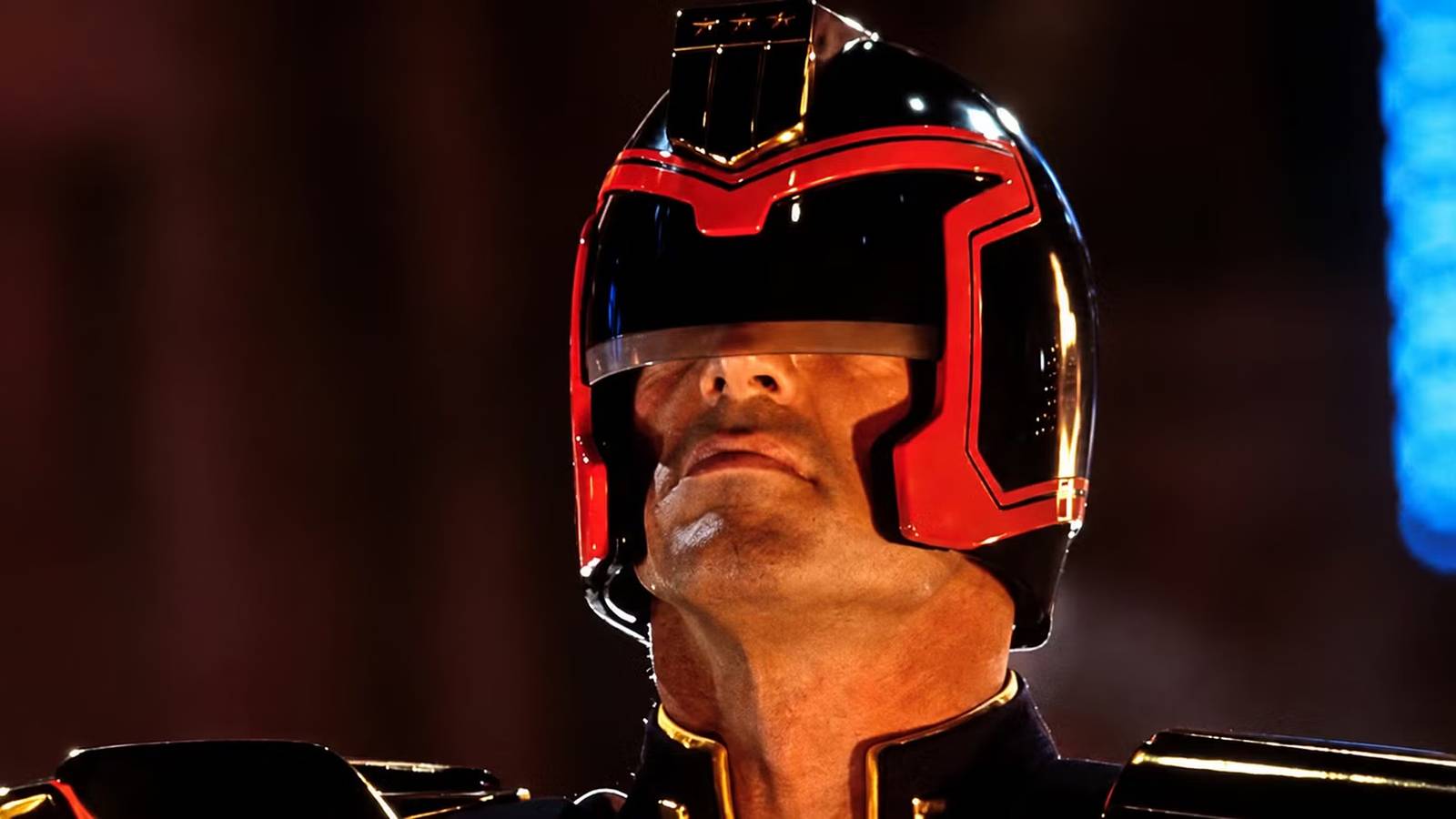
Image via Buena Vista Pictures Published Jul 26, 2026, 1:03 PM EDT Sign in to your Collider account Every science fiction story asks a question about tomorrow and talks about the unforeseen future. But the six R-rated films on this list all share the exact same dark premise. They look at a future where our own advancements turn against us. Not to mention their stories are great, and driven by cybernetic implants, advanced artificial intelligence, genetic cloning, and automated warfare. Sounds interesting to hear but the problem is not the premise. The problem is what these filmmakers did with it. Instead of exploring these fascinating sci-fi ideas with intelligence, these movies traded deep concepts for mindless action, cheap thrills, unnecessary scenes and heavy violence. They took genuinely great science fiction premises and flattened them into forgettable box office disasters. 6 ‘Johnny Mnemonic’ (1995) Image via TriStar Pictures The most surprising thing about Johnny Mnemonic is that it somehow manages to make very exciting concepts, boring. For instance, look at a premise involving cybernetic implants, digital storage in the human brain, and a futuristic conspiracy. All these things are perfect ingredients for a high-quality script, but this film fails to produce that. Johnny Mnemonic (Keanu Reeves) works as a courier who literally stores confidential data inside his own brain, though after accepting one dangerous job, he discovers that he is carrying more information than his mind can safely handle. What I kept waiting for, however, was the movie to actually do something interesting with that idea. Instead, the film spends most of its runtime throwing Johnny into one noisy, confusing encounter after another. Keanu Reeves looks as if he understands that none of this makes sense, which honestly became part of the entertainment for me. After every few scenes, somebody introduces a new piece of futuristic technology or another complicated plot point, yet none of it ever feels connected to anything emotionally real. The strangest part is that the film constantly behaves as though it is blowing your mind when, in reality, you are mostly trying to stay awake. 5 ‘Alien Resurrection’ (1997) Image via 20th Century Studios I think the biggest mistake Alien Resurrection makes happens before the movie even begins. Ellen Ripley (Sigourney Weaver) died at the end of Alien 3 in a tragic way. Then Alien Resurrection simply brings her back through cloning and expects the audience to move on as if nothing happened. From that moment onward, the film never fully recovers. It is hands down frustrating because there are moments where you can see a genuinely weird and interesting movie going to waste. Clone Ripley is unsettling in ways that the previous versions of the character never were, and some of the ideas involving identity and genetic experimentation could have led somewhere fascinating. I was less disturbed by the Xenomorphs than I was by the realization that the franchise had somehow made one of cinema's greatest heroines feel like a side character in her own story. 4 ‘Judge Dredd’ (1995) Image via Buena Vista Pictures The first thing I remember about Judge Dredd are the fashion choices of the characters. Before Sylvester Stallone even says a word as Judge Joseph Dredd (Sylvester Stallone), the movie has already committed so aggressively to its ridiculous visual style that it becomes difficult to take anything seriously afterwards. Dredd is supposed to be an intimidating symbol of absolute law and authority but he often looks like somebody trying very hard to convince us that he is intimidating. The worst part is that the film wasted a good script. A futuristic city governed by judges who act as police officers, juries, and executioners is actually a compelling idea. Yet the movie quickly abandons any interest in exploring that world and turns into a series of explosions, chases, and arguments delivered at maximum volume. Every time you think the film might finally settle down and develop an idea, somebody would crash through a wall or fire another oversized weapon; it feels like you are watching being shouted at for two hours. Collider Exclusive · Sci-Fi Survival Quiz Which Sci-Fi World Would You Survive? The Matrix · Mad Max · Blade Runner · Dune · Star Wars Five universes. Five completely different ways the future went wrong — or sideways, or up in flames. Only one of them is the world your instincts were built for. Eight questions will figure out which dystopia, galaxy, or desert wasteland you'd actually make it out of alive. 💊The Matrix 🔥Mad Max 🌧️Blade Runner 🏜️Dune 🚀Star Wars TEST YOUR SURVIVAL → 01 You sense something is deeply wrong with the world around you. What do you do? The first instinct is often the truest one. APull on every thread until I understand the system — then figure out how to break it. BStop asking questions and start stockpiling — food, fuel, weapons. Questions don't keep you alive. CKeep my head down, observe carefully, and trust no one until I know who's pulling the strings. DStudy the patterns. Every system has a rhythm — learn it, and you learn how to survive it. EFind the people fighting back and join them. You can't fix a broken galaxy alone. NEXT QUESTION → 02 In a world of scarcity, what resource do you guard most fiercely? What we protect reveals what we believe survival actually requires. AKnowledge. If you understand the system, you don't need resources — you can generate them. BFuel. Everything else — movement, power, escape — runs on it. CTrust. In a world of fakes and informants, a truly reliable ally is rarer than any commodity. DWater. And after water, information — the two things empires are truly built on. EShips and credits. The galaxy is big — you survive it by being able to move through it freely. NEXT QUESTION → 03 What kind of threat keeps you up at night? Fear is useful data — if you're honest about what you're actually afraid of. AThat reality itself is a lie — that everything I experience has been constructed to keep me compliant. BA raid. No warning, no mercy — just the roar of engines and then nothing left. CBeing identified. Once someone with power decides you're a problem, you're already out of time. DBeing outmanoeuvred — losing a political game I didn't even know I was playing. EThe Empire tightening its grip until there's nowhere left to run. NEXT QUESTION → 04 How do you deal with authority you don't trust? Every dystopia has a power structure. Your approach to it determines everything. ASubvert it from the inside — learn its rules well enough to weaponise them against it. BIgnore it and stay out of its reach. The further from any power structure, the better. CAppear to comply while doing exactly what I need to do. Visibility is the enemy. DManoeuvre within it carefully. You can't beat a system you refuse to understand. EResist openly when I have to. Some things are worth the risk of being seen. NEXT QUESTION → 05 Which environment could you actually endure long-term? Survival isn't just tactical — it's physical, psychological, and very much about where you are. AUnderground bunkers and server rooms — cramped, artificial, but with access to everything that matters. BOpen wasteland — brutal sun, no shelter, constant movement. At least the threat is honest. CA dense, rain-soaked city where you can disappear into the crowd and nobody asks questions. DMerciless desert — extreme heat, no water, and something enormous living beneath the sand. EThe fringe — backwater planets and busy spaceports where the Empire's attention rarely reaches. NEXT QUESTION → 06 Who do you want in your corner when things fall apart? The company you keep is the clearest signal of who you actually are. AA tight crew of believers who've seen behind the curtain and have nothing left to lose. BOne or two people I'd trust with my life. Any more than that and someone talks. CNobody, ideally. Alliances are liabilities. I work alone unless I have no choice. DA community bound by shared hardship and mutual survival — people who need each other to last. EA ragtag team with wildly different skills and total commitment when it counts. NEXT QUESTION → 07 Where do you draw the line — if you draw one at all? Every survivor eventually faces a moment that tests what they're actually made of. AI won't harm the innocent — even the ones who'd report me without hesitation. BI do what I have to to protect the people I've chosen. Everything else is negotiable. CThe line shifts depending on who's asking and what's at stake. DI draw a long-term line — nothing that compromises my people's future, even if it'd help now. ESome lines, once crossed, can't be uncrossed. I know which ones they are. NEXT QUESTION → 08 What would actually make survival worth it? Staying alive is one thing. Having a reason to is another. AWaking others up — dismantling the illusion so no one else has to live inside it. BFinding somewhere — or someone — worth protecting. A reason to keep moving. CAnswers. Understanding what I am, what any of this means, before time runs out. DLegacy — shaping the future in a way that outlasts me by generations. EFreedom — for myself, for others, for every world still living under someone else's boot. REVEAL MY WORLD → Your Fate Has Been Calculated You'd Survive In…Your answers point to the world your instincts were built for. This is the universe your temperament, your survival instincts, and your particular brand of stubbornness were made for. The MatrixYou took the red pill a long time ago — probably before anyone offered it to you. You're a systems thinker who can't help but notice the seams in things. You're drawn to understanding how the system works before figuring out how to break it. You'd find the Resistance, or it would find you — your instinct for spotting constructed realities is the machines' worst nightmare. You function best when you have access to information and the freedom to act on it. The Matrix built an airtight prison. You'd be the one probing the walls for the door. Mad MaxThe wasteland doesn't reward the clever or the well-connected — it rewards those who are hard to kill and harder to break. That's you. You don't need comfort, community, or a cause larger than the next horizon. You need a vehicle, a clear threat, and enough fuel to outrun it — and you're good at all three. You are unsentimental enough to survive that world, and decent enough — just barely — to be something more than another raider. In the wasteland, that distinction is everything. Blade RunnerYou'd survive here because you know how to exist in moral grey areas without losing yourself completely. You read people accurately, keep your circle small, and ask the questions others prefer not to answer. In a city where humanity is a legal designation rather than a feeling, you hold onto something that keeps you functional. You're not a hero. But you're not lost, either. In Blade Runner's world, that distinction is everything. DuneArrakis is the most hostile environment in the known universe — and you are precisely the kind of person it rewards. Patience, discipline, and political awareness are your core strengths — and on Arrakis, they're survival tools. You understand that the long game matters more than any single victory. Others come to Dune and are consumed by it. You'd learn its logic and earn its respect. In time, you wouldn't just survive Arrakis — you'd begin to reshape it. Star WarsThe galaxy far, far away is vast, loud, and in a constant state of violent political upheaval — and you wouldn't have it any other way. You find meaning in being part of something larger than yourself — a cause, a crew, a rebellion. You'd gravitate toward the Rebellion, or the fringes, or whatever pocket of the galaxy still believes the Empire's grip can be broken. You fight — not because you have to, but because standing aside isn't something you're capable of. In Star Wars, that willingness is what makes all the difference. ↻ RETAKE THE QUIZ 3 ‘Hardware’ (1990) Image via Palace Pictures For almost thirty minutes, everyone genuinely believed Hardware might turn into a cult classic. The film follows Mo Baxter (Dylan McDermott), who unknowingly brings home the remains of a military robot that eventually reconstructs itself and begins hunting artist Jill (Stacey Travis) inside her apartment. The story is simple, claustrophobic, and honestly pretty effective. Then the movie slowly becomes trapped inside its own atmosphere. Every scene is so obsessed with looking grimy, futuristic, and disturbing that the story itself eventually disappears. I reached a point where I realized I was no longer following the characters or the plot. I was simply staring at smoke, flashing lights, metal walls, and increasingly loud sound effects. There is a good science-fiction horror movie buried somewhere inside Hardware that just failed to reach its full potential. 2 ‘Split Second’ (1992) Image via InterStar Rutger Hauer plays detective Harley Stone, a man hunting a mysterious killer in a flooded futuristic London while consuming enough caffeine to endanger his own health. Honestly, that premise alone almost convinced me that Split Second deserved to become a cult favorite. For a while, I was willing to forgive nearly everything because Hauer commits so completely to playing a man who appears to have slept for about three hours over the previous decade. The problem is that the movie never figures out what it wants its monster to be. Is this a detective story? A horror movie? A science-fiction action film? The answer changes every twenty minutes. There is something admirable about the film's commitment to excess, though eventually that excess becomes exhausting. It just leaves you simply waiting to explain what exactly you had been watching all along. 1 ‘Virus’ (1999) Image via Universal Pictures One of the worst things a science-fiction horror movie can do is make its central threat uninteresting because that’s the only thing that keeps the film going. Unfortunately, that is exactly what happens in Virus. After a mysterious alien intelligence takes control of a Russian research vessel, Captain Robert Everton (Donald Sutherland) and Kelly Foster (Jamie Lee Curtis) find themselves fighting machines that have begun rebuilding human bodies into grotesque mechanical hybrids. This should have been terrifying. Instead, I spent most of the movie admiring the practical effects while feeling absolutely nothing about the story itself. The film introduces horrifying concepts and then presents them with all the emotional impact of an instruction manual. Jamie Lee Curtis does everything she can to make her character believable, though even she eventually seems overwhelmed by the endless machinery, explosions, and shouting. Virus Release Date January 15, 1999 Runtime 99 Minutes Cast Jamie Lee Curtis Kit Foster Joanna Pacula Nadia Vinogradova
6 Worst R-Rated Sci-Fi Movies of the 1990s
Full Article
Original Source
Read the full article at Collider →KhanList aggregates and links to publicly available news content. We do not host full articles from third-party sources. Always verify important information with original sources.