
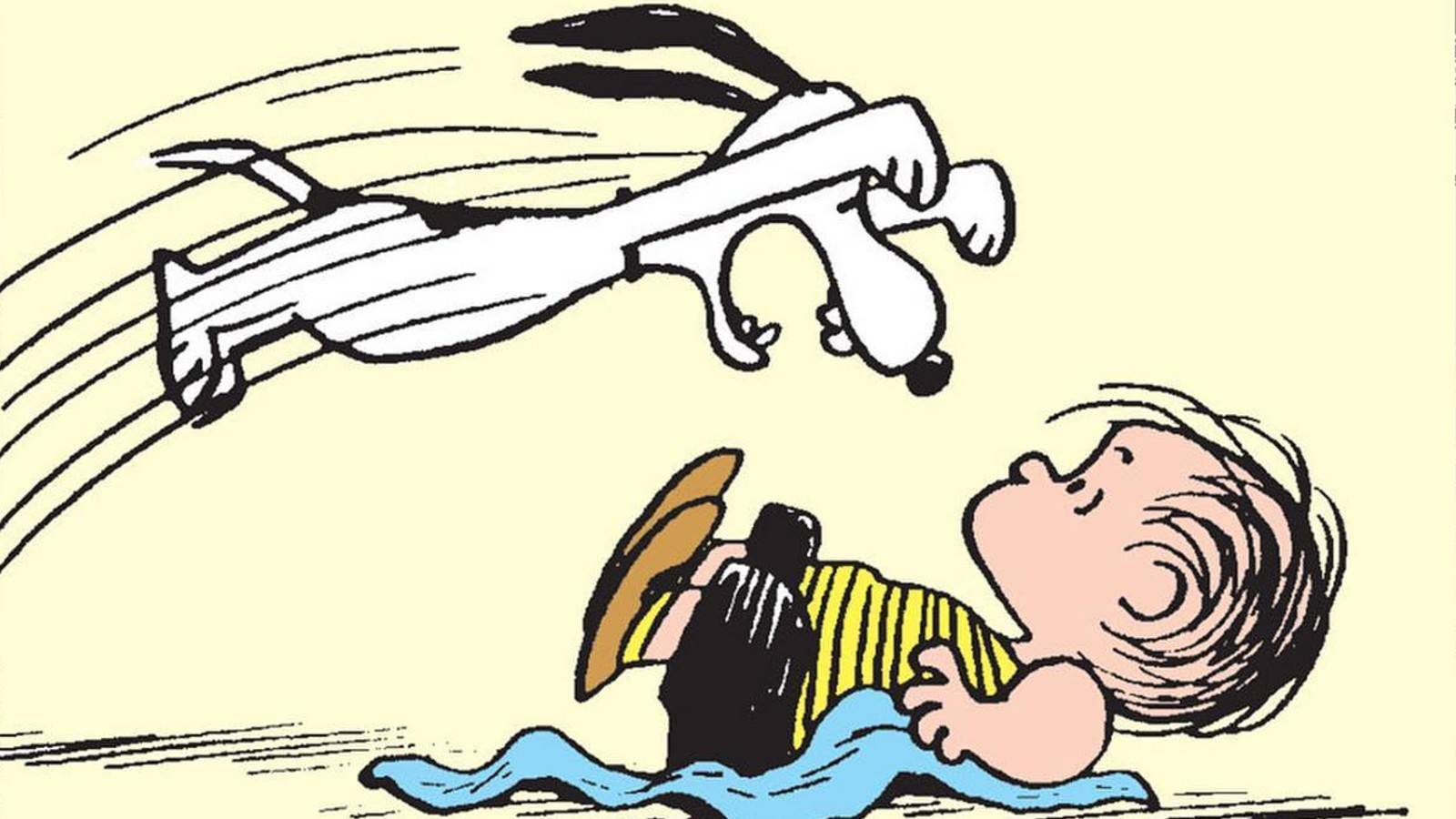
Published Sep 29, 2026, 6:00 PM EDT Derek is the Training Lead for ScreenRant. Before his current position, he spent 20 years working in games, TV, and film while also writing for several entertainment sites. Derek is also the co-host of three pop culture podcasts: Across the Omniverse, The Bad Batch, and Watch Men. Ever since Richard F. Outcault introduced the world to Hogan's Alley in 1895, newspaper comics have become one of the primary features in daily periodicals around the world. The characters, from Krazy Kat to Nancy, have made an impact on the culture, appearing in cartoons, on endless merchandise, and becoming institutions in themselves. The funnies help kids learn to read, give adults a break from the news of the day, and make the world just a little brighter. But these newspaper strips also change the way we speak, even if we don't know it. Not unlike how Shakespeare created words like "swagger" and, weirdly enough, "bedroom," creators of comic strips have also added words to the lexicon, giving us new ways to express ourselves. In some cases, the phrases or words have far outlived the comic strips they were created in, while others are forever connected to classic comics that will never be forgotten. But, whatever the case, these everyday words have their origins in ink and newsprint, proving beyond a doubt that the funnies are more than just an escape. That, when the comics are at their best, they can truly change the world, even if it is just one word at a time. Peanuts Made "Security Blanket" A Common Phrase The defining trait of Linus in Peanuts is his security blanket. The kid won't go anywhere without it and constantly has to be on the lookout for Snoopy, who desires the blanket over almost anything else, and his grandmother, who hates it. With Peanuts being one of the most popular comic strips of all time, it isn't surprising that the phrase was quickly picked up by the public, giving Schulz the honor of making it a popular term. Schulz didn't actually come up with "security blanket" himself. The term first came into use in the 1920s, and became somewhat common when the military used it to refer to actions they took for security purposes during World War II. This is likely where Schulz, who served in the 20th Armored Division during the war, first came across it. His inclusion of "security blanket" in the June 1, 1954, strip and subsequent uses later took the phrase out of the military and into everyday use. Popeye Introduced The World To Jeep A well-known automobile, Jeep got its name from the U.S. Army's general purpose — or GP — vehicles. "GP" would often be said as "jeep" because that just sounds cooler. But before the first GP was built, the phrase was already in use in E.C. Segar's Popeye comic strips. In the comics, Eugene the Jeep is a fourth dimensional creature that exists in our world. Not unlike the car, Eugene has powers that make him something of a general purpose being who can teleport, phase through walls, and always tells the truth. But, as a being from another dimension, his ability to speak is limited, and he only says "jeep." While the connection to the vehicle is limited, there's no doubting that people first came to know the word from Segar's popular comic. Milquetoast Came From An All But Forgotten Newspaper Strip The term milquetoast has come to be a way to describe someone who is meek or timid. The common belief is that the word is based on the very bland and undesired food milk toast, which is, as the name suggests, milk and bread put into a pan and toasted up together. And while that is partly true, the word itself comes from the mostly forgotten comic strip The Timid Soul by H. T. Webster. Webster's strip, which ran from 1924 to 1953, focused on the life of Casper Milquetoast, who Webster described as "the man who speaks softly and gets hit with a big stick." Webster chose to name his character after the rather unappealing sounding breakfast food specifically because it is known for its lack of flavor, but changed the spelling to make it look more like an actual last name. And while The Timid Soul is primarily remembered by comic strip historians, the phrase will never disappear from common use. Newlywed Was A Family Name There are some words that are so obvious, it seems impossible to believe they haven't always existed. But, not unlike Charles Dickens coming up with "doormat," there are many words that were created much closer to today than we sometimes realize. One perfect example is "newlywed," which seems like such an obvious term it is hard to believe it didn't exist until 1904, when George McManus' strip The Newlyweds was first published in New York World. The strip about a newly married couple named, if you haven't guessed it, the Newlyweds were popular, and became more popular when their child, Snookums, was born three years into the run, changing the strip's name to The Newlyweds and Their Baby. Along with creating the term, McManus' strip was the first comic to be collected into a hardcover compilation that included glossy paper and color printing, which means if you own any high-end graphic novels or comic trades, he helped make that possible. One Popeye Villain Introduced A Term To Landlubbers Sailors have their own language that, to anyone who doesn't spend their days on the seven seas, can be hard to understand. One word that made its way off the boats and into common parlance is "goon." In the 1800s, sailors would use the term to refer to albatrosses, a big, clumsy seabird that will supposedly lead to bad luck for anyone who kills one. When looking to introduce a new villain in his Popeye strips, E.C. Segar needed a word that would fit a group of people who were big, lumbering galoots that could be both a foe of Popeye but also quite lovable. He landed on "Goons" and, mainly through Alice the Goon, made the sailor word into a popular term to refer to big, clumsy people. The way "goon" is used has changed over the years, but Segar was the one who took it out of the sea and placed it on land. The Far Side Named A Part Of A Dinosaur With Gary Larson's ability to mix science with humor, it shouldn't come as a surprise that Far Side creator has made his mark in both the newspaper funnies and the science community. Along with having his name attached to a few insects and arthropods, Larson has the honor of naming a part of the stegosaurus. On May 27, 1982, Far Side featured a classic single-panel comic showing a group of cavemen sitting for a lecture, with the teacher pointing to the spikes on the tail of a stegosaurus, saying: "Now, this end is called the thagomizer... after the late Thag Simmons." The dearly departed Thag Simmons, clearly killed by the spikes, made his way into science books after paleontologist Kenneth Carpenter used it during a speech at the 1993 Society of Vertebrate Paleontology Annual Meeting. Paleontologists around the world have continued to call the spikes "thagomziers" ever since.
6 Popular Phrases Created By Classic Comic Strips
Full Article
Original Source
Read the full article at Screenrant →KhanList aggregates and links to publicly available news content. We do not host full articles from third-party sources. Always verify important information with original sources.