
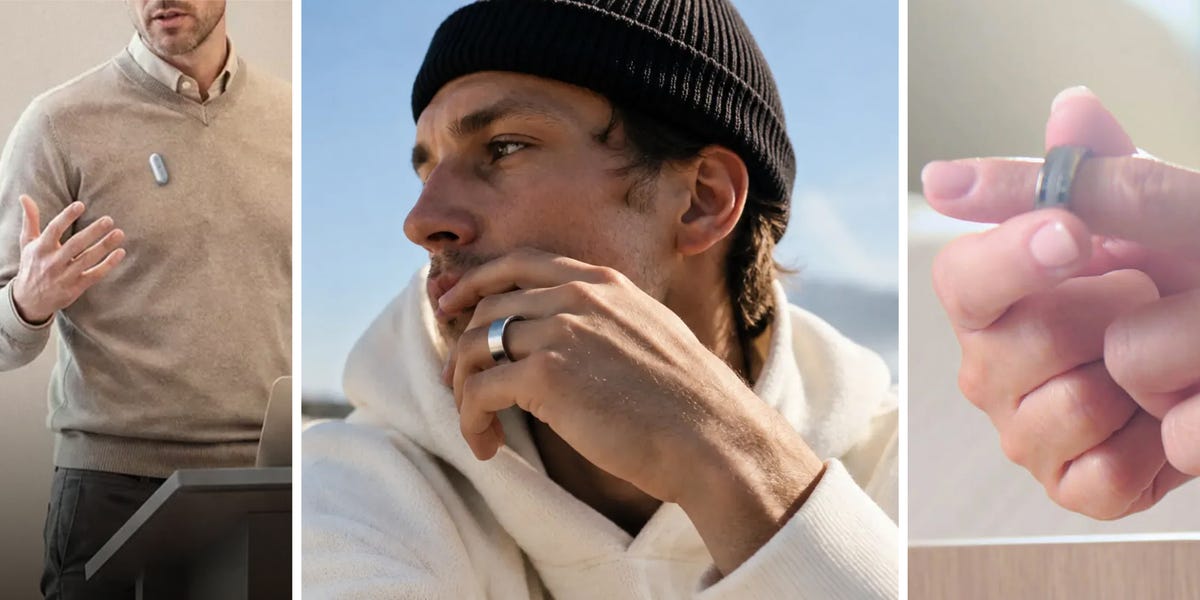
Every product was carefully curated by an Esquire editor. We may earn a commission from these links. Here’s how we test products and why you should trust us.Plaud/Plaud/Pulse/Signal RingIf you have one of many medical conditions (I genuinely do) that requires you to monitor your blood pressure you know how annoying those cuffs can get. Hilo suggests a better solution; Hilo Core is dedicated to providing users with insights into their blood pressure over time. As a result, the system is a bit more complicated than just a single wearable with an app. That’s the main part, but the FDA-cleared blood pressure cuff is the third part of the equation. The three aspects of the Hilo work in tandem to give accurate, consistent blood pressure readings with as little invasiveness as possible.To start, you need to use the cuff to take baseline readings for a few days but after that you should only have to use the cuff once per month to calibrate your readings. After that, you can rely on the Hilo Band itself for accurate and consistent readings thanks to its advanced optical sensors. All of that is viewable in graphs and charts that put your hourly, daily, and weekly readings into a greater context.Hilo isn’t the only company making wearables that are trying to replace chunky old-fashioned blood pressure cuffs. And unlike Hilo, Signal even does it without needing any kind of cuff at any point. All you need is the single Signal ring, and no, there’s no subscription to pay.Compared to an Oura ring and other similar watches and bands, the Signal Ring uses more advanced sensors to capture your systolic and diastolic readings to display your blood pressure in real time. It’s not measuring general cardiovascular strain or anything vague like that, it’s actually measuring blood pressure. And like with the Hilo, same situation; you can view everything on the app.It’s worth noting the device itself is not yet FDA cleared (and neither is the Hilo Band to be clear). A 451-person study the company commissioned did meet the requirements of ISO 81060-2, the international accuracy standard for non-invasive blood pressure devices.Advertisement - Continue Reading BelowThis isn’t a watch or ring, but it definitely works best as a wearable. Plaud makes AI powered audio recorders that can also automatically transcribe everything for you. As a writer and editor, this is somewhere AI could have saved me time in my intern days.The NotePin S is the size of a lapel microphone and clips right on to your shirt just like one too. At least that’s my favorite way to wear it—feels professional. You can wear it like a necklace or in a wrist band too, all options that are possible with attachments that come in the box.I’ve written about vagus nerve stimulators before. It’s an underwritten trend, and the mindfulness tech that’s been coming out over the past year or two has been embracing it. Essentially, the vagus nerve runs from the brainstem all the way down to, really, every other major organ in your body. vagus nerve stimulation devices send electrical signals that can supposedly fix many ailments. In my experience, they are great for relaxation and can help with anxiety and stress relief. But really, it’s meant to aid your parasympathetic nervous system. This impacts your digestion, and is also the source of your “fight or flight” response.Like other handheld devices I’ve used, you have to apply a layer of electricity conducting gel before a session with the Pulsetto. After that, put it on (it’s adjustable to any neck size) and let the electrodes work their magic. It’s certainly a well-built, futuristic feeling piece of tech, but as with any of these actual results may vary.Advertisement - Continue Reading BelowPulse takes a different approach to smart rings. It’s not about becoming the best version of yourself by optimizing your sleep, fitness, and recovery every second of the day. Instead, this is a ring that senses your stress levels throughout the day and gives you vibrations (pulses) when you might, based on your vitals, need a breather. Be it meditation or just a minute away to get your composure, sometimes taking this time can be the difference between turning a bad day around and having it go worse.Like the Pulsetto device, Sona is making a vagus nerve stimulator. This one goes on your ear like a single earbud. From there it sends stimulating signals to your vagus nerve, no goop required. Once you’ve onboarded the device and set up your protocol, the promise is that the AI is always adapting to you and your body’s rhythms.Sona’s focuses are stress relief and better sleep. Yes, you are supposed to sleep with it on. Full disclosure, I can’t say I’ve tried this one and for nearly $1,000 I don’t want to recommend it wholeheartedly without hands-on time. But the promise is... well promising, compared to other similar devices out there, even if the price makes it currently unattainable for most.
6 Pieces of Wearable Tech That Solve Real-World Problems
Full Article
Original Source
Read the full article at Esquire →KhanList aggregates and links to publicly available news content. We do not host full articles from third-party sources. Always verify important information with original sources.