
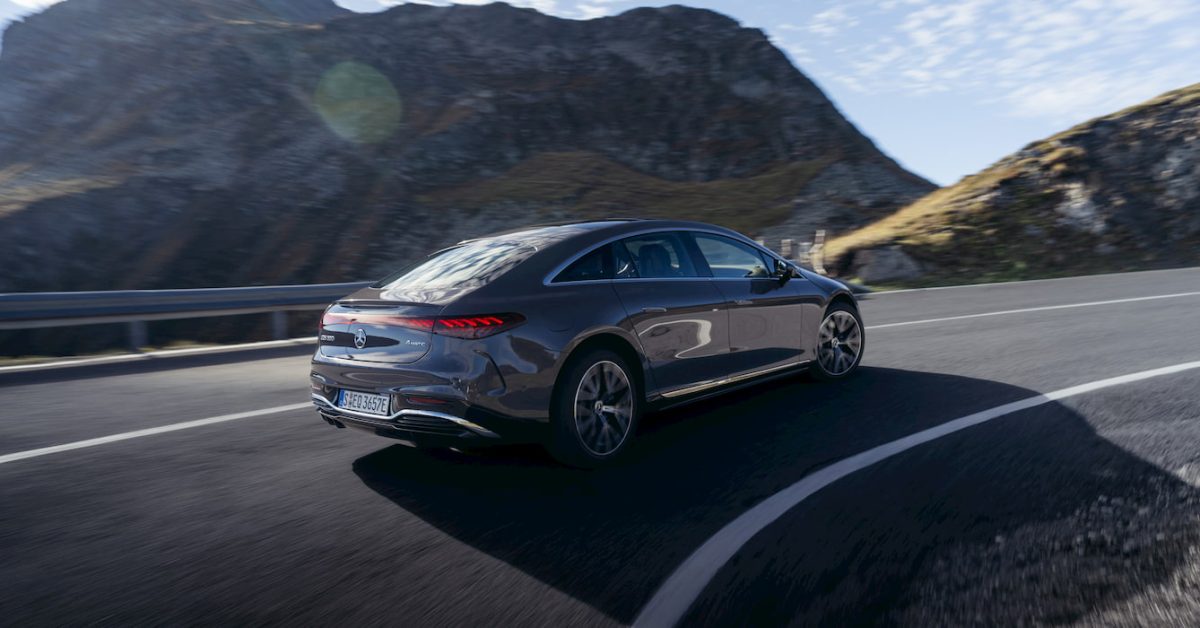
The new Mercedes-Benz EQS 450+ covered 539 miles without stopping to charge, making range anxiety look like a thing of the past. Mercedes EQS beats EPA range in real-world test Mercedes-Benz overhauled the EQS electric sedan, including a bigger battery and an 800V electrical architecture. The 2027 Mercedes-Benz EQS 450+ uses a 122 kWh battery that provides an EPA-estimated range of up to 467 miles. While that’s already impressive, the electric sedan will likely go even farther in everyday driving conditions. During Edmunds recent EV Range Test, the 2027 Mercedes EQS 450+ drove a whopping 539 miles without stopping to charge. The EQS beat its own EPA estimate by 72 miles and is now the longest-range electric sedan Edmunds has ever tested, beating the Lucid Air, the first EV to break the 500-mile mark. The only EV that has it beat is the Cadillac Escalade IQ, which managed 558 miles from its massive 205 kWh battery. Mercedes-Benz EQS 580 4MATIC (Source: Mercedes-Benz) During the test, the 2027 Mercedes EQS 450+ was also more efficient than its official numbers suggest. The new EQS used 29.6 kWh per 100 miles, beating its EPA estimate of 28 kWh per 100 miles. In comparison, the 2025 Mercedes EQS 450+ covered 464 miles and used 34 kWh per 100 miles during the same test, so the improvements are considerable. Edmunds observed a peak charging rate of 350 kW, in line with Mercedes’ estimates, while it sustained an average of 222 kW throughout the session. Mercedes-Benz EQS 580 4MATIC (Source: Mercedes-Benz) Both beat the older EQS, which reached a peak charge rate of 208 kW and sustained an average of 175 kW. The new Mercedes EQS 450+ added 825 miles of range in an hour, and 100 miles in just over 7 minutes, nearly twice the speed of the 2025MY. The Edmunds EV Range Test is designed to provide a more accurate estimate of an EV’s range in everyday driving conditions. It includes 60% city and 40% highway driving with an average speed of 40 mph. The vehicle stays within 5 mph of the posted speed limit, and the climate control is set to auto at 72 degrees. Electrek’s Take How much is too much? 539 miles on a single charge is impressive, but do you need it? In a recent “nationally representative” survey, BMW found that Americans want more EV range than they actually need. The study showed that 73% consider 25, 50, or 75 miles enough to cover their daily driving. However, 42% said they would require at least 300 miles of range before they would consider an EV. If you have access to a home charger, nothing beats waking up with a full charge every day. Meanwhile, public charging continues to improve, giving EV drivers more reliable options on longer trips. Faster charging also helps. Another 53% said they would be more likely to consider an EV if it could add about 150 miles of range in around 10 minutes. In the same Edmunds EV Range Test last week, the new 2027 BMW iX3 50 xDrive drove 436 miles on a single charge, exceeding its EPA estimate of 392 miles by 44 miles. It also used 28.3 kWh per 100 miles during the test, beating its official EPA estimate of 32 kWh per 100 miles. The new 2027 Volvo EX60 drove 352 miles while the 2027 Mercedes-Benz GLC Electric covered 392 miles during the same test. One thing is certain: electric vehicles are becoming more efficient, enabling longer driving ranges and faster charging times. As battery tech advances, EVs will drive farther and charge faster, while safety and performance will continue to improve. How much driving range would you consider enough for your daily drive? What about for the week? Let us know in the comments below. FTC: We use income earning auto affiliate links. More.
The Mercedes-Benz EQS drove 539 miles on a single charge. Still worried about range?
Full Article
Original Source
Read the full article at Electrek →KhanList aggregates and links to publicly available news content. We do not host full articles from third-party sources. Always verify important information with original sources.