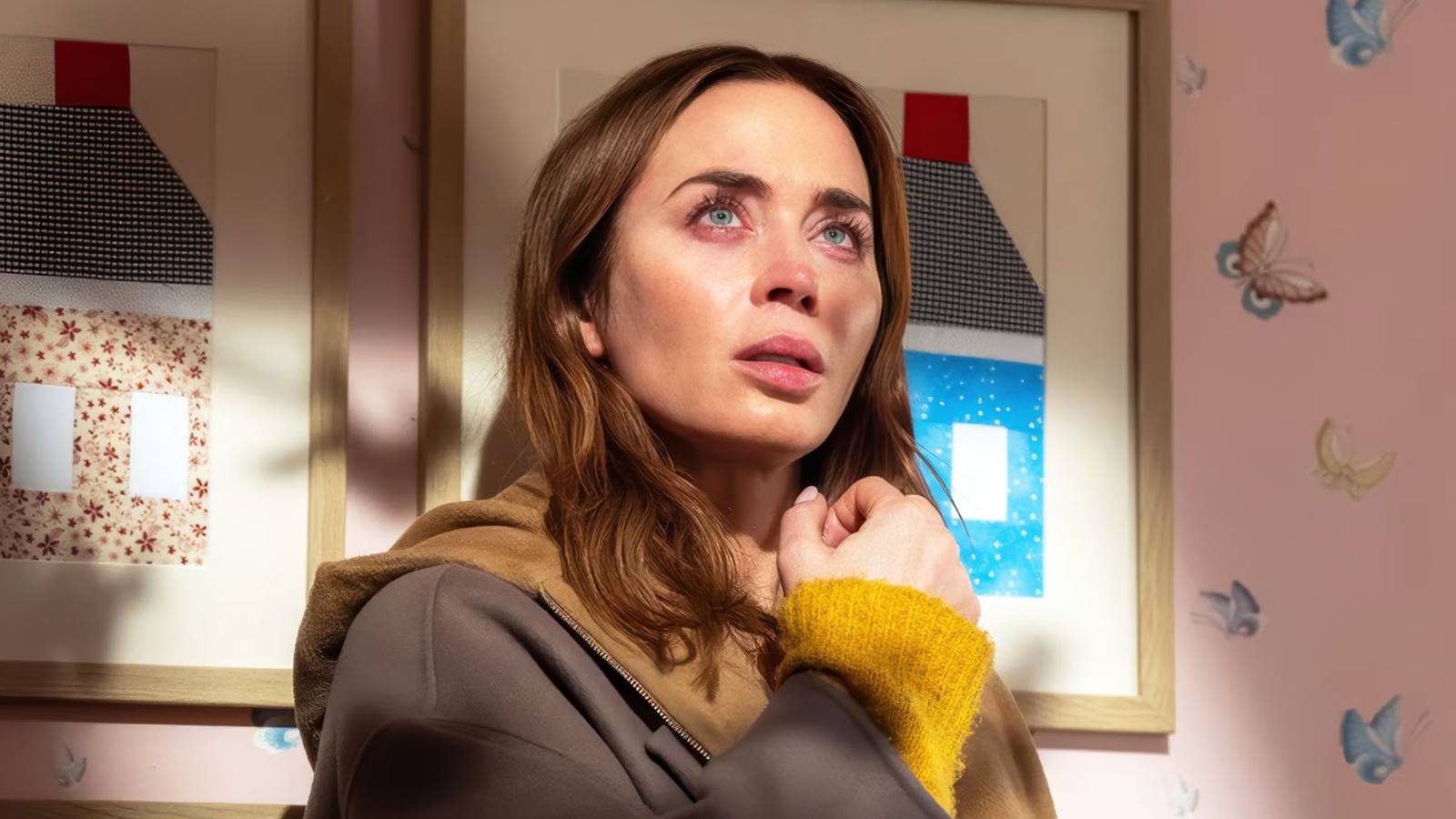
Image via Universal Pictures Published Jul 29, 2026, 6:05 AM EDT Sign in to your Collider account Recent thrillers have found fresh ways to make ordinary situations feel unsafe again. A dinner date or one buried government secret can create more tension than another giant action set piece when the writing keeps tightening the problem instead of searching for distractions. And that’s amazing. These six films, however, understand more than that. They understand momentum, but speed is only part of it. Each one has a clear emotional conflict pushing underneath the suspense. Control, humiliation, trust, survival, fanaticism, and the need to expose the truth keep the characters moving even when running would be easier. These are 6 recent thrillers that are modern and hook just as well as perhaps a wife-disappearing in Gone Girl or daughter being kidnapped in Taken. 6 'Drop' (2025) Image via Universal Pictures In Drop, Violet (Meghann Fahy) agrees to her first date in years and leaves her young son at home, hoping dinner with the charming Henry (Brandon Sklenar) might help her reclaim a part of life buried under grief and fear. Then anonymous DigiDrop messages begin appearing on her phone. The sender can see her, knows where her family lives, and orders her to kill Henry before the night ends. Christopher Landon keeps nearly everything inside one restaurant, turning the other diners, waiters, security cameras, and passing glances into possible clues. Meghann Fahy gives Violet enough nervous energy to keep suspicion moving around the room. Henry could be involved. The overeager waiter could be hiding something. A stranger touching a phone suddenly looks dangerous. Even Violet’s own reactions threaten to expose her. The movie keeps the technology simple, which helps the fear stay immediate. Anyone nearby can send the message, and every delay puts her son closer to death. Drop takes the familiar anxiety of checking a phone during dinner and turns every vibration into a threat. 5 'Companion' (2025) Image via Warner Bros. Iris (Sophie Thatcher) believes she met Josh (Jack Quaid) in a grocery store, fell in love, and joined him for a weekend with friends at a remote lakeside house. Her memory of that romance is part of the programming. She is a companion robot, Josh owns her, and her personality has been adjusted to suit his preferences. Companion reveals this early enough to let the real story begin. Iris has to understand that the tenderness defining her life came from settings selected by someone else. Sophie Thatcher finds the emotional truth inside a very sharp sci-fi joke. Iris can access facts about herself faster than she can process the betrayal behind them. Josh lowers her intelligence, controls her aggression, and expects devotion to continue after she learns the truth. Jack Quaid keeps his entitlement casual, which makes him far uglier than a theatrical villain. The violence gets nasty and the humor stays dark, yet the most satisfying development in this film is Iris discovering that choice can be learned. 4 'Black Bag' (2025) Image via Focus Features Black Bag follows George Woodhouse (Michael Fassbender) as he invites five suspected traitors to dinner and serves them food designed to loosen their tongues. Four are colleagues. The fifth is Kathryn (Cate Blanchett), his wife and one of Britain’s most capable intelligence officers. A dangerous cyberweapon called Severus has been compromised, and George has one week to identify the person responsible. The investigation would already be difficult without a marriage where both people are trained to lie for a living. Steven Soderbergh trusts conversation more than explosions. Fassbender barely raises his voice as George, since close observation is his real weapon. Kathryn can answer a question, dodge it, and make the person asking feel foolish within a few seconds. David Koepp’s script keeps professional secrets and private betrayals tangled together, so a hidden affair can look as damaging as espionage until the wider picture emerges. The film is sleek, funny, and extremely alert to how intimacy changes when both partners know every trick of deception. Collider Exclusive · Oscar Best Picture Quiz Which Oscar Best PictureIs Your Perfect Movie? Parasite · Everything Everywhere · Oppenheimer · Birdman · No Country Five Oscar Best Picture winners. Five completely different visions of what cinema can be — and what it can do to you. One of them is the film that was made for the way your mind works. Ten questions will figure out which one. 🪜Parasite 🌀Everything Everywhere ☢️Oppenheimer 🐦Birdman 🪙No Country for Old Men FIND YOUR FILM → 01 What kind of film experience do you actually want? The best movies don't just entertain — they leave something behind. ASomething that pulls the rug out — that makes me think I'm watching one kind of film and then reveals I'm watching another entirely. BSomething overwhelming — funny, sad, absurd, and genuinely moving, all at once. CSomething grand and weighty — a film that makes me feel the full scale of what I'm watching. DSomething formally daring — a film that pushes what cinema can even do. ESomething lean and relentless — pure tension with no wasted frame. NEXT QUESTION → 02 Which idea grabs you most in a film? Great films are driven by a central obsession. What's yours? AClass, inequality, and what people are willing to do when desperation meets opportunity. BIdentity, family, and the chaos of trying to hold your life together when everything is falling apart. CGenius, moral responsibility, and the catastrophic weight of a decision you can never take back. DEgo, legacy, and the terror of becoming irrelevant while you're still alive to watch it happen. EEvil, chance, and whether moral order actually exists or if we just tell ourselves it does. NEXT QUESTION → 03 How do you like your story told? Form is content. The way a story is shaped changes what it means. AGenre-twisting — I want it to start in one lane and migrate into something completely different. BMaximalist and genre-blending — comedy, action, drama, sci-fi, all in one ride. CEpic and non-linear — cutting between timelines, building a mosaic of cause and consequence. DA single unbroken flow — I want to feel like I'm living it in real time, no cuts to safety. ESpare and precise — every scene doing exactly what it needs to do and nothing more. NEXT QUESTION → 04 What makes a truly great antagonist? The opposition defines the protagonist. What kind of opposition fascinates you? AA system — invisible, structural, and almost impossible to fight because it has no single face. BThe self — the ways we sabotage, abandon, and fail the people we love most. CHistory — the unstoppable momentum of events that no single person can stop or redirect. DThe industry — the machinery of culture that chews up talent and spits out irrelevance. EPure, implacable evil — a force so certain of itself it becomes almost philosophical. NEXT QUESTION → 05 What do you want from a film's ending? The final note is the one that lingers. What do you want it to sound like? AShock and inevitability — a conclusion that recontextualises everything that came before it. BEarned emotion — I want to cry, laugh, and feel genuinely hopeful, even if the world is a mess. CDevastation and grandeur — an ending that makes me sit in silence for a few minutes after. DAmbiguity — something that leaves enough open that I'm still thinking about it days later. EBleakness — an honest refusal to pretend the world is tidier than it actually is. NEXT QUESTION → 06 Which setting pulls you in most? Where a film takes place shapes everything — mood, stakes, what's even possible. AA gleaming modern city with a hidden underside — beauty masking rot, wealth masking desperation. BA collapsing suburban life that opens onto something infinite — the multiverse of a single ordinary person. CThe corridors of power and science at a world-historical turning point — where decisions echo for decades. DThe grimy, alive chaos of New York and Hollywood — fame as both destination and trap. EVast, indifferent landscape — desert and highway where violence arrives without warning or reason. NEXT QUESTION → 07 What cinematic craft impresses you most? Every great film has a signature — a technical or artistic element that makes it unmistakable. AProduction design and mise-en-scène — every frame composed to carry meaning beneath the surface. BEditing and tonal control — the ability to move between registers without losing the audience. CScore and sound design — music that becomes inseparable from the dread and awe of what you're watching. DCinematography as performance — the camera not recording events but participating in them. ESilence and restraint — what's left unsaid and unshown doing more work than any dialogue could. NEXT QUESTION → 08 What kind of main character do you root for? The protagonist is the lens. Who you choose to follow says something about you. ASomeone smart and resourceful who makes increasingly dangerous decisions under pressure. BSomeone overwhelmed and ordinary who turns out to be capable of something extraordinary. CA brilliant, tortured figure whose gifts and flaws are inseparable from each other. DA self-destructive artist whose ego is both their superpower and their undoing. EA quiet, principled person trying to make sense of a world that has stopped making sense. NEXT QUESTION → 09 How do you feel about a film that takes its time? Pace is a choice. Some films sprint; others let tension accumulate slowly, deliberately. AI love a slow build when I know the payoff is going to be seismic — patience for a devastating reveal. BGive me relentless momentum — I want to feel breathless and emotionally spent by the end. CEpic runtime doesn't scare me — if the material demands three hours, give me three hours. DI want it to feel propulsive even when nothing is technically happening — restless energy throughout. EDeliberate and unhurried — I want dread to accumulate in the spaces between the action. NEXT QUESTION → 10 What do you want to feel walking out of the cinema? The best films leave a mark. What kind of mark do you want? AUnsettled — like I've just seen something I can't fully explain but can't stop thinking about. BMoved and energised — like the film reminded me what actually matters and gave me something to hold onto. CHumbled — like I've been in the presence of something genuinely important and overwhelming. DExhilarated — like I've just seen cinema doing something it's never quite done before. EHaunted — like a cold, quiet dread that stays with me for days. REVEAL MY FILM → The Academy Has Decided Your Perfect Film Is…Your answers have pointed to one Oscar Best Picture winner above all others. This is the film that was made for the way your mind works. ParasiteYou are drawn to films that operate on multiple levels simultaneously — that begin in one genre and quietly, brilliantly migrate into another. Bong Joon-ho's Parasite is a film about class, desire, and the architecture of inequality that manages to be darkly funny, deeply suspenseful, and genuinely shocking across a single extraordinary running time. Your instinct is for cinema that hides its true intentions until the moment it's ready to reveal them. Parasite is exactly that — a film that rewards close attention and punishes assumptions, right up to its devastating final image. Everything Everywhere All at OnceYou want it all — and this film gives you all of it. The Daniels' Everything Everywhere All at Once is one of the most maximalist films ever made: action comedy, multiverse sci-fi, family drama, existential crisis, and a genuinely earned emotional core that sneaks up on you amid the chaos. You are someone who responds to ambition, who doesn't want cinema to choose between being entertaining and being meaningful. This film refuses that choice entirely. It is overwhelming by design, and its overwhelming nature is precisely the point — because the feeling of being crushed by infinite possibility is exactly what it's about. OppenheimerYou are drawn to cinema on a grand scale — films that understand history not as a backdrop but as a force, and that place their characters inside that force and watch what happens. Christopher Nolan's Oppenheimer is a film about the terrifying gap between what we can do and what we should do, told with the full weight of one of the most consequential moments in human history behind it. You want your films to feel important without feeling self-important — to earn their ambition through sheer craft and the gravity of their subject. Oppenheimer does exactly that. It is enormous, complicated, and refuses easy comfort. BirdmanYou are drawn to films that foreground their own construction — that make the how of the filmmaking part of the what it's about. Alejandro González Iñárritu's Birdman, shot to appear as a single continuous take, is cinema examining itself through the cracked mirror of a fading actor's ego. You respond to formal daring, to the feeling that a film is doing something that probably shouldn't be possible. Michael Keaton's performance and Emmanuel Lubezki's restless camera create something genuinely unlike anything else — a film that is simultaneously about creativity, relevance, self-destruction, and the impossibility of ever truly knowing if your work means anything at all. No Country for Old MenYou are drawn to cinema that trusts silence, that refuses to explain itself, and that treats dread as a form of meaning. The Coen Brothers' No Country for Old Men is a film about the arrival of a new kind of evil — implacable, arbitrary, and utterly indifferent to the moral frameworks we use to make sense of the world. It is one of the most formally controlled films ever made, and its controlled restraint is what makes it so terrifying. You want your films to haunt you, not comfort you. You are not interested in resolution if resolution would be dishonest. No Country for Old Men is honest in a way that most cinema never dares to be. ↻ RETAKE THE QUIZ 3 'Send Help' (2026) Image via 20th Century Studios Send Help follows Linda Liddle (Rachel McAdams) and she has the skills, experience, and work ethic to earn a senior position. Her new boss Bradley (Dylan O’Brien) sees an awkward employee he can dismiss in front of everyone. A plane crash strands them on an island and destroys that office hierarchy within minutes. Linda knows how to find food, build shelter, treat injuries, and stay alive. Bradley has money, confidence, a badly damaged leg, and no practical value once the corporate title disappears. Rachel McAdams goes all in on Linda’s cheerful intensity, buried resentment, and growing enjoyment of control. Dylan O’Brien gives Bradley enough insecurity to show why he keeps reaching for power even while depending on the person he humiliated. Sam Raimi turns the island into a filthy workplace revenge fantasy full of gore, slapstick, suspicion, and sudden changes in advantage. Every time the relationship seems settled, one of them reveals another lie or makes a worse decision. Linda spent years being ignored in rooms where she was the smartest person present but on the island, Bradley finally has to listen. 2 '28 Years Later: The Bone Temple' (2026) Image via Sony Pictures Releasing 28 Years Later: The Bone Temple follows Spike (Alfie Williams) escaping one nightmare and walking directly into another. After leaving his family, the boy falls in with the Jimmys, a violent group led by Sir Jimmy Crystal (Jack O’Connell), whose theatrical behavior barely hides the cruelty holding his followers together. Elsewhere, Dr. Ian Kelson (Ralph Fiennes) continues studying the infected and develops an extraordinary connection with Samson (Chi Lewis-Parry), an Alpha whose behavior challenges everything survivors believe about the Rage Virus. The Bone Installment pushes the franchise toward cult horror, dark comedy, and a surprisingly moving debate about whether humanity can return after extreme violence. Jimmy Crystal is frightening. He never loses the childish need underneath the authority. Ralph Fiennes brings warmth and curiosity to Kelson, especially during his strange friendship with Samson. The gore is savage, though the film’s strongest confrontations are about belief. Jimmy turns suffering into doctrine. Kelson keeps looking for evidence that healing remains possible. In this ruined Britain, the scientist living among bones has more faith in life than the healthy people building religions around death. 1 'Disclosure Day' (2026) Image via Universal Pictures Steven Spielberg returns to extraterrestrial contact in Disclosure Day through a world where proof can be copied, buried, leaked, denied, and turned into a global crisis within hours. Daniel Kellner (Josh O’Connor) is a cybersecurity expert trying to expose suppressed evidence of alien life. Margaret Fairchild (Emily Blunt) is a meteorologist who begins speaking languages she never learned and discovers that her connection to the mystery goes back much further than she knew. Wardex, led by Noah Scanlon (Colin Firth), on the other hand, wants the information contained before the public can see it. Josh O’Connor brings nervous urgency to Daniel, while Emily Blunt handles Margaret’s fear and growing certainty without losing the ordinary person underneath the phenomenon. Spielberg and David Koepp build the chase around a larger question. What happens after humanity receives undeniable proof that it has never been alone? The train set piece has the old Spielberg command of movement and geography, and John Williams gives the revelation scale without drowning out the people inside it. Disclosure Day reaches for awe, paranoia, political panic, and empathy in the same breath. Its last instruction is simple. Listen.
6 New Thriller Movies That Are Perfect From Start to Finish
Full Article
Original Source
Read the full article at Collider →KhanList aggregates and links to publicly available news content. We do not host full articles from third-party sources. Always verify important information with original sources.