
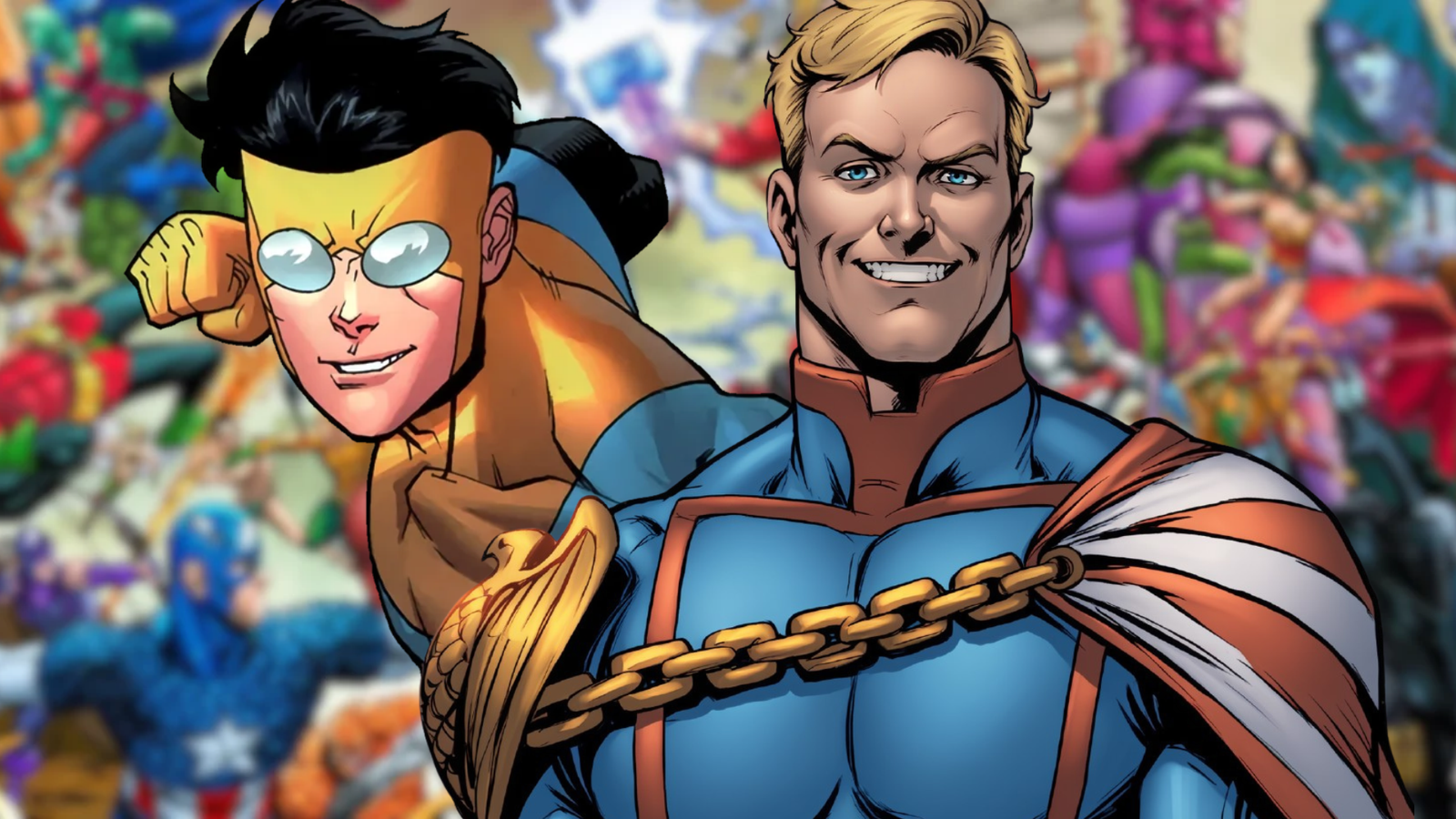
When thinking of superhero comics, many would likely first think of classic characters from major publishers like DC and Marvel, who have created some of the most memorable and iconic heroes ever created. However, there are countless other publishers that have introduced other superhero stories that evoke the same thrill as DC or Marvel’s most popular stories, with some even challenging expectations and traditional tropes entirely. Outside the Big Two, independent and creator-owned comics have given writers and artists more freedom to experiment with stories and characters, creating comics that are bold and unique. Without decades of established continuity shaping most major choices, these superhero comics have been able to effectively create new worlds with radically different approaches to what heroism looks like and all the responsibilities that come with it. The Boys The Boys centers on Billy Butcher, the leader of a CIA-backed team that is tasked with monitoring and neutralizing corrupt superheroes who take advantage of their status as celebrities to indulge in their own selfish desires. Alongside Hughie Campbell, called “Wee Hughie” by Billy, and several other dangerous allies, the team takes down various corrupt superhero teams as tensions gradually build between Billy and Homelander, the leader of the premier team, The Seven. The comic was created by writer Garth Ennis and artist Darick Robertson and was originally published under WildStorm, an imprint of DC Comics, in October 2006. However, after six issues, the comic was canceled before being picked up by Dynamite Entertainment in 2007, allowing the comic to continue its run for a total of 72 issues. What makes The Boys stand out among other superhero comics is its willingness to explore what happens when superpowers become tangled with corporate influence and celebrity culture. Rather than just making superheroes more inherently violent or immoral, The Boys creates a world where heroism itself is commodified, allowing the story to deconstruct traditional tropes and share a less idealistic portrayal of heroes than many DC and Marvel stories. The Umbrella Academy The Umbrella Academy follows seven adopted siblings who were raised from childhood to become superheroes by Sir Reginald Hargreeves. Following a tragic death, the dysfunctional family has gone their separate ways until their adopted father’s death brings them back together just as an apocalyptic threat emerges. Their powers matter, and they must unite to save the world, but their complicated history also plays a major role and serves as the story's emotional backbone. Among superhero comics, The Umbrella Academy is arguably the most unconventional and imaginative in the best possible way. The series was created by Gerard Way, best known as the lead singer for My Chemical Romance, and artist Gabriel Bá. The Umbrella Academy was published in September 2007 by Dark Horse Comics and stands out for its surreal, absurdist nature and style. The first volume, Apocalypse Suite, also won an Eisner Award for Best Limited Series. With dysfunctional family dynamics, bizarre threats, time travel, and a highly distinctive style, The Umbrella Academy is unlike most other superhero narratives. The story is eccentric and keeps readers guessing, all while delivering a rewarding experience filled with surprising emotional depth beneath the over-the-top absurdity. Among superhero comics, The Umbrella Academy is arguably the most unconventional and imaginative in the best possible way. Irredeemable Irredeemable introduces the Plutonian, a powerful figure widely respected and seen by the public as the perfect hero. However, that all takes a turn after he completely snaps and turns against humanity, destroying entire cities and slaughtering millions in cold blood. His former teammates, a superhero group known as The Paradigm, try to figure out what happened as they look for a way to stop a being with seemingly unstoppable god-like power. Mark Waid created Irredeemable alongside artists Peter Krause and Diego Barreto, which was first published in April 2009 by Boom! Studios. The comic ran for 37 issues, gradually revealing the circumstances behind the Plutonian’s descent as the story jumps from the past to the present. Along with its spinoff series, Incorruptible, the storyline gives a complete exploration of a world where a superhero goes rogue. What makes Irredeemable stand out even more, however, is that the Paradigm already knows that the Plutonian is powerful enough to make conventional battle practically impossible, adding weight to the already bleak atmosphere. Paired with how the story doesn’t shy away from the dark realities of a broken-down savior while also sharing the tragedy of the Plutonian’s past, Irredeemable is a powerful, genre-defying story that readers can’t afford to miss. Radiant Black Radiant Black follows Nathan Burnett, a 30-year-old struggling writer whose stalled career and mounting debt force him back home. While spending time with an old friend, he comes across a mini black hole that bonds him with a cosmic artifact called the Radiant. With a newly acquired armored suit granting him extraordinary abilities, Nathan first tries to capitalize on it before facing villains and protecting the public. However, early on, he’s severely injured, with his friend, Marshall Ward, taking up the mantle of Radiant Black. The story was published by Image Comics starting in February 2021 and was created by Kyle Higgins and Marcelo Costa. It’s the flagship series of the publisher’s Massive-Verse, an interconnected superhero universe with shared villains and lore, including titles such as Rogue Sun and No/One, although each series is largely self-contained. Radiant Black stands out for its willingness to explore realistic financial burdens in ways that make the protagonists both relatable and grounded. The comic’s gorgeous, eye-catching art also enhances the reading experience, with Nathan and Marshall’s stories cementing it as a refreshing take on the genre that absolutely can’t be missed. Black Hammer Black Hammer follows a group of superheroes who become trapped in a timeless, rural town called Rockwood after saving the world from a devastating cosmic threat known as the Anti-God. With the death of Black Hammer and unable to leave or resume their former lives, the six remaining heroes settle into their new reality while hiding their true powers and identities. Created by Jeff Lemire and Dean Ormston, Black Hammer debuted through Dark Horse Comics in July 2016. The Eisner Award-winning series is known as a deconstruction as well as a homage to Golden, Silver, and Bronze Age superhero tropes and archetypes, while also incorporating sci-fi, mystery, drama, and horror elements. The comic deliberately uses these classic archetypes and tropes in order to explore how superheroes would react when all grandeur and purpose is stripped away. By forcing these heroes into a timeless rural world, they are forced to confront aging, isolation, loss, and grief in different ways. Arguably, these struggles become more harrowing than a supervillain due to how personal and internal the conflicts are. By exploring superheroes in a world where their powers and identities mean nothing, Black Hammer creates a story that taps into deep existential dread, questioning the true cost of heroism and whether it can exist without a war to fight. Invincible Invincible centers on Mark Grayson, an ordinary teenager whose life changes after he inherits superpowers like his father, Omni-Man, Earth’s most powerful superhero. As he develops his abilities and begins protecting the planet as Invincible, he soon finds out that his father’s origins and secrets are far from the idealistic, benevolent hero he thought him to be. This revelation forces Mark to reconsider his identity while taking on threats that gradually become more overwhelming. Published by Image Comics in January 2003, the series was created by Robert Kirkman and artists Cory Walker and Ryan Ottley. About halfway through its run, Invincible started publishing under Kirkman’s Skybound Entertainment and ran for a total of 144 issues, officially ending in 2018. The comic stands out most for how it deconstructs traditional tropes without shying away from realistic, devastating consequences. Mark’s development throughout the series is constantly shifting and evolving as he’s forced into these seemingly impossible situations. By letting the central hero make mistakes and face consequences, the story explores the cost of heroism in ways few traditional superhero narratives do. Due to this willingness to explore darker aspects of heroism and a superpowered universe,Invincible resonates with audiences on a deeper level and leaves a stronger impact, cementing its place as a must-read experience. comics
6 Incredible Superhero Comics That Aren't From DC or Marvel
Full Article
Original Source
Read the full article at Screenrant →KhanList aggregates and links to publicly available news content. We do not host full articles from third-party sources. Always verify important information with original sources.