
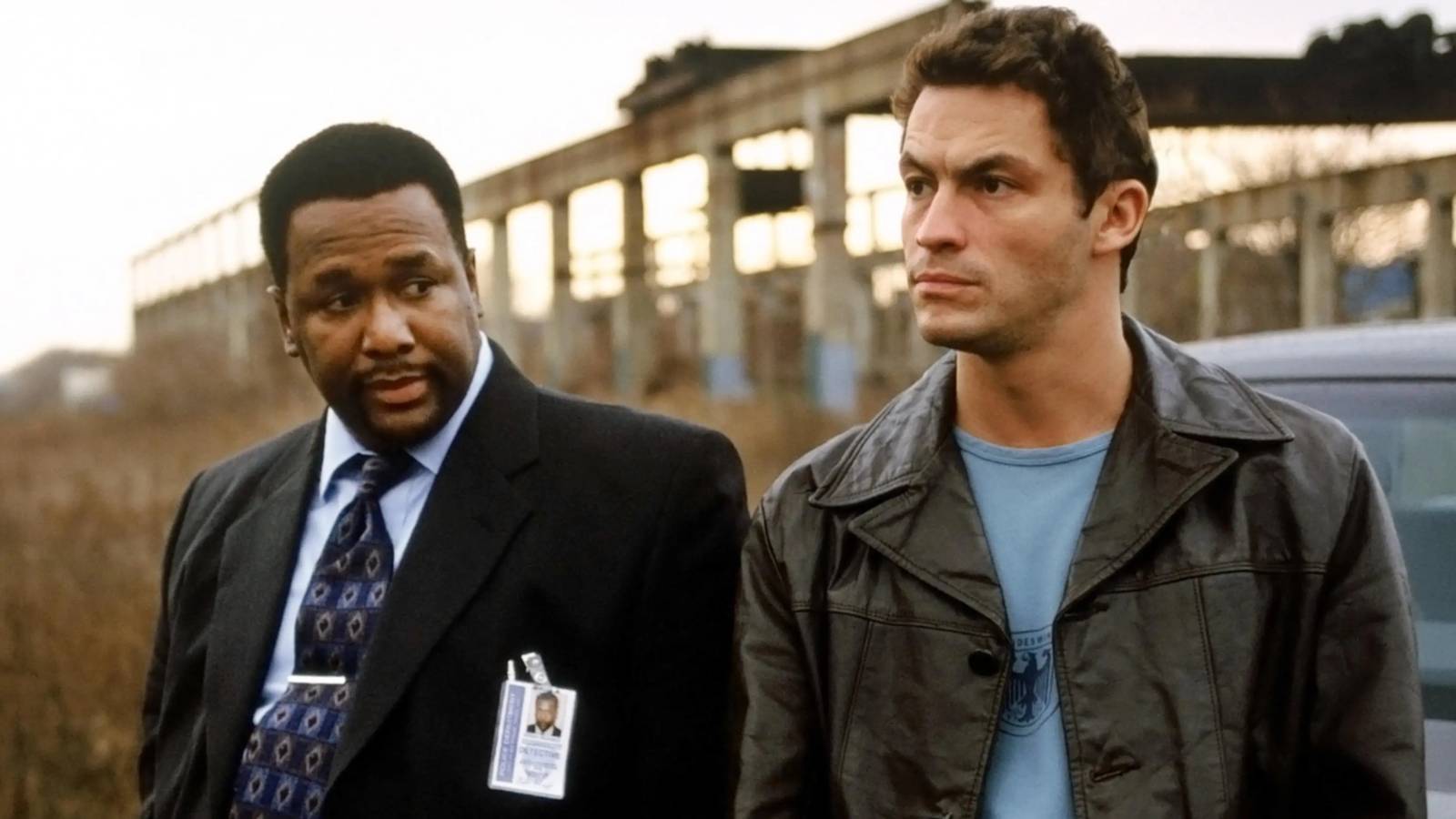
Image via HBO Max Published Sep 20, 2026, 9:22 PM EDT Ryan Heffernan is a Senior Writer at Collider. Storytelling has been one of his interests since an early age, with his appreciation for film and television becoming a particular interest of his during his teenage years. This passion saw Ryan graduate from the University of Canberra in 2020 with an Honours Degree in Film Production. In the years since, he has found freelance work as a videographer and editor in the Canberra region while also becoming entrenched in the city's film-making community. In addition to cinema and writing, Ryan's other major interest is sport, with him having a particular love for Australian Rules football, Formula 1, and cricket. He also has casual interests in reading, gaming, and history. Sign in to your Collider account Throughout the 21st century, HBO has been synonymous with television brilliance. The premium network was instrumental in pioneering the medium’s ascent to prestige entertainment in the late ‘90s and early 2000s, and it has remained at the forefront of groundbreaking excellence in the format for the better part of 30 years. However, making a great series is one thing, making a series that does not feature a single bad episode is another thing entirely. While even many of the best shows of all time—including some HBO productions—are prone to the occasional misfire, these six series never once erred. Including everything from long-running shows that define television drama at its absolute best to award-winning miniseries where every single episode is a work of perfection, these shows are HBO’s most consistently astounding series as well as some of the most acclaimed titles the medium has ever seen. 6 'Deadwood' (2004-2006) Image via HBO HBO has long been renowned for the enormity of its television productions, be it enrapturing fantasy worlds or dystopian sci-fi futures. The premium network’s litany of historical dramas is perhaps the greatest testament to this, and in this regard there is no series as brilliant as Deadwood. The gritty Western series combines a loose historical basis with an infectious sense of dramatic rawness as it delves into the lawlessness of the titular town in 1870s South Dakota, dissecting how order deteriorates and crime thrives amid a population boom as the masses seek to make their fortune in the town’s gold rush. The series has an uncanny ability to immerse viewers in the world it presents, a violent era of mud-soaked desperation and candle-lit sin. David Milch’s writing makes this unflinching atmosphere all the more intoxicating, not only with his rhythmic dialogue that runs like profanity-laden poetry, but with the depth and complexity of his characters and the callousness of their schemes as well. While the series was canceled prematurely at the end of its third season, Deadwood remains one of HBO’s most illustrious achievements, a masterpiece of hard-edged Western storytelling that never once lowers its standards across its 36-episode tenure. 5 'Chernobyl' (2019) Image via HBO It may not seem like a huge feat that a miniseries with just five chapters never produced a weak episode, but Chernobyl deserves acknowledgment on the basis that every single one of its episodes is nothing short of a masterpiece of small-screen drama. Exuding a piercing sense of stomach-churning tension and dread, it dramatizes the impact of the 1986 Chernobyl nuclear power plant disaster, exploring the immediate aftermath of panic and radiation poisoning, the strenuous efforts to contain the fallout, the Soviet Union leaders’ conniving to conceal the true scope of the catastrophe from the world, and the court hearing that saw the truth exposed. Excelling in everything from its detailed production design to its note-perfect performances, astonishing technical craft, and its narrative brilliance that combines the epic, nation-spanning grandeur of the story with a piercing sense of horror-like intensity, Chernobyl delivers five episodes of television perfection that few other series of any length have been able to match. The way it marries its historical context with a cautionary foreboding pertaining to political corruption in the modern day is a magnificent final touch, one that sees the miniseries elevated from being a stunning immersion in true events to an urgent drama that is profoundly timely. 4 'Band of Brothers' (2001) Image via HBO Another miniseries that is defined by its ceaseless perfection, Band of Brothers has been the unsurpassed pinnacle of the format for 25 years. The awe-inspiring WWII drama follows the experiences of Easy Company, an American Airborne division who fight on the front lines in the European Theater of the conflict. Across its 10-episode run, the limited series depicts the unit’s training, their airdrop into Normandy, the many battlefields they fought on throughout their campaign, their liberation of a concentration camp, and their arduous, lingering presence in Germany at the end of the war. Complimented by the sheer might of the production—undeniably a byproduct of the involvement of Hollywood titans Steven Spielberg and Tom Hanks—Band of Brothers delivers what is arguably the greatest dramatization of WWII America has ever produced. Furthermore, it isn’t only a feat of filmmaking grandiosity, but an emotionally evocative and insightful exploration of the impact war has on a soldier’s psychology, a point it covers brilliantly by focusing on different characters’ perspectives throughout the series. From illustrating the brutality of combat to examining the effects of PTSD, Band of Brothers is the epitome of television excellence, with every one of its 10 episodes standing as a masterclass of storytelling in the form. Collider Exclusive · Villain Personality Quiz Which Criminal Mastermind Would Be Your Nemesis? Lecter · Joker · Moriarty · Chigurh Four of the finest criminal minds ever put on screen. One of them would look at you and see something worth their time. Eight questions decide which one comes for you, why they picked you, and what they would want when they arrived. 🍷Lecter 🃏Joker ♟️Moriarty 🪙Chigurh MEET YOUR NEMESIS → 01 What would a criminal mastermind notice about you first? Great villains choose their opponents carefully. Something about you got their attention. AMy manners, and everything I am careful not to say. BThat I still believe people are basically decent. CThat I am clever, and quietly enjoy proving it. DThat I handle things myself, and always have. NEXT QUESTION → 02 How do they make first contact? The introduction tells you everything about what is coming next. AA polite letter. Beautiful handwriting. Quietly wrong. BSomething on fire, with a message left beside it. CA puzzle, left where only I would look. DNo contact. Just the aftermath, and a coin. NEXT QUESTION → 03 What do you actually believe about right and wrong? Every nemesis is really an argument about the thing you believe most. AThere are lines. Mine are private and absolute. BRules are the only thing keeping us from being animals. CMorality is a system, and systems can be solved. DThings happen. Most of it was never up to me. NEXT QUESTION → 04 What finally gets under your skin? Everybody has a pressure point. Finding yours is the whole plan. ABeing seen clearly by somebody I cannot read. BWatching good people do something ugly. CLosing to someone who was simply better prepared. DHaving no move left that changes anything. NEXT QUESTION → 05 They have made their move. How do you fight back? This is the part of the film where the audience finds out who you are. ACarefully, and never where they expect to be touched. BLoudly. I would rather lose than play their game. CWith a better plan. I can out-think this. DDirectly, once, with whatever is closest to hand. NEXT QUESTION → 06 What would they use against you? A good villain never brings a weapon you have not already handed them. AMy privacy. I have kept far too much to myself. BMy conscience. I will not cross the line they want. CMy ego. I cannot resist a worthy opponent. DMy certainty that I can handle it alone. NEXT QUESTION → 07 What do they actually want from you? The money is never the point. Something else always is. ATo understand me better than anyone ever has. BTo prove I am no better than they are. CTo finally be beaten by someone worth the trouble. DNothing at all. I stepped into the wrong path. NEXT QUESTION → 08 How does it end between the two of you? Eight questions in, this is the one that decides who comes for you. AA conversation I will be replaying for years. BA choice forced on me that has no clean answer. COne final move, and the better mind wins. DA coin in the air, and nothing I can say. REVEAL MY NEMESIS → The Case File Is Complete Your Nemesis Is…Four criminal masterminds. One of them was always going to be yours. Here is who comes for you, why they picked you out of everyone available, and what they want from the encounter. Hannibal LecterYour nemesis does not want to beat you. He wants to know you completely, and he is patient enough to wait for it. The frightening part is how good the conversation is. Lecter is the most dangerous kind of opponent: the one who finds you interesting. He never raises his voice, because he has never needed to. You keep a great deal to yourself and you are careful about what you show. That reserve is exactly the door he would knock on. The films understood something other thrillers missed. The horror is not the violence. It is being perfectly understood by the wrong person. He would be unfailingly polite about all of it. That is the worst part. The JokerYour nemesis is not after money, territory or revenge. He is after a demonstration, and you are the person he has chosen to prove his point on. The Joker only picks opponents who believe in something. Your decency is not a defence against him. It is the entire reason he showed up. He has no plan you can predict and nothing you can take away, which removes every tool you would normally reach for. His whole argument is that you are one bad day away from being him, and you would spend the rest of your life proving him wrong. He would call it a magic trick. You would call it the worst night of your life. MoriartyYour nemesis respects you, which sounds flattering until you work out what it means. He chose you because nobody else was worth his time. Moriarty is the original criminal mastermind, the template every later one borrows from: a mind the equal of the hero's, pointed the wrong way. You enjoy being the cleverest person in the room. He is counting on exactly that, and he has already built the room. This is the rare nemesis who would be genuinely disappointed if you lost badly. He needs the game to be worth playing. It ends the way these things always end. Two people, one problem, and only one way down. Anton ChigurhYour nemesis has no personal interest in you whatsoever, and that is precisely what makes him unsurvivable. You are not a rival. You are a stop on the way. Chigurh does not negotiate, gloat or explain. He arrives, he asks one question, and the answer was decided long before you opened your mouth. You trust yourself to handle things. He is the one problem in the world that has no interest in how capable you are. No Country for Old Men rewrote the screen villain by removing the thing audiences quietly rely on: the sense that talking might work. Call it. He will wait. ↻ RETAKE THE QUIZ 3 'The Leftovers' (2014–2017) Image via HBO Throughout the history of HBO, there has hardly been a release that has been as underrated and overlooked as The Leftovers. Created by Tom Perrotta and Damon Lindelof—and partly based on Perrotta’s novel—it transpires in a world still reeling from the “Sudden Departure,” an inexplicable event three years prior in which two percent of the world’s population mysteriously vanished. Those left behind navigate an existence of grief, trauma, and perplexing loss while being torn between trying to move on with their lives and reflecting on their losses. Operating as a slow and meditative character drama rather than a mystery thriller, The Leftovers maintains a patient grandiosity that is beautifully supported by the emotional intelligence of the writing and the gripping power of the performances. Across its three-season run, it features episodes that run the gamut from introspective and quiet drama to eruptions of high-stakes violence, and even spiritual surrealism. All of it is handled with masterful precision, making for 28 episodes of exceptional psychological drama that embodies television brilliance from beginning to end. 2 'The Sopranos' (1999–2007) Image via HBO As the defining spearhead of HBO’s ascent to being the pinnacle of television drama and an instrumental title in pioneering the medium’s golden era, The Sopranos is well-known for its influential greatness. What’s more, throughout the entirety of its six-season, 86-episode run, the hit crime series never produces a single bad episode as it follows Tony Soprano (James Gandolfini), a New Jersey mob boss who begins seeing a therapist in secret as he finds the mounting stress of his volatile life leading to a series of debilitating anxiety attacks. Its serialized nature revolutionized television, focusing on one continuous story throughout its six-season run with a precision, depth, and boundary-pushing dare that made it an instant innovator and has seen it age as arguably the greatest TV show of all time. David Chase’s writing is paramount to this, with every single episode evolving the series, be it through violent turns in Tony’s criminal syndicate or psychological revelations through either his therapy or surreal, cerebral ventures. Also complemented by some of the finest performances to have ever graced the small screen, The Sopranos is the embodiment of television drama at its absolute best throughout the entirety of its run. 1 'The Wire' (2002–2008) Image via HBO Max Underappreciated as it was airing, The Wire has, in time, come to be regarded as one of television’s greatest and most integral triumphs. The five-season series unfurls as an ever-expanding exploration of the drug trade and social institutions of Baltimore, with its unrelenting brilliance anchored in its epic, sprawling scope as it evolves from Season 1’s tight focus on street-level dealers and a small police unit’s investigation into a sweeping dissection of everything from the hierarchy of rival crime operations, the chain-of-command in the police department, the shifting priorities of city hall, and the damning failures of institutions like public education and news media. Buoyed by a palpable sense of realism courtesy of the experience of co-creators David Simon, a former crime reporter in Baltimore, and Ed Burns, a veteran detective with the BPD, The Wire delivers engrossing, high-stakes drama throughout the whole of its 60-episode run. With its pulsating emphasis on raw realism beautifully complemented by its timeless, incisive analysis of how the criminal landscape and legal systems of a city are interwoven, The Wire remains one of TV’s greatest-ever series 18 years on from its finale. The Wire Release Date 2002 - 2008-00-00 Network HBO
6 Flawless HBO Shows With No Weak Episodes, Ranked
Full Article
Original Source
Read the full article at Collider →KhanList aggregates and links to publicly available news content. We do not host full articles from third-party sources. Always verify important information with original sources.