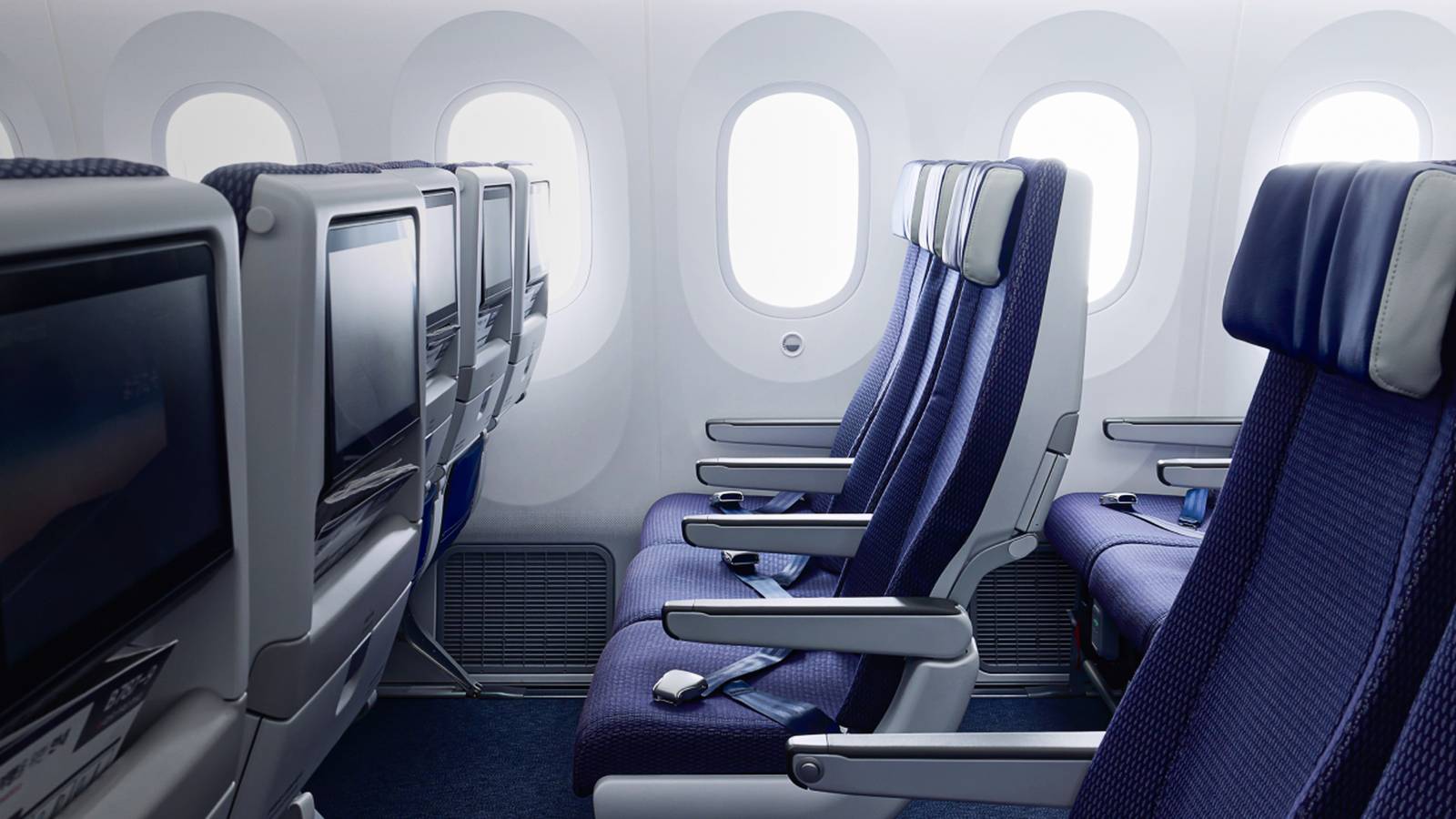
Published Jul 23, 2026, 2:00 PM EDT Jack comes to Simple Flying with a lifelong interest in all things aviation. He holds a degree in Aerospace Engineering from Georgia Tech, and is a certified private and remote pilot. Beyond these experiences, Jack previously worked for a corporate flight department where he gained first-hand experience in the world of business aviation. Currently, Jack works in the professional services industry and continues to build his flight hours outside of work. Economy class has become steadily less forgiving over the past two decades. Airlines have pursued higher passenger capacity, primarily by reducing seat width, or tightening legroom, or both. On numerous long-haul aircraft, cabins that once featured spacious nine-abreast seating are now squeezing in ten seats across. Typical seat pitch on many major carriers has settled around 31 to 32 inches, while ultra-low-cost airlines sometimes offer as little as 28 inches. For travelers, those incremental reductions have translated into noticeably less personal space, particularly on flights lasting eight hours or more. Against this backdrop, a small group of airlines has taken a different approach. Rather than maximizing the number of seats, they have prioritized passenger comfort by preserving generous seat width, maintaining above-average pitch, or carefully selecting cabin layouts that create a more open environment. These decisions often reduce overall capacity and therefore represent a deliberate commercial tradeoff. The result is an economy class experience that frequently surprises passengers. Wider seats reduce shoulder contact with neighboring travelers, additional pitch eases pressure on knees and hips, and thoughtful cabin layouts create a greater sense of openness. The following five airlines consistently stand apart for offering economy seating that rivals premium products in comfort. Their reputations are supported by published cabin specifications, independent aviation analysis, and respected industry awards rather than marketing claims. Japan Airlines A leader in economy comfort Credit: Shutterstock No airline illustrates the value of cabin layout better than Japan Airlines (JAL). While much of the industry has added extra seats to modern widebody aircraft, JAL has resisted that trend and instead preserved one of the roomiest economy cabins in commercial aviation. Its most distinctive decision is found aboard the Boeing 787. Nearly every airline operating the aircraft installs nine seats per row in a 3-3-3 configuration. JAL remains the only airline worldwide to configure its Dreamliners with just eight economy seats across in a 2-4-2 layout. That choice produces seats measuring roughly 18.9 to 19 inches wide, dimensions that rival or exceed some airlines' premium economy products. The airline extends the same philosophy to its Boeing 777-300ER fleet, where economy remains arranged nine abreast instead of the increasingly common ten abreast configuration. Seat pitch generally ranges from 33 to 34 inches, comfortably exceeding the industry average and providing noticeably more knee room on long-haul flights. JAL markets these cabins as "Sky Wider," but the practical benefits matter more than the branding. Wider cushions reduce shoulder compression, while fewer passengers per row mean easier access to aisles and less crowding throughout the cabin. On overnight services, these small improvements combine to produce a substantially more relaxed journey. Independent evaluations consistently reinforce that reputation. Skytrax awarded Japan Airlines World's Best Economy Class Seat, recognizing both seat dimensions and overall passenger comfort. Aviation analysts also regularly identify JAL as one of the most spacious economy products available globally because it achieves exceptional width without sacrificing legroom. The airline demonstrates that premium comfort does not always require premium pricing. Instead, careful engineering decisions about cabin density can dramatically improve the experience without changing the ticket class. All Nippon Airways Outstanding legroom with modern seat design Japan's other major international carrier has earned a similarly strong reputation through a different strategy. Rather than focusing primarily on seat width, All Nippon Airways (ANA) emphasizes generous legroom, ergonomic seating, and continuous product upgrades. Across much of its long-haul fleet, ANA has standardized a 34-inch seat pitch in economy. That measurement exceeds what travelers encounter on most competing international airlines and provides valuable additional space for changing positions during extended flights. The airline has also invested heavily in seat technology. Beginning in summer 2026, ANA is introducing new Recaro economy seats aboard Boeing 787-9 aircraft featuring redesigned backrests that create approximately one additional inch of usable knee space without increasing cabin length. The seats also recline up to seven inches, among the highest recline figures currently offered in international economy cabins. These improvements reflect broader trends in aircraft interior design to focus on usable living space rather than relying solely on pitch measurements. Slimmer seat backs, repositioned literature pockets, and improved sculpting can increase perceived room without requiring additional aircraft floor space. ANA combines those engineering advances with consistently high service standards, quality cabin maintenance, and thoughtful interior design. While those factors do not physically enlarge the seat itself, they contribute to the overall impression that the economy cabin feels considerably more refined than average. Air Premia The longest economy legroom in the world Credit: Air Premia | Simple Flying South Korea's relatively young hybrid airline, Air Premia, has quickly gained attention by offering what is arguably the world's most spacious standard economy seating in terms of legroom. Operating an all Boeing 787-9 fleet, the airline provides up to 35 inches of seat pitch in selected economy cabins. That figure exceeds virtually every major full-service international competitor and approaches measurements traditionally associated with premium economy rather than standard economy. Unlike many airlines that attempt to maximize passenger numbers, Air Premia deliberately sacrifices seating density. Fewer rows generate less revenue per aircraft, but they also create a noticeably more comfortable environment for travelers on the airline's long-haul routes linking South Korea with destinations in North America and Europe. An additional inch or two of pitch may appear insignificant on paper, yet ergonomics experts note that small increases substantially improve joint angles for the hips and knees during prolonged sitting. Over flights lasting ten hours or longer, that improvement reduces stiffness, allows more frequent changes in posture, and makes it easier to work or rest without constantly contacting the seat ahead. Air Premia Cabin Configurations Aircraft Premium Economy Seat Count Economy Seat Count 787-9 56 253 787-9 56 264 787-9 35 309 Industry analysts consistently rank Air Premia at or near the top of worldwide economy seating comparisons because no other scheduled airline currently provides comparable standard economy legroom across its principal long-haul product. Its approach illustrates how a newer airline can distinguish itself without competing solely on price. Instead of adding more passengers, Air Premia has built much of its international reputation around offering exceptional physical comfort in the lowest fare class. Korean Air Preserving seat width while others shrink Credit: Shutterstock Korean Air occupies an unusual position because its economy seats feel spacious primarily due to their width rather than record-breaking legroom. The airline continues configuring its Boeing 777 aircraft with nine seats across in a 3-3-3 arrangement. Many competitors operating the same aircraft have adopted ten abreast seating in a 3-4-3 layout, narrowing each passenger's available space to accommodate one additional traveler per row. By retaining the less dense configuration, Korean Air offers noticeably wider seats alongside approximately 33 to 34 inches of seat pitch. The significance of this decision became particularly clear when the airline previously explored denser seating arrangements. Public criticism from passengers and aviation observers proved strong enough that Korean Air ultimately stepped back from introducing ten abreast economy on its Boeing 777 fleet. The episode demonstrated how closely travelers associate the airline with spacious seating. Cabin openness extends beyond the seat itself. Fewer passengers per row generally mean wider aisles, less congestion during boarding, and easier movement throughout the aircraft. Collectively, those characteristics help create an experience that feels noticeably less crowded than many competing international airlines. Although Korean Air may not lead every measurable category, its consistent refusal to pursue maximum seating density has preserved an economy product that remains widely respected among frequent long-haul travelers. Qatar Airways Consistency across a world class fleet Credit: Qatar Airways Unlike some airlines that rely on unusually generous measurements, Qatar Airways earns recognition through remarkable consistency across one of the world's largest international networks. The airline maintains competitive economy dimensions throughout its fleet while combining them with high-quality cabin finishes, modern aircraft interiors, attentive service, and carefully maintained seating. Those factors create an experience that often feels more premium than the raw numbers alone would suggest. Whether traveling aboard the Airbus A350, Airbus A380, Boeing 777, or Boeing 787, travelers generally encounter well-designed seating with respectable pitch, supportive cushioning, and contemporary entertainment systems. Cabin presentation also contributes significantly to passenger perception. Clean interior finishes, thoughtful lighting, quiet cabins, and efficient service all influence whether a seat feels comfortable beyond its physical measurements. Researchers studying passenger satisfaction consistently find that comfort depends on the complete travel environment rather than dimensions alone. The airline delivers an unusually dependable standard throughout its long-haul operation, and that reliability distinguishes it from competitors whose seating quality varies considerably between aircraft types or fleet generations. For travelers booking complex international itineraries, consistency carries genuine value. A passenger connecting through multiple flights can reasonably expect a similar level of comfort throughout the journey rather than encountering dramatically different seating experiences depending on aircraft assignment. Qatar Airways demonstrates that premium-feeling economy cabins result not only from generous seat measurements but also from disciplined fleet management, thoughtful cabin design, and sustained investment in passenger comfort across an entire global operation.
5 Economy Seats So Spacious That Passengers Mistake Them For Premium
Full Article
Original Source
Read the full article at Simpleflying →KhanList aggregates and links to publicly available news content. We do not host full articles from third-party sources. Always verify important information with original sources.