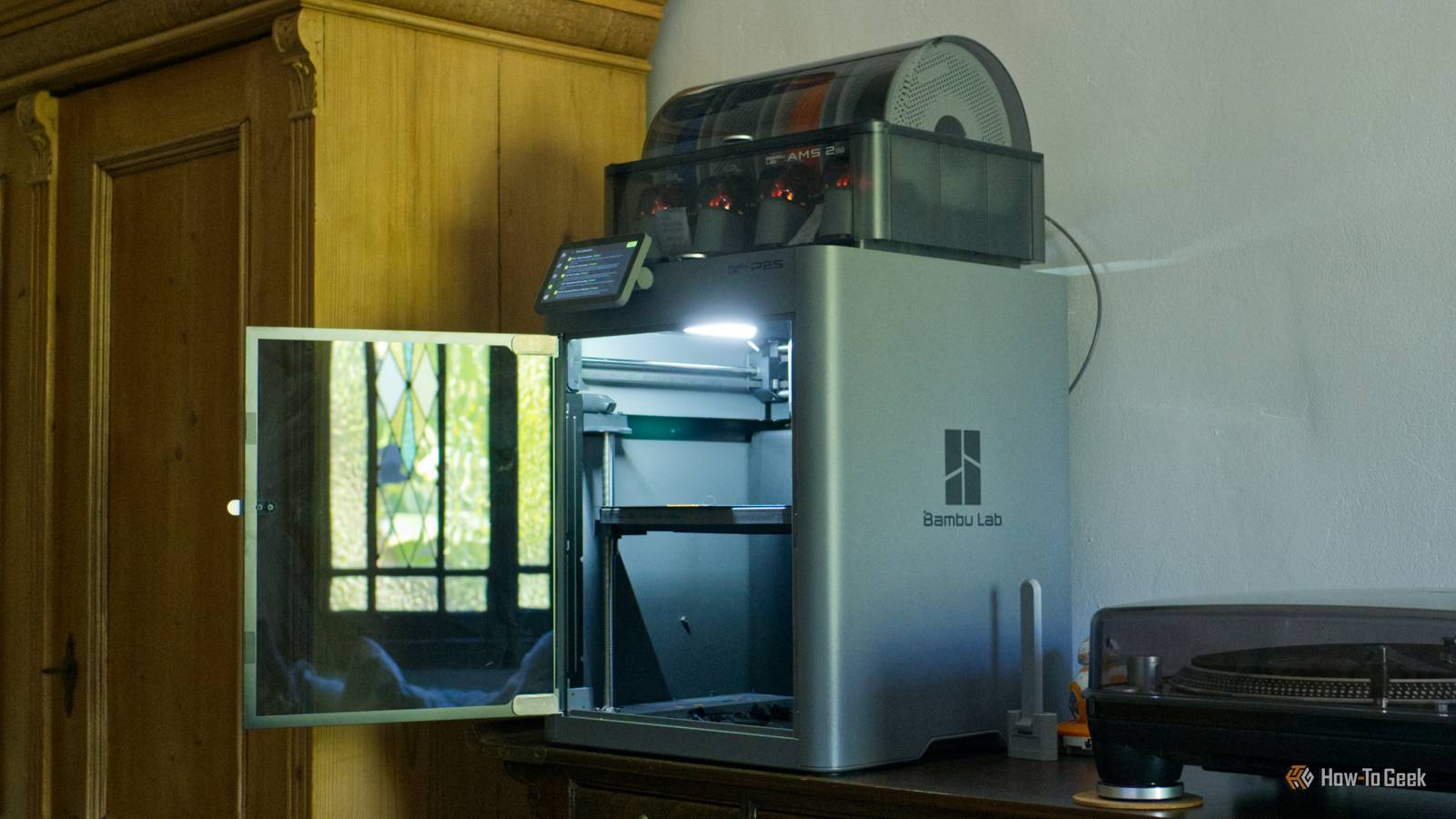
Published Jul 29, 2026, 7:00 AM EDT Tim has been covering technology for almost 20 years, in that time spanning a broad range of topics from security to product reviews. He is especially focused on the Apple ecosystem, productivity, and consumer advice. Over the years Tim has written thousands of articles, reviews, and round-ups in addition to producing video content and original photography. A graduate of journalism, he found his footing as a freelancer with a laptop and loves how he is able to work from practically anywhere. Now a Senior Editor for iPhone, Mac, and Smart Home at How-To Geek, Tim still loves to write. He can also be found crafting round-ups and productivity posts for the Zapier blog. Earlier in his career Tim spent nearly a decade as a writer and eventually Apple section editor for MakeUseOf. Tim currently lives in Brisbane, Australia. Outside of work he loves to hike and work out, play video games, and spend quality time with his wonderful partner and two cats Inka and Roger. You might not have given much thought to the location of your 3D printer beyond making sure it fits somewhere. So what if you could print more and prevent problems simply by moving it to another room? You can print all night long Forget about printer noise Credit: Tim Brookes / How-To GeekCredit: Tim Brookes / How-To GeekCredit: Patrick Campanale / How-To GeekCredit: Patrick Campanale / How-To GeekCredit: Tim Brookes / How-To GeekCredit: Tim Brookes / How-To GeekCredit: Tim Brookes / How-To GeekCredit: Patrick Campanale / How-To GeekCredit: Patrick Campanale / How-To GeekCredit: Tim Brookes / How-To Geek 3D printers are noisy and distracting and, for most of us, this is a big contributing factor when it comes to finding a suitable location. My printer (the Bambu Lab P2S) has an active motor noise cancellation feature, which does a pretty good job at dampening the high-frequency sounds emitted by the motors that are used to move the print head and print bed. Even so, the printer rattles and bounces around so much that I couldn’t imagine sleeping next to it. This is why it’s not located in the bedroom or main living area, but tucked away in the spare room (I can still just about hear it, even when the door is closed). Since not all print jobs are quick 30-minute affairs, having my printer closed off from the rest of the house means I can leave it running all night long and still get some shut-eye. It also means that there isn’t a printer rattling away in the corner while I’m trying to have a conversation, eat dinner, or watch a movie. As a bonus, my cats don’t decide that the top of the printer is a perfect place for a nap. Slicers are pretty good at predicting print times, in my experience. You can carefully time prints to avoid disruption, but that requires an extra degree of preparedness. To schedule a print in advance, I’d need to use a print management system like Bambuddy. As much as I love to see an item materialize before my eyes, I appreciate the peace and quiet a bit more. Bambu Labs A1 mini 3D Printer Build Volume 180x180x180 Printing Speed 500mm/s The Bambu Lab A1 mini 3D printer is ready to go out of the box and can have you printing within 30 minutes. Offering full-auto calibration, this compact 3D printer features a 180mm build volume and is compatible with the AMS Lite for multi-color printing. It also features built-in vibration and flow-rate calibration, which are typically features only found on more premium printers. Stable temperature and humidity mean better prints Relevant if your printer is in your workshop, garage or shed Credit: Tim Brookes / How-To Geek Personally, I’d never put my 3D printer in my garage because I live in a sub-tropical climate, where humidity regularly exceeds 80%. The garage is poorly sealed against the outside world (which I suspect is the case with most workshops and sheds). Inside the house is usually more reasonable on account of it being weather-tight and air-conditioned when things become unbearable. Humidity is a problem for 3D printer filament, which is hygroscopic and sucks moisture out of the air. Moisture can cause all manner of print problems, from cosmetic defects like stringing and uneven surfaces right through to outright print failures and bed adhesion issues. I keep Bambu Lab’s AMS 2 Pro multi-filament system loaded with four rolls at a time, and swap out desiccant regularly. Even so, I have to run a dry process on the AMS every few months to take the relative humidity inside the unit down from around 50% to a more reasonable 20%. If my printer was “outside” in a much damper environment, I’d be doing this a lot more often, and it would definitely get in the way of printing. The same is true of temperature stability, particularly if you’re trying to print more challenging materials that warp (like ABS or ASA) on a printer that lacks a heated chamber. In the summer you might find that a hot shed makes these filaments easier to work with, but in the winter the opposite will be true. Bambu Lab AMS 2 Pro A multi-material system for Bambu Lab printers with active air vent 65°C filament drying, air-tight filament storage, a brushless servo feeding motor, Bambu's signature RFID filament sync, and compatibility with up to up 24-color/material printing by connecting more AMS 2 Pro units. Print harmful filament types without worrying about the air Open up a world of possibilities Credit: Tim Brookes / How-To Geek PLA is a relatively “safe” 3D printer filament in that it doesn’t release any seriously toxic substances when you print with it. It still might not be a good idea to hang around in the same room while the printer is running, especially if you’re sensitive to that melting plastic smell, but it’s not going to do you much harm in the short term. By contrast, materials like ABS (acrylonitrile butadiene styrene) and ASA (acrylonitrile styrene acrylate) release styrene gas when melted, which can cause some serious health effects. This includes irritation of the nose and throat, nausea, headache, and dizziness in the short term, with a potential cancer risk in the long term. Once these materials are in a stable (printed) form, they no longer pose this risk. Being locked out of using materials like ABS and ASA can mean foregoing the benefits they provide in terms of UV stability, heat resistance, and overall strength compared to weaker materials. Using the right filament can massively impact how a print stands the test of time and its suitability for the task at hand. Putting your 3D printer in a room that’s fitted with a proper ventilation system to move these harmful gases outside allows you to print with them safely (but you still shouldn’t hang around). Looking for better 3D prints? Here are some tricks you can use to make your prints look better.
3 ways moving your 3D printer to a different room can improve your prints
Full Article
Original Source
Read the full article at Howtogeek →KhanList aggregates and links to publicly available news content. We do not host full articles from third-party sources. Always verify important information with original sources.