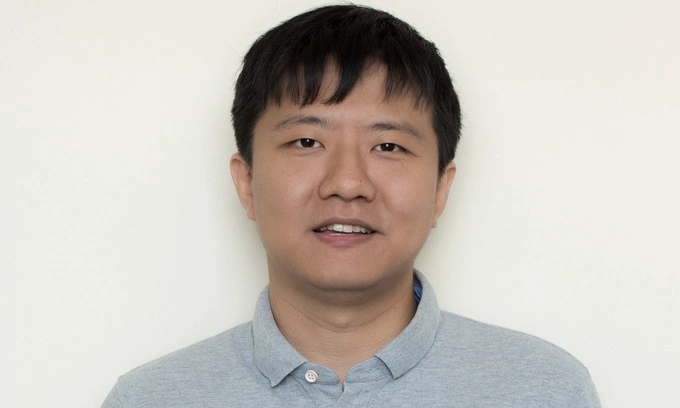
2026 Fields Medal laureate Yu Deng said that there were virtually no reference materials available for the problem he was trying to solve, forcing him to develop the necessary mathematical tools on his own while pursuing a solution to a question that had remained unresolved for more than a century. Deng, 37, is one of four mathematicians awarded the Fields Medal, often regarded as the "Nobel Prize of Mathematics," at the International Congress of Mathematicians (ICM) on July 23.He was recognized for a series of works that proved a central aspect of the sixth of the 23 problems proposed by German mathematician David Hilbert at the 1900 International Congress of Mathematicians in Paris. More than a century later, only about half of Hilbert's problems have been substantially solved, while the others remain partially resolved or open.Born in Shenzhen, China, Deng won a gold medal at the 2006 International Mathematical Olympiad, the world's most prestigious math contest for high school students. He studied at Peking University for two years before transferring to the Massachusetts Institute of Technology in the United States, and later earned a PhD from Princeton University.He is currently a professor at the University of Chicago. His research focuses on wave equations, nonlinear dispersive equations, fluid dynamics, harmonic analysis, probability theory for partial differential equations, and statistical physics. Professor Yu Deng in a photo he provided. In an interview with VnExpress on July 20 ahead of the ICM, Deng discussed how he approached the Hilbert's problem, the lessons he drew from mathematics competitions during his school years, and the potential role of artificial intelligence in mathematical research.Your recent work resolves one of the most important mathematical problems posed by David Hilbert more than a century ago. How would you explain its importance to someone without an advanced mathematics background?Strictly speaking, it's an important case of Hilbert's problem. We know the macroscopic fluid is formed by microscopic particles (atoms, molecules etc.).Basically, this question asks how to connect the microscopic picture of particles (how they move and interact etc.) to the macroscopic laws of motion for fluids. Based on earlier works, our result establishes this link in a mathematically rigorous way, under certain natural assumptions (Boltzmann-Grad scaling and ideal gas).When you spend years working on a problem that no one has solved before, how do you know whether you're making progress or heading in the wrong direction? Can you recall a time when you felt completely stuck, and what helped you move forward?The progress was made gradually when we worked in this direction: first on short-time wave kinetic theory, then long-time wave kinetic theory, then long-time Boltzmann. The success in previous sub-steps make us more confident that we are in the right direction. Maybe the most difficult time was back in 2019-2020, where we started working on the so-called "critical" time-scale for wave kinetic theory (the Boltzmann paper later shared the same framework).At that time we had to develop every single tool we needed, and there was almost no literature to learn from. Fortunately we were able to find a way, which turned out to be a general theory, much more powerful than we originally imagined.Before choosing mathematics, you once dreamed of becoming a professional Go player. You also enjoy the poetry of the Tang dynasty poet Li Shangyin, whose works are renowned for their rich layers of meaning. Do you find any parallels between the strategic thinking of Go, the structure of poetry, and the way you approach mathematical problems?Maybe there are not many concrete connections, but it is interesting to think of them aesthetically: the rhyme and rhythm and symmetry in poetry, the combination of patterns in Go, etc.You won a gold medal at the International Mathematical Olympiad as a teenager. Looking back, what did competition mathematics prepare you for - and what did it not prepare you for - mathematical research?The benefit from Math Olympiad experience is more in the way of thinking: given a problem, how to analyze it, how to find possible points of breakthrough, how to make a plan to attack it, etc. On a concrete level, it also makes me much more comfortable when dealing with combinatorics, which plays a key role in my research.Artificial intelligence (AI) is transforming almost every field of science. In your view, which aspects of mathematical research are likely to be transformed by AI, and which aspects do you think will remain uniquely human?The optimal scenario will be that, humans come up with new theories, novel ideas, general frameworks etc., and AI fills in the technical details. This also depends on the capability of AI, which is also evolving rapidly. Optimistically, this will significantly accelerate mathematical research, and possibly allow people to attack problems previously out of reach.What are some of the biggest unanswered questions in your field that excite you the most?The "critical" theory for probabilistic PDEs/SPDEs. This is my main theme of research in the last few years, we have made much progress, but there are still many questions that remain to be answered.
2026 Fields Medal laureate Yu Deng on cracking century-old mathematical problem
Full Article
Original Source
Read the full article at E →KhanList aggregates and links to publicly available news content. We do not host full articles from third-party sources. Always verify important information with original sources.