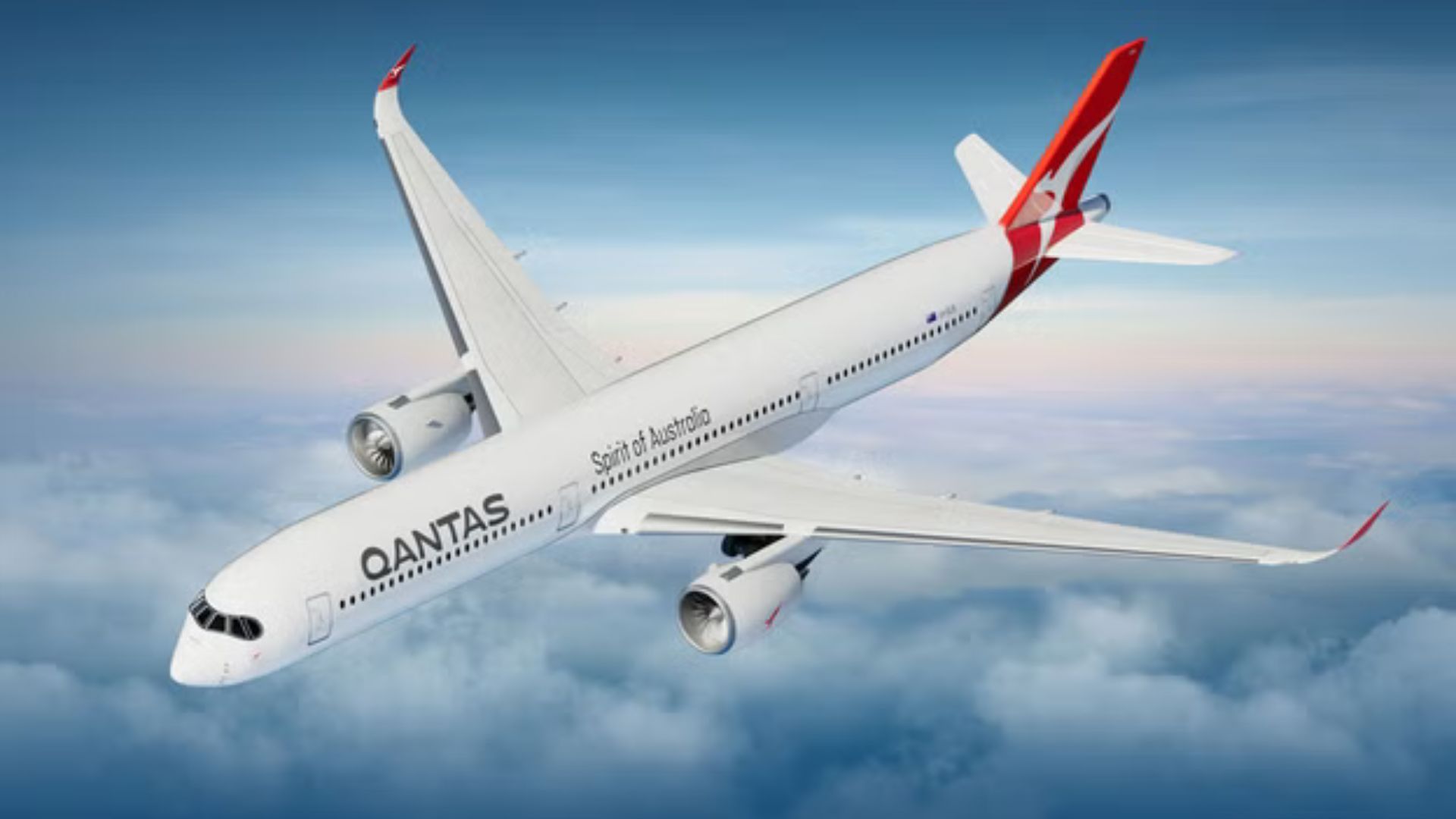
Recently, an Airbus A350-1000ULR jet touched down in Toulouse, France, after remaining airborne for 24 hours and 24 minutes without stopping. The A350-1000ULR variant was custom-built by Airbus for Qantas Airways. Originating from Melbourne, Australia, the marathon voyage covered 23,075 kilometers (14,338 miles) across the Pacific and Atlantic oceans. It set what is believed to be the longest continuous flight ever completed by a commercial airliner. “The aircraft flew northeast over the Pacific, over the US and Canada, then across the Atlantic and south over the UK to Toulouse, crossing three continents and two oceans, with two sunsets and two sunrises along the way,” the Australian airline stated in the LinkedIn post. Beating the previous record As per the Guardian, the 24-hour marathon shattered the long-standing record of 22 hours and 42 minutes, held by a Boeing 777-200LR since 2005. That 2005 record-setting flight flew from Hong Kong to London by taking the long way across the Pacific Ocean. This new historic leg was a proof of concept. The test aircraft is part of Qantas Airways’ flagship Project Sunrise, an initiative designed to link Australia’s east coast directly to London and New York. Earlier, the journey from Sydney to London — also known as the “Kangaroo Route” — was a multi-stop ordeal that once took five days. Today, Qantas aims to compress that voyage into a single, seamless 19- to 21-hour non-stop trip. Keeping a commercial jet airborne for a full 24 hours requires a mix of tailored engineering, strict weight management, and strategic navigation. Airbus achieved this by equipping the A350-1000ULR with a custom rear-center fuel tank holding an extra 20,900 liters. Plus, the test aircraft was powered by Rolls-Royce Trent XWB-97 engines to prove the A350-1000ULR can comfortably achieve a 23-hour “block time.” Over the course of the long-haul mission, the crew validated key operational systems, like cabin air conditioning measurements and the newly designed twin Flight Crew Rest Compartment. Massive public interest After initial local testing near Toulouse, the aircraft launched its long-haul test campaign with a 19-hour, 13-minute flight to Melbourne, landing on July 24. Just three days later, it set off on its return journey back to Toulouse, completing the record-breaking marathon flight in 24 hours and 25 minutes. To manage pilot fatigue on the marathon route, Airbus implemented a staggered shift system featuring a twin rest compartment and rotating four-hour pilot shifts every two hours. Ars Technica reported that the return flight from Melbourne to Toulouse carried five flight-test engineers alongside three Airbus pilots and two Qantas pilots. It gave the Australian carrier its first operational experience with the A350-1000ULR variant. Captivating millions worldwide, the return leg became the second-most-tracked flight in Flightradar24 history, with over 3.6 million people following its journey online. Currently, Singapore Airlines holds the record for the longest scheduled nonstop commercial flight, with its 161-seat A350-900ULR flying between New York and Singapore in 18 to 19 hours. Qantas aims to eclipse this benchmark with its Project Sunrise routes between Sydney and London or New York. Interestingly, the custom-built A350-1000ULR is set to make its commercial debut on Qantas’s non-stop Sydney–London route starting in 2027. Recommended ArticlesGet the latest in engineering, tech, space & science - delivered daily to your inbox.Mrigakshi is a science journalist who enjoys writing about space exploration, biology, and technological innovations. Her work has been featured in well-known publications including Nature India, Supercluster, The Weather Channel and Astronomy magazine. If you have pitches in mind, please do not hesitate to email her.
14,338 miles: Airbus’ custom jet for Qantas completes record 24-hour nonstop flight
Full Article
Original Source
Read the full article at Interestingengineering →KhanList aggregates and links to publicly available news content. We do not host full articles from third-party sources. Always verify important information with original sources.