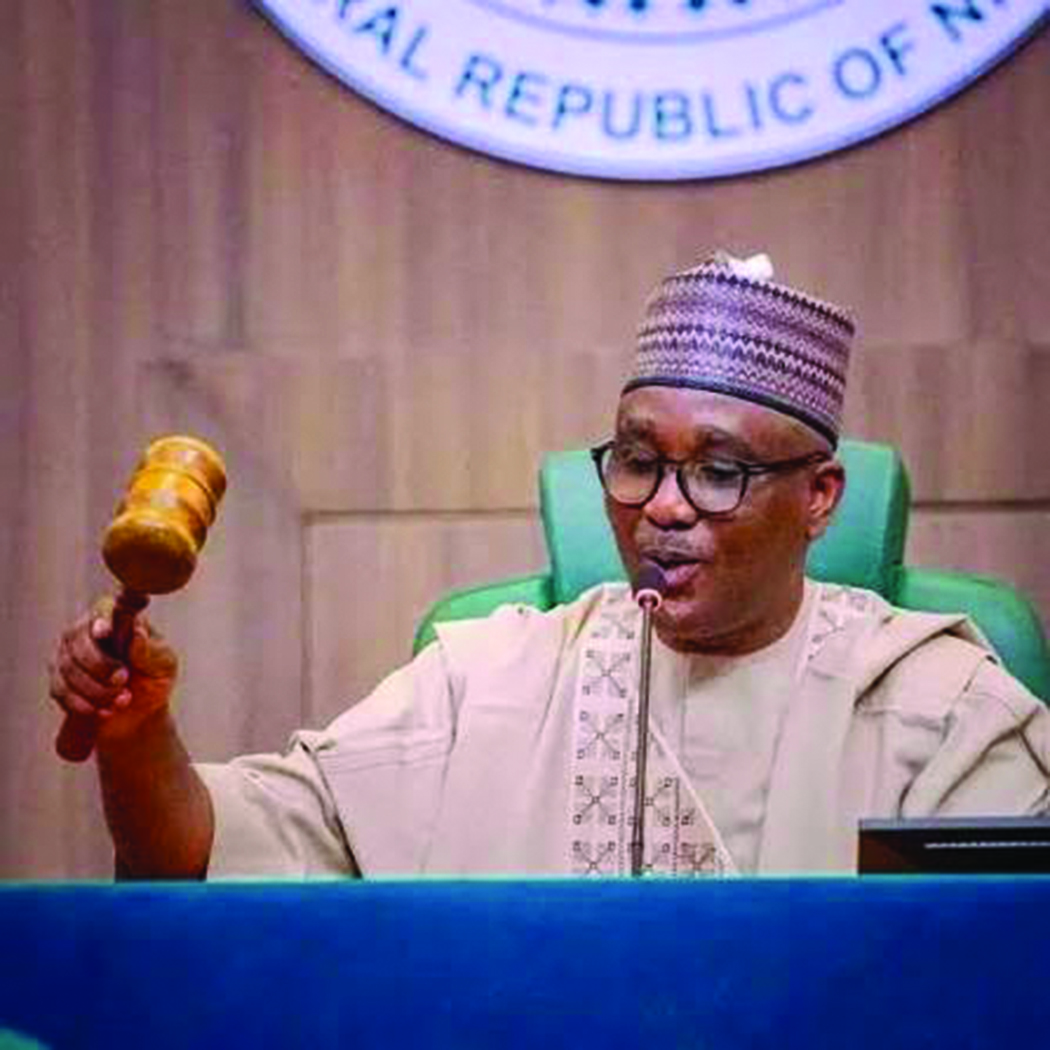
Last week, the 10th House of Representatives unveiled the third year legislative scorecard. While it used the event to highlight the achievements of the Green Chamber, it didn’t fail to mention its shortcomings and areas of improvements, Adedayo Akinwale writes The House of Representatives recently gave an account of its stewardship in the last three years since its inauguration, during the 2026 National Assembly Open Week and the unveiling of the third-year legislative performance. The Open Week was conceived not as an exercise in self-congratulation, but as an act of accountability. Though, openness is not a courtesy the Green Chamber extends at its pleasure; it is an obligation it owes to those it serves. Following the standard set by the 9th Assembly, Nigerians were hopeful of a good performance from the 10th Assembly. While Nigerians were not expecting the Green Chamber to perform miracles, the expectation placed a huge burden on the 10th House. It was expected that if the 10th Assembly could not surpass the achievements of the 9th Assembly, it should at least match it. There is no gainsaying that the 10th House has recorded substantial achievements within three years, however, it hasn’t been immune from controversy and scandal too. For instance, the 10th House has faced multiple controversies, ranging from signature forgery disputes to corruption probes involving executive officials and legislative committees. In 2025, the House Committee on University Education was implicated in an alleged extortion racket alongside Senate committees, purportedly demanding N8 million from federal universities in exchange for passing the 2025 budget. Nevertheless, the House denied the claims and cleared its committees without a formal public probe, drawing backlash. Recently, the House erupted into a rowdy session after lawmakers alleged that their signatures were forged on documents nominating minority leadership positions. This led to internal wrangling over lawmakers allegedly compromising their opposition mandates. At the end of the day, the issue was resolved and Hon. Fred Agbedi emerged as the Minority Leader. Three-year Scorecard Bills Despite some setbacks, between 14 June, 2023 and 4th June, 2026, the House received 2,747 bills — the highest three-year intake of any House since 1999. The overwhelming majority were members’ bills (2,595, or 94.5 per cent), with 57 Executive Bills (2.1 per cent) and 95 bills transmitted from the Senate. Interestingly, the dominance of private-member initiative is the defining feature of the 10th House’s legislative character and a marked shift from earlier Assemblies, in which Executive Bills made up a far larger share. Motions and Matters of Urgent Public Importance Across three years, the House considered 1,320 motions, of which 1,302 (98.6 per cent) were referred to committees and 460 (34.8 per cent ) were presented as Matters of Urgent Public Importance. In the third session the urgency intensified: 121 of roughly 220 motions (55 per cent) were MUPIs, a figure independently confirmed against the Third-Session Motions’ record, signalling a chamber increasingly used to respond to immediate national concerns. The distribution of motions tracks the House’s stated priorities: social-sector concerns lead (458 motions; 34.7 per cent), followed by national security (255; 19.3 per cent), economic growth (186; 14.1 per cent) and good governance (178; 13.5 per cent.) Petitions The petitions system is a direct channel between citizens and the House, and its intake demonstrates real accessibility. As such, in three years, 857 petitions were referred to the Committee on Public Petitions between June 2023 and June 2026, from civil servants, retirees, students, NGOs, professional associations and communities, on grievances ranging from wrongful termination and unpaid pensions to land disputes and abuse of power. But resolution has lagged badly. Of the 857, 209 were concluded (180 closed, 27 struck out, two withdrawn) and 648 remained pending as at June 2026, a clearance rate of roughly 24 per cent. The Committee laid 55 reports and considered 50. It should be noted that motions and the resolutions adopting them are the House’s most immediate instrument, but they are advisory, not binding, and their impact depends on executive compliance. According to the House committee-monitoring data, only 46 per cent of resolutions are acknowledged as implemented. Oversight of the executive Over three years, committees undertook 766 oversight engagements: 135 familiarisation and courtesy visits, 480 oversight and inspection visits, 84 investigative hearings and public hearings. Recoveries and results The clearest oversight results came from the Public Accounts Committee, chaired by Hon. Bamidele Salam. In March 2025 the Committee reported cumulative recoveries of unremitted royalties and taxes from oil and gas companies of N 50.1 billion (about $33.44 million), with further sums under reconciliation and a 20-day ultimatum for an additional $23.2 million. By Democracy Day 2025, the Speaker, Hon. Tajudeen Abbas commended the committee for recovering over N 61.5 billion from erring companies. Oversight Function The House acknowledged that oversight activity was highly uneven: a minority of committees account for most engagements while many conduct few or none, and a significant number fail to submit the quarterly reports the Standing Orders require. Second, follow-through is weak, only 46 per cent of House resolutions are acknowledged as implemented by the Executive. The House’s own internal review conceded that “oversight activities remained partially funded by the very MDAs under scrutiny, making some committees hesitant to initiate confrontational probes.” It was against this background that civil-society voices questioned whether the House exercises robust oversight over the Executive. Speaking during the opening ceremony of the 2026 NASS Open Week, Abass said: “Where we have served the nation well, the Scorecard records it. Where we have fallen short, it records that also. At our inauguration in 2023, we asked to be measured against our own promises, and we meant it.” He pointed out that nothing tests a government, or a parliament, so severely as the safety of the citizens. Abass recalled that in Oyo State, schoolchildren and their teachers were seized from their classrooms and taken into the forests before they were finally rescued by security agencies. He emphasised that the deeper lesson of Oyo is that a nation of this magnitude cannot be policed in perpetuity from a single command in Abuja. Constitutional Reform State Police In the course of the constitutional reform led by the Deputy Speaker, Hon. Ben Kalu, the House passed a State Police Bill and placed the matter squarely before the nation. But in a surprising move, the House rescinded the Bill it passed earlier after President Bola Tinubu transmitted to the National Assembly an Executive version of the State Police Bill, which is more robust and more comprehensive than the version this House earlier passed. The Bill, Abbas noted, was the product of a dedicated committee inaugurated by the President and chaired by former Speaker of the House, Gbajabiamila. He assured that the Bill would pass through Public Hearing and open scrutiny, saying, “the framework will carry robust safeguards. A state must satisfy clear and demanding standards and safeguards before it may be entrusted with a police service.” The Speaker was of the opinion that a proper funding mechanism must be well spelt out before the establishment of state police. He stated: “We must settle the question of money from the very beginning, whether through a dedicated policing fund, through shared services, or through federal support that is tied firmly to standards, so that no state creates a police force it cannot pay, and no unpaid officer becomes a threat to the citizen he has sworn to protect.” The Special Seats Bill Abass said it is an uncomfortable truth that women occupy fewer than one in 20 seats in this National Assembly, and that some of the State Houses of Assembly do not have a single woman among them. According to him, No nation ascends by consigning half of its talent to the margins. To this end, the Special Seats Bill is considered the answer. He said a reasonable question has been raised: whether reserved seats would simply confer position upon a favoured few, without the discipline of an election. “They will be elected, by secret ballot conducted by the Independent National Electoral Commission, through a college of representatives whom the people themselves have already elected, from our councillors to our state legislators to the members of this House and of the Senate. It is a genuine mandate, earned rather than granted, and it diminishes no existing seat. The measure is, by deliberate design, temporary, a bridge to be crossed and thereafter reviewed,” Abbas noted. In his submission, the Chief of Staff to the President said that the Presidency remained committed to a productive relationship with the National Assembly in pursuit of security, economic renewal, social justice and shared prosperity under the Renewed Hope Agenda. To him, while the Executive and the Legislature are separate arms of government, they share one ultimate mandate which is to improve the lives of the Nigerian people. He was of the opinion that constructive cooperation does not diminish legislative independence, nor does robust debate amount to institutional conflict. The Executive Secretary of the National Assembly Library, Hon. Henry Nwawuba said since the unveiling, the library has remained dedicated to preserving Nigeria’s legislative heritage, promoting research excellence and modernising parliamentary knowledge management through technology. Nwawuba stated: “Over one million website visitors every week, reflecting growing public interest in legislative information. More than 20,000 digital media subscribers, with a combined social media reach exceeding 1.5 million Nigerians and global audiences. 8,584 legislative materials digitized, preserving invaluable parliamentary records.”
10th House at Three: Achievements, Challenges and Road Ahead
Full Article
Original Source
Read the full article at Thisdaylive →KhanList aggregates and links to publicly available news content. We do not host full articles from third-party sources. Always verify important information with original sources.