
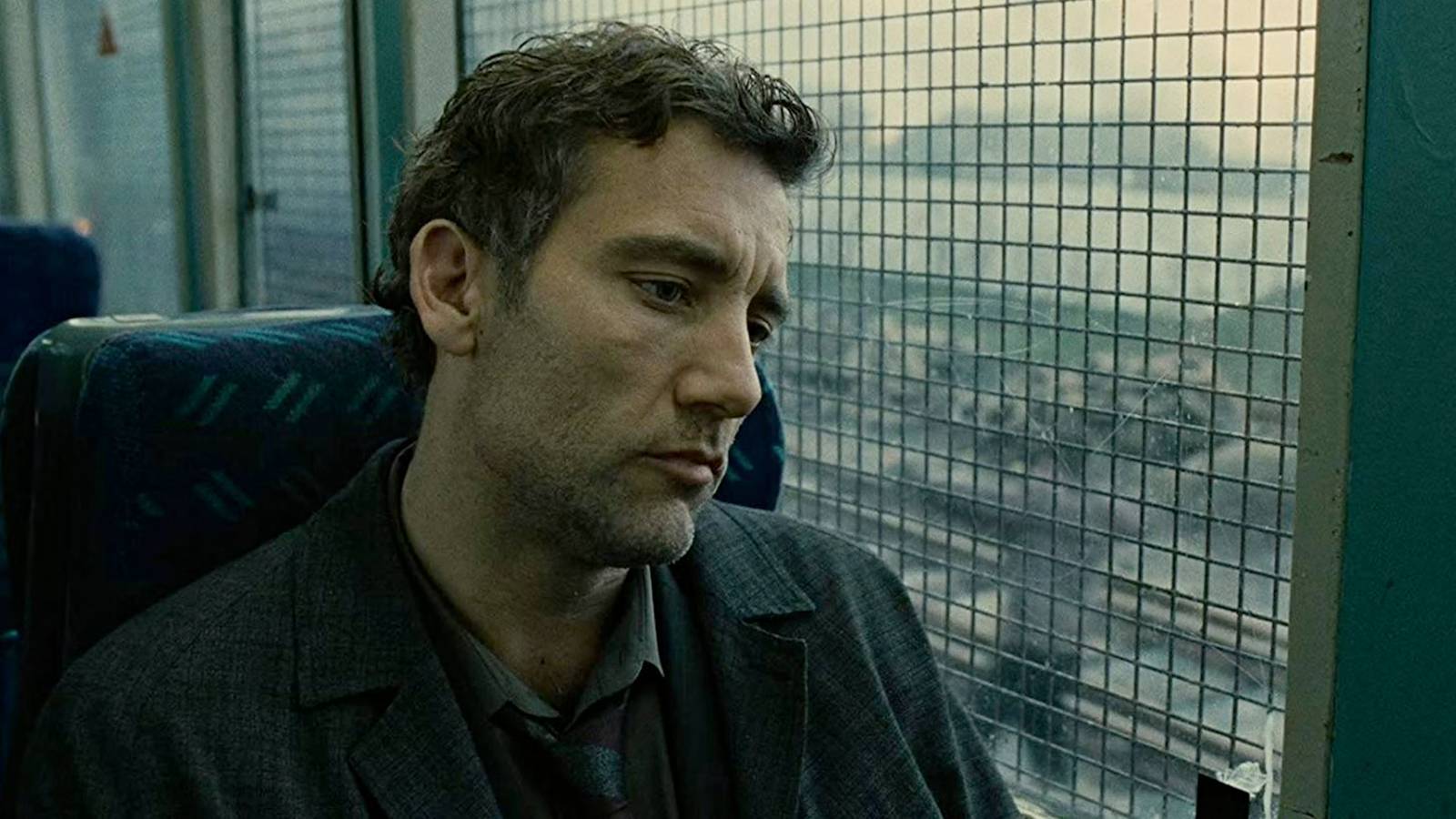
Dystopian science fiction and horror movies have produced some of the bleakest and most upsetting places to live in cinematic history. Dystopian movies often overlap with post-apocalyptic stories, but the two genres are not quite the same. A post-apocalyptic world is defined by a civilization-ending disaster, whether that is nuclear war, disease, environmental collapse, or something else entirely. A dystopia, meanwhile, focuses on the society that emerges afterward, or from within a deeply flawed society that functions despite its horrors. The key ingredient is not necessarily destruction, but the way ordinary people are forced to live under oppressive, dangerous, or fundamentally broken systems. That is why the worst dystopian worlds are not always the most violent. Some of the most terrifying fictional societies offer food, shelter, and a degree of stability while stripping away freedom, individuality, and hope. Others force their citizens into daily survival struggles where death can come from starvation, disease, or authoritarian control. The best dystopian movies use these settings to explore real-world fears, exaggerating political, social, or environmental problems into nightmares that feel disturbingly plausible. Whether societies built on exploitation or worlds where humanity is on the brink of extinction, these movie settings make viewers grateful they only have to visit them for a couple of hours. 1984 (1984) George Orwell's 1984 has influenced virtually every dystopian story that followed it, and Michael Radford's adaptation remains one of the most unsettling depictions of totalitarian control ever put on screen. Life in Oceania is defined by constant surveillance, endless propaganda, and the knowledge that even private thoughts can be treated as crimes. However bleak, this world is comparatively survivable because that society still functions. People have homes, jobs, and access to basic necessities. The real horror comes from the psychological control exercised by the Party. Individuality has been erased, history is constantly rewritten, and truth itself is whatever Big Brother says it is. It is an awful place to live, but for many citizens the system is so effective that they barely realize how imprisoned they are. That makes 1984 less immediately dangerous than the worlds higher on this list, even if its long-term implications are terrifying. Children Of Men (2006) Alfonso Cuarón's Children of Men presents a society that has not collapsed completely but is rapidly approaching the point of no return. Humanity has become infertile, and no child has been born for nearly two decades. Without future generations, governments and institutions continue to exist, but they feel increasingly hollow. Children of Men's version of Britain remains recognizable, which is precisely what makes it so disturbing. Public services still operate, cities are still populated, and people still go to work, yet the entire world is gripped by hopelessness. Violence, xenophobia, and authoritarian policies have become normalized because society has lost faith in tomorrow. The absence of children affects every aspect of daily life, creating a civilization that is slowly dying while everyone watches it happen. Compared to some dystopias, survival is achievable, but living without any meaningful future would be emotionally devastating. The Hunger Games (2012) Panem's Capitol maintains power through wealth, fear, and spectacle, forcing children from the districts to participate in televised death matches. The Hunger Games themselves are horrifying enough, but they represent only one part of a deeply unequal society. Life in Panem depends heavily on where someone is born. Citizens in wealthier districts can enjoy relative comfort, while people in places like District 12 struggle with poverty, hunger, and dangerous working conditions. The annual Games ensure that every family lives with the possibility of losing a child to the Capitol's entertainment machine. Despite that cruelty, functioning communities still exist throughout Panem, and many citizens manage to build meaningful lives. That keeps The Hunger Games lower on this list than worlds where survival itself becomes uncertain. Nevertheless, being forced to live under a regime that treats children as disposable political tools would be a nightmare. Planet Of The Apes (1968) The original Planet of the Apes offers one of science fiction's greatest twists, but its dystopian setting is equally memorable. Human beings occupy the lowest rung of society, treated as animals by an ape civilization that controls politics, science, and religion. For an average human, daily life would be grim. Most people lack rights, education, and any meaningful autonomy. The ruling ape authorities actively suppress scientific discoveries that challenge their worldview, making social mobility effectively impossible. The fact that society itself remains relatively stable prevents Planet of the Apes from climbing higher on this list. Civilization functions, infrastructure exists, and most apes are not openly sadistic. The problem is that humans are trapped at the bottom of the hierarchy. Living in a world where your species is viewed as inferior livestock would be a terrifying experience, even if it is not immediately lethal. Snowpiercer (2013) Bong Joon-ho's Snowpiercer imagines the remnants of humanity surviving aboard a train endlessly circling a frozen Earth. Civilization has been reduced to a single moving ecosystem, and every passenger's position is determined by an inflexible class system. The train's lower-class passengers endure overcrowding, poor nutrition, and brutal treatment from those in power. Social mobility is almost nonexistent, with violence used to maintain the established order. Even those in privileged positions face the reality that humanity's future depends entirely on a machine that cannot fail. The world outside is uninhabitable, meaning there is nowhere to escape. Unlike many dystopias, Snowpiercer removes even the illusion of choice. Every aspect of life is controlled by geography, and geography consists of a single train. It is difficult to imagine a more claustrophobic society. The Maze Runner (2014) The world depicted in The Maze Runner is almost as frightening as the Maze itself. The planet has been devastated by solar flares and the deadly Flare virus, leaving civilization fractured and desperate. WCKD's controversial experiments are presented as humanity's best chance at survival, illustrating just how dire conditions have become. Unlike many dystopian governments, WCKD is not motivated purely by power. Its actions stem from a genuine attempt to save humanity, which makes its methods even more disturbing. Ordinary people are trapped between environmental devastation, disease, and organizations willing to sacrifice lives in pursuit of a cure. The Maze Runner’s world still contains functioning communities, but they exist amid widespread chaos and uncertainty. The possibility of infection hangs over everything. Even if someone survives the physical dangers, they must navigate a society willing to abandon basic ethics in the name of survival. Mad Max (1979-2015) The Mad Max franchise depicts a world where society has largely disintegrated, leaving power in the hands of whoever can seize resources through force. Fuel, water, food, and ammunition are worth more than laws, and survival depends heavily on strength, luck, and mobility. One reason the setting ranks so highly is its unpredictability. There are no stable institutions, reliable governments, or meaningful protections. Entire communities can be wiped out by raiders or warlords seeking resources. Mad Max: Fury Road demonstrates how even water becomes a tool of oppression when scarcity reaches extreme levels. Every aspect of life revolves around survival, and a single mistake can prove fatal. While pockets of humanity still exist, they are constantly threatened by violence and environmental collapse. Mad Max is a world where basic necessities have become luxuries and hope is always in short supply. The Matrix (1999) At first glance, life inside the Matrix appears completely normal. People go to work, live in cities, and experience what seems like an ordinary existence. The truth makes it one of the bleakest dystopias ever conceived. Humanity has been enslaved by intelligent machines and reduced to a power resource. Every relationship, achievement, and memory experienced within the simulation is ultimately artificial. Worse still, most people never discover the truth. Unlike many dystopian societies, the Matrix removes not only freedom but reality itself. Human beings are denied meaningful agency because they do not even understand the conditions of their imprisonment. The real world is scarcely better, consisting of devastated landscapes and isolated resistance cells. Even if someone escapes the simulation, they inherit a life of hardship and constant danger. The illusion of normality makes The Matrix uniquely horrifying. 28 Years Later (2025) Image via Everett Collection Danny Boyle's 28 Years Later presents a Britain that remains scarred by decades of the Rage Virus outbreak. While the infected are not technically zombies, their speed, aggression, and persistence make everyday life extraordinarily dangerous. The sheer unpredictability of the threat distinguishes 28 Years Later from many post-apocalyptic worlds. Communities may survive for years, only to be destroyed in moments by a single breach in their defenses. Travel becomes incredibly risky, communication is limited, and rebuilding civilization remains an enormous challenge. The infected dominate both the physical landscape and the psychology of the survivors. Every decision carries life-or-death consequences. Even simple tasks require extensive planning and caution. The possibility of creating a stable future exists, but the constant presence of the infected ensures that survival is never guaranteed for long. The Road (2009) Few movies have depicted the end of civilization as bleakly as The Road. John Hillcoat's adaptation of Cormac McCarthy's novel takes place in a world where the environment itself appears to be dying. Crops no longer grow, animals have largely disappeared, and humanity is slowly starving. The total absence of hope makes this setting the worst dystopian world on this list. Many dystopian stories contain at least the possibility of reform, rebellion, or recovery. The Road offers almost none. Resources are dwindling, communities are collapsing, and cannibalism has become commonplace among survivors. There are no functioning governments, no technological solutions, and no signs that conditions will improve. Survival is reduced to finding enough food to last another day. Even The Road’s moments of compassion are overshadowed by the overwhelming sense that humanity is approaching extinction. It is not just a terrible place to live; it may be the last place humanity ever lives. Release Date November 25, 2009 Runtime 111 minutes Director John Hillcoat
10 Worst Dystopian Movie Worlds To Live In, Ranked
Full Article
Original Source
Read the full article at Screenrant →KhanList aggregates and links to publicly available news content. We do not host full articles from third-party sources. Always verify important information with original sources.