
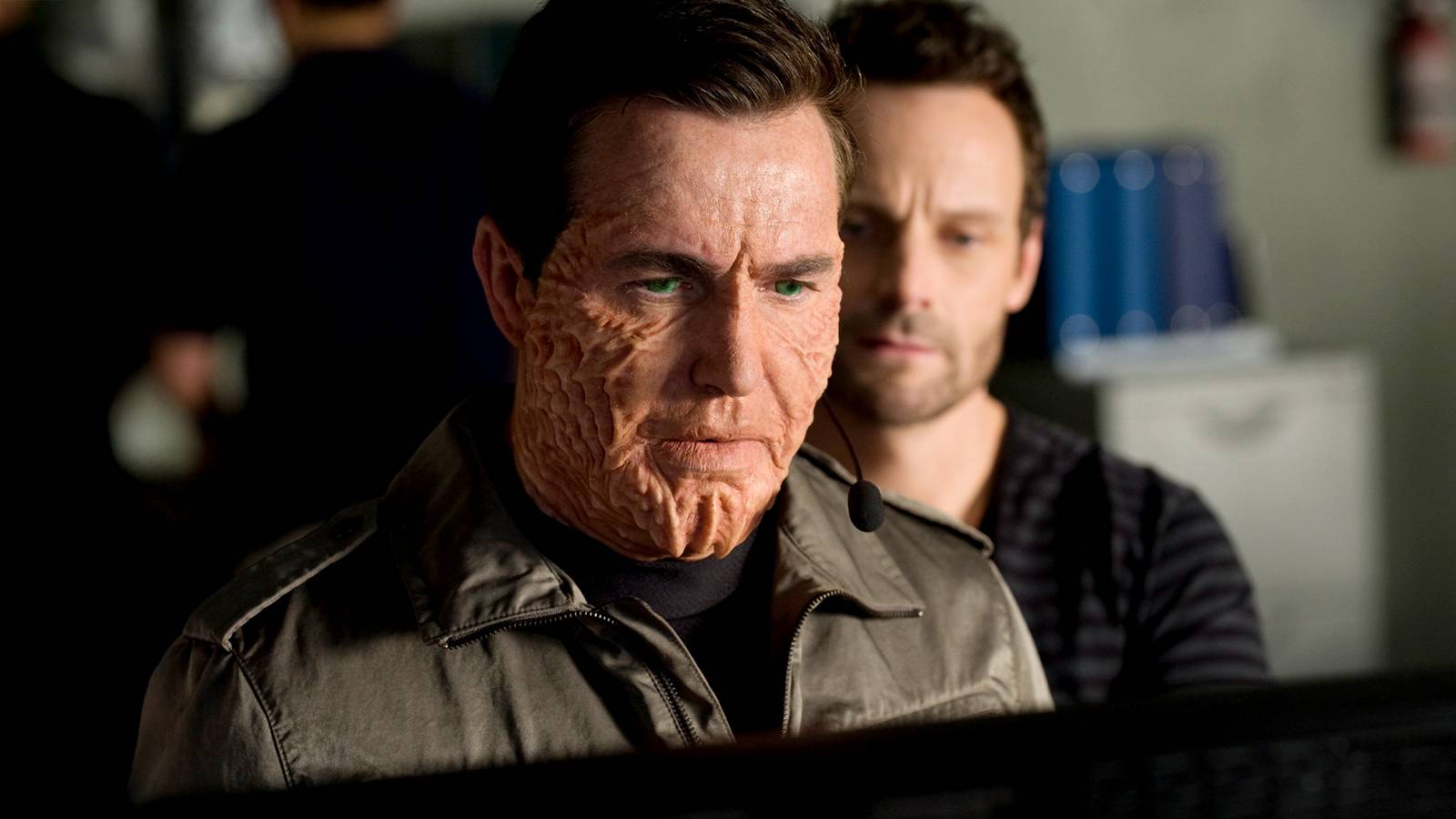
Image via Carole Segal; Sci-Fi/Everett Collection Published Oct 4, 2026, 4:43 PM EDT Roger is passionate about movies and TV shows, as well as the drive-in theater. Aside from hosting and producing three podcasts and a monthly live show, he also collects comic books, records, VHS tapes, and classic TV Guides. Currently, he's gotten into restoring cars and enjoys many of the shows on the Motortrend channel. Sign in to your Collider account There’s a funny little pocket of genre TV that existed before streaming convinced everyone they needed to build empires out of CGI and brooding mythologies. You remember it: the late-aughts stretch where shows like Fringe, Warehouse 13, Primeval, Torchwood, and the final seasons of Stargate Atlantis were all running around with big ideas and only half the infrastructure to pull them off. You can feel the hunger in those shows — the sense that the writers’ rooms were pitching things they absolutely didn’t have the money for, but were going to attempt anyway because that’s where the fun lived. Sanctuary came out of that era like the scrappy kid from the playground who didn’t bother asking permission. It just showed up swinging. Across that stretch and the years that followed, the mix was distinctive: Battlestar Galactica redefining what a cable drama could be, Grimm later developing its dark-fairy-tale toolkit, and Doctor Who doing its best to convince viewers that wobbly green screens were part of the charm. Sanctuary slipped right into that ecosystem — a digitally built, creature-heavy, emotionally anchored little world that shouldn’t have worked as well as it did. Looking back in 2026, after the elaborate worlds of The Expanse, The Witcher, and Shadow and Bone, its ambitions feel familiar. Sanctuary was attempting expansive genre storytelling long before streaming made it a selling point. ‘Sanctuary’ Built an Entire World on a Modest Budget The first thing everyone remembers — or misremembers — about Sanctuary is that it used “all green screens.” Not entirely true, but close enough that the myth holds. Back in 2008, that felt like a dare. Digital sets were far less common on television than they are now, and Sanctuary made them central to its production. Collider Exclusive · Sci-Fi Personality Quiz Which Sci-Fi Hero Are You Most Like? Paul Atreides · Captain Kirk · Princess Leia · Ellen Ripley · Max Rockatansky Five iconic heroes. Five completely different ways of facing an impossible universe. One of them shares your instincts, your values, and your particular way of refusing to back down. Eight questions will tell you which one. 🏜️Paul Atreides 🖖Capt. Kirk ✊Princess Leia 🔦Ellen Ripley 🔥Max Rockatansky FIND YOUR HERO → 01 How do you lead when the stakes couldn't be higher? The way you lead under pressure is the most honest thing about you. AI absorb everything — every variable, every pattern — and move only when I know the path forward. BI read the room, make the call, and own the consequences. Hesitation costs more than mistakes. CI rally people. A cause needs a voice, and I refuse to let fear be louder than conviction. DI assess the threat, establish what needs doing, and get it done without waiting for permission. EI don't lead. I act. Others can follow or not — I'm already moving. NEXT QUESTION → 02 What is your greatest strength in a crisis? The quality that keeps you alive when everything else fails. APrescience — the ability to see further ahead than anyone else and plan accordingly. BImprovisation — I'm at my best when the plan falls apart and I have to invent a new one. CConviction — I know what I'm fighting for, and that certainty doesn't waver under fire. DComposure — I stay functional when everyone around me is falling apart. Panic is a luxury. EEndurance — I outlast things. I take the hit and keep moving long after others have stopped. NEXT QUESTION → 03 What is the thing you'd sacrifice everything else for? Your deepest motivation is your truest compass. AThe survival and dignity of my people — even if I have to become something frightening to ensure it. BThe safety of my crew — every single one of them. No one gets left behind. CFreedom — for my people, for every world still crushed under the weight of an empire. DThe truth — what actually happened, what's actually out there, whether anyone believes me or not. EThe one person — or the one memory — that still makes any of this worth surviving for. NEXT QUESTION → 04 How do you relate to the people around you? Who you are to others under pressure is who you really are. AWith intensity and distance — I care deeply, but the weight I carry makes closeness complicated. BWith warmth and irreverence — I take the mission seriously, not myself. CWith directness and trust — I say what I mean, and I expect the people I work with to rise to it. DWith professional care but clear limits — I'll protect you, but I won't pretend we're family. EWith wariness that slowly becomes loyalty — I don't trust easily, but when I do, it holds. NEXT QUESTION → 05 You're facing a threat that no one else believes is real. What do you do? How you respond when you're the only one who sees it defines everything. APrepare in silence. If they won't listen, I'll be ready when they finally have to. BKeep pushing until someone listens — and if no one does, handle it myself. CBuild the case, find the allies, and make the threat impossible to ignore. DDocument everything. The truth matters even if no one believes it yet. EStop trying to convince anyone. Survive it. That's the only argument that counts. NEXT QUESTION → 06 What has your heroism cost you personally? Every hero pays. The question is what — and whether they'd pay it again. AMy innocence — I've seen what I'm capable of, and I can't unsee it. BPeople I loved — the command chair has a view, but it's a lonely one. CA normal life — I gave up everything ordinary the moment I chose the cause. DMy sense of safety — I know exactly what's out there now, and I can't pretend otherwise. EAlmost everything — and I'm still not sure what I'm carrying it all for. But I keep going. NEXT QUESTION → 07 How do you feel about the rules of the world you're in? Every hero has a relationship with the system. What's yours? AI understand them deeply — and I know exactly which ones must be broken, and why. BI respect the spirit of them and bend the letter when the situation demands it. CThe system is the problem. I'm not here to work within it — I'm here to dismantle it. DI follow protocol until protocol stops being useful. Then I make the call myself. EThe rules collapsed a long time ago. What's left is instinct, and mine are reliable. NEXT QUESTION → 08 When everything is on the line, what keeps you going? The answer is the most honest thing about you. ADestiny — or something that feels so much like it that the difference no longer matters. BThe people on my ship — their faces, their trust, the fact that they're counting on me. CThe belief that what we're fighting for is worth every sacrifice, including this one. DSheer refusal to let it win — whatever it is. I don't stop. That's just who I am. EI'm not sure anymore. But the road is still there, and I'm still on it. REVEAL MY HERO → Your Hero Has Been Identified Your Sci-Fi Hero Is…Your answers point to the iconic sci-fi hero who shares your instincts, your values, and your particular way of facing the impossible. Paul AtreidesYou carry a weight most people would crumble under — the knowledge of what you're capable of, and the burden of what you might have to become. You see further ahead than others and you plan accordingly, even when the vision frightens you. You are driven by loyalty to your people and a sense of destiny you didn't ask for but can't escape. Paul Atreides is not simply a hero — he is someone who understands the cost of power and chooses to bear it anyway. That gravity, that willingness to carry what others won't, is exactly you. Captain KirkYou lead with instinct, warmth, and an absolute refusal to accept a no-win scenario — because you've always believed there's a third option nobody else has thought of yet. You take the mission seriously without ever taking yourself too seriously. Your crew would follow you anywhere, not because you demand it, but because you've earned it. Kirk's genius isn't tactical — it's human. He reads people, bends rules with purpose, and wills outcomes into existence through sheer conviction. That combination of warmth, audacity, and relentless optimism is unmistakably yours. Princess LeiaYou are the kind of person who holds the line when everyone else is losing faith — not because you're fearless, but because giving up simply isn't something you're capable of. You lead through conviction. Your voice carries because your belief is unshakeable. You gave up everything ordinary the moment you chose the cause, and you've never looked back. Leia is not a supporting character in her own story — she is the moral centre of the entire rebellion. That same fierce, principled, unbreakable core is what defines you. Ellen RipleyYou are not reckless, not grandiose, and not particularly interested in being anyone's hero — you just refuse to stop when it matters. You see threats clearly, you document the truth even when no one listens, and when the time comes you handle it yourself. Ripley's heroism is earned, not performed. She doesn't have a speech — she has a flamethrower and a plan. You share her composure under the worst possible pressure, and her refusal to pretend the monster isn't there. When it counts, you don't flinch. That's everything. Max RockatanskyYou have been through fire that would break most people — and what came out the other side is something the world underestimates at its peril. You don't ask for help, don't need validation, and don't wait for anyone to tell you the rules no longer apply. Your loyalty, when it finally arrives, is absolute — but it's earned in silence and tested in action, not in words. Max is not a nihilist. He is someone who lost everything and found, against his will, that he still has something worth protecting. That bruised, stubborn, ultimately human core is exactly yours. ↻ RETAKE THE QUIZ And here’s the thing: the digital environments weren’t slick. They were moody, textured, sometimes too ambitious for the processors trying to render them. But that slight unreality became the show’s secret sauce. Sanctuary used CGI as geography — a way to build a world that felt bigger than the studio each episode was filmed in. Those shadowy corridors, the vaulted labs, the cities tucked into corners of the globe are part of why the show feels strangely modern to revisit now. It had the worldbuilding impulse of The Witcher long before fantasy TV budgets caught up. Beneath all of that ambition was something sturdier: a sense of place. Sanctuary may have relied heavily on digital environments, but it carried itself like a show living in concrete hallways. That’s why the digital backdrop never swallowed the characters. It simply stretched around them. Amanda Tapping Made ‘Sanctuary’s Impossible World Feel Real Image via SYFY In any effects-heavy sci-fi series, there’s always one question: Is there an actor who can hold the frame when the background gets loud? Sanctuary had Amanda Tapping — and honestly, that’s half the battle won. Her Dr. Helen Magnus could’ve easily been another British-accented exposition machine, but Tapping played her like someone who’d actually lived her way through centuries of heartbreak and discovery. There’s a groundedness to her performance that still feels rare. Tapping never lets the digital world flatten her. She’d steady a scene without making a meal of it — a small look, a shift in her voice, and suddenly everything around her stopped wobbling. Not soft, not stern, just sure in a way that made the world feel older than the effects could manage. And because she played it that way, the show could afford to get strange. The creatures, the legends, the big swings — they held together because she didn’t flinch. The mythology didn’t have to shrink to fit the budget. The entire concept of the Sanctuary Network — this international system of safe havens and secrets — could feel like something lived-in instead of a binder full of ideas the writers never quite had time to explore. Magnus believing in that world made viewers believe in it, too. ‘Sanctuary’s Best Monsters Were More Than Villains Image via Syfy Sanctuary always marketed itself as a sci-fi fantasy hybrid, but the truth is the show leaned harder into creature storytelling than almost anything on TV at the time. You had your vampire offshoots, your shape-shifters, your telepaths, your brilliant one-off anomalies that looked like they crawled out of some forgotten corner of Pan’s Labyrinth. And while CGI made some of them look like early computer-game cutscenes, the actual designs were thoughtful in a way genre TV often didn’t attempt back then. What worked wasn’t realism — that wasn’t really possible — but intention. The creatures weren’t just “monsters of the week.” They came with motivations and histories that made the Sanctuary’s mission feel urgent. Like the later Grimm, Sanctuary found moral complexity in characters whose appearances made them easy to fear, sometimes with a digital creature whose face was barely textured correctly. And occasionally, the series hit a moment where the effects, the performance, and the story beat lined up just right, and you’d get something startlingly emotional. Those are the moments that linger when you think back on it — not the technical limitations, but the way the show kept insisting that even the most terrifying “abnormal” deserved to be understood before it was feared. 'Sanctuary' Is the Perfect Binge Watch for Sci-Fi Lovers There’s something comforting about going back to a show that swung big without worrying about whether it would land clean. Even alongside today’s more polished genre productions, Sanctuary feels like a reminder that invention doesn’t need permission. Fans of Shadowhunters, The Magicians, Altered Carbon, and The Peripheral will find a familiar appetite for strange worlds and ambitious mythology. With all four seasons streaming free on Tubi, the barrier to entry is basically “do you have 45 minutes and a snack?” You don’t have to clear a weekend for it — you just drop in, let an episode run, and see where it takes you. The thing has this scrappy, trying-its-heart-out energy that’s hard not to root for, even when a shot looks a little off or the story sprints faster than it should. Sanctuary isn’t a “perfect” show, and that’s not why you go back to it. You return because it swings at things other series wouldn’t touch. And if you’ve got even a trace of nostalgia for that late-2000s moment when sci-fi was stretching past its old guardrails, the rewatch lands a little lower in the chest than you expect. Release Date 2008 - 2011-00-00 Network SyFy Directors Martin Wood, amanda tapping, Peter DeLuise, Brenton Spencer, Steven A. Adelson, Lee Wilson, Andy Mikita Writers Damian Kindler, Sam Egan, Alan McCullough, James Thorpe, Sara B. Cooper, Gillian Horvath, Miranda Kwok Cast amanda tapping, Robin Dunne, Emilie Ullerup, Ryan Robbins, Christopher Heyerdahl, Agam Darshi, Callum Blue Creator(s) Damian Kindler
Forget ‘Fringe,’ This 59-Episode Sci-Fi Fantasy Is the Perfect Series Replacement
Full Article
Original Source
Read the full article at Collider →KhanList aggregates and links to publicly available news content. We do not host full articles from third-party sources. Always verify important information with original sources.