
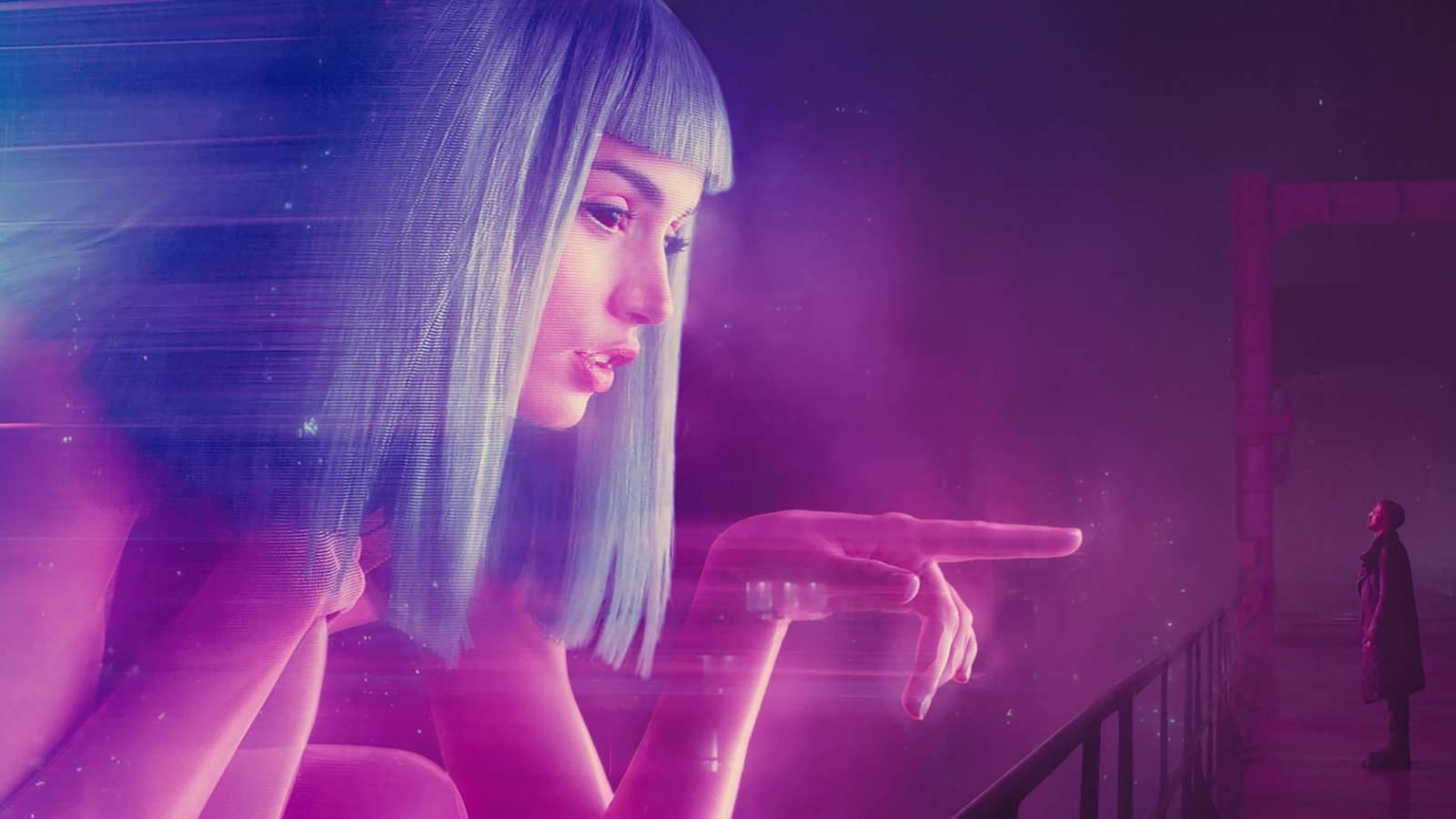
Image via Warner Bros. Pictures Published Oct 10, 2026, 1:09 PM EDT Diego Pineda has been a devout storyteller his whole life. He has self-published a fantasy novel and a book of short stories, and is actively working on publishing his second novel. A lifelong fan of watching movies and talking about them endlessly, he writes reviews and analyses on his Instagram page dedicated to cinema, and occasionally on his blog. His favorite filmmakers are Andrei Tarkovsky and Charlie Chaplin. He loves modern Mexican cinema and thinks it's tragically underappreciated. Other interests of Diego's include reading, gaming, roller coasters, writing reviews on his Letterboxd account (username: DPP_reviews), and going down rabbit holes of whatever topic he's interested in at any given point. Sign in to your Collider account There are multiple ways for a science fiction movie to be legendary, from its having groundbreaking visual effects to its having deeply intricate and atmospheric world-building. One aspect of sci-fi filmmaking that's often awfully underappreciated, however, is character writing. A solid screenplay is necessary for any sci-fi movie to be truly great, and characters who are profoundly interesting are pretty much vital for any sci-fi screenplay to be solid. We aren't talking about characters who are just cool, or memorable, or even just emotionally compelling. We're talking about characters who are deeply interesting, the kinds with backstories so fascinating and personalities so complex that you never stop wanting to learn more about them. From modern masterpieces like District 9 to foundational classics like Aliens, several of the best sci-fi films of all time also happen to contain fascinating characters. 10 'District 9' (2009) Image via Sony Pictures Releasing Peter Jackson of The Lord of the Rings fame was planning to produce a movie adaptation of the Halo video game series directed by Neill Blomkamp, who had never directed a feature film before. That project never came together, so the pair instead decided to use props and items originally made for the Halo movie to make District 9, almost inarguably the greatest and most noteworthy sci-fi film ever to have come out of the African continent. This South African masterpiece is one of the best R-rated sci-fi movies since 2000, with character writing that serves a rejection of traditional genre tropes of heroism and morality. This is a sci-fi story that relies not on tried-and-true archetypes, but on fundamentally flawed and deeply nuanced characters who perfectly embody the narrative's thematic critiques of apartheid, institutionalized racism, and xenophobia. 9 'Gattaca' (1997) Image via Sony Pictures Releasing Yet another exceptional sci-fi feature film directorial debut, Andrew Niccol's Gattaca has gone down in history as one of the best hard sci-fi movies of all time. The film draws on concerns on the potential dark consequences of reproductive technologies that facilitate eugenics, concerns that have tragically allowed the film to age like fine wine as one of the most ahead-of-their-time sci-fi masterpieces of the 1990s. But where it may have been easy for Niccol to write Gattaca's characters simply as victims of a dystopian society, all of these characters instead offer powerful and insightful reflections on how a society where eugenics are the norm might view humanity's inherent worth. By realizing that the most fascinating aspect of this kind of dystopia would be not the genetic technology itself, but people's relation to it, Niccol crafted some of the most interesting characters of any dystopian sci-fi movie in history. 8 'Dune: Part Two' (2024) Image via Warner Bros. Pictures Frank Herbert's Dune may well be the greatest and most important sci-fi novel of the 20th century, which makes it all the more admirable that Denis Villeneuve's film duology adaptation turned out as well as it did. Indeed, exceptional though 2021's Dune may be, it's 2024's Dune: Part Two that's among the best movies set in space released since 2020, if not perhaps even the best sci-fi epic of the 21st century. At its core, Dune is not a traditional Hero's Journey story, but rather a cautionary tale against the dangers of charismatic leaders and of religious fanaticism. It's a thematic core that pretty much demands great character writing, and Villeneuve and co-writer Jon Spaihts deliver. Paul is an absolutely fascinating anti-hero protagonist, Feyd-Rautha is a masterfully-written foil to him, and side characters like Chani and the Lady Jessica are just as riveting to watch. 7 'Blade Runner 2049' (2017) Image via United International Pictures Before he took on the most ambitious project of his career, Denis Villeneuve took Ridley Scott's Blade Runner, one of the biggest cult classics in the history of sci-fi cinema, and made one of the greatest legacy sequels in movie history. It's Blade Runner 2049, one of the most perfect sci-fi movies since 2010 and a testament to Villeneuve's tremendous quality as a filmmaker. The original Blade Runner also has some of the greatest character writing in genre film history, but it's not exactly a hot take to say that Blade Runner 2049's characters are even more interesting. You get the return of legacy characters like Rick and Rachael, as well as the introduction of fascinating new characters like Officer K and Joi, all of these written with the utmost attention to detail and nuance. 6 'Stalker' (1979) Image via Goskino Soviet auteur Andrei Tarkovsky was one of history's greatest European auteurs, a true poet with a movie camera whose career was tragically cut short due to cancer, which many believe came from his time shooting Stalker in a radioactive zone. Yet, in spite of its tragic backstory, this cinematic masterpiece is easily one of the best sci-fi movies of the last 75 years. Philosophically-charged and beautifully slow-burning, Tarkovsky's cinema was always mostly theme-driven. Stalker in particular is also remarkably character-driven, but in a way that helps to greatly elevate the philosophical and spiritual themes. The Stalker, the Writer, and the Professor are arguably Tarkovsky's three most interesting and intriguing characters, whose deep-seated motivations and desires are precisely the mysteries that fuel the film's narrative. Collider Exclusive · Sci-Fi Survival Quiz Which Sci-Fi World Would You Survive? The Matrix · Mad Max · Blade Runner · Dune · Star Wars Five universes. Five completely different ways the future went wrong — or sideways, or up in flames. Only one of them is the world your instincts were built for. Eight questions will figure out which dystopia, galaxy, or desert wasteland you'd actually make it out of alive. 💊The Matrix 🔥Mad Max 🌧️Blade Runner 🏜️Dune 🚀Star Wars TEST YOUR SURVIVAL → 01 You sense something is deeply wrong with the world around you. What do you do? The first instinct is often the truest one. APull on every thread until I understand the system — then figure out how to break it. BStop asking questions and start stockpiling — food, fuel, weapons. Questions don't keep you alive. CKeep my head down, observe carefully, and trust no one until I know who's pulling the strings. DStudy the patterns. Every system has a rhythm — learn it, and you learn how to survive it. EFind the people fighting back and join them. You can't fix a broken galaxy alone. NEXT QUESTION → 02 In a world of scarcity, what resource do you guard most fiercely? What we protect reveals what we believe survival actually requires. AKnowledge. If you understand the system, you don't need resources — you can generate them. BFuel. Everything else — movement, power, escape — runs on it. CTrust. In a world of fakes and informants, a truly reliable ally is rarer than any commodity. DWater. And after water, information — the two things empires are truly built on. EShips and credits. The galaxy is big — you survive it by being able to move through it freely. NEXT QUESTION → 03 What kind of threat keeps you up at night? Fear is useful data — if you're honest about what you're actually afraid of. AThat reality itself is a lie — that everything I experience has been constructed to keep me compliant. BA raid. No warning, no mercy — just the roar of engines and then nothing left. CBeing identified. Once someone with power decides you're a problem, you're already out of time. DBeing outmanoeuvred — losing a political game I didn't even know I was playing. EThe Empire tightening its grip until there's nowhere left to run. NEXT QUESTION → 04 How do you deal with authority you don't trust? Every dystopia has a power structure. Your approach to it determines everything. ASubvert it from the inside — learn its rules well enough to weaponise them against it. BIgnore it and stay out of its reach. The further from any power structure, the better. CAppear to comply while doing exactly what I need to do. Visibility is the enemy. DManoeuvre within it carefully. You can't beat a system you refuse to understand. EResist openly when I have to. Some things are worth the risk of being seen. NEXT QUESTION → 05 Which environment could you actually endure long-term? Survival isn't just tactical — it's physical, psychological, and very much about where you are. AUnderground bunkers and server rooms — cramped, artificial, but with access to everything that matters. BOpen wasteland — brutal sun, no shelter, constant movement. At least the threat is honest. CA dense, rain-soaked city where you can disappear into the crowd and nobody asks questions. DMerciless desert — extreme heat, no water, and something enormous living beneath the sand. EThe fringe — backwater planets and busy spaceports where the Empire's attention rarely reaches. NEXT QUESTION → 06 Who do you want in your corner when things fall apart? The company you keep is the clearest signal of who you actually are. AA tight crew of believers who've seen behind the curtain and have nothing left to lose. BOne or two people I'd trust with my life. Any more than that and someone talks. CNobody, ideally. Alliances are liabilities. I work alone unless I have no choice. DA community bound by shared hardship and mutual survival — people who need each other to last. EA ragtag team with wildly different skills and total commitment when it counts. NEXT QUESTION → 07 Where do you draw the line — if you draw one at all? Every survivor eventually faces a moment that tests what they're actually made of. AI won't harm the innocent — even the ones who'd report me without hesitation. BI do what I have to to protect the people I've chosen. Everything else is negotiable. CThe line shifts depending on who's asking and what's at stake. DI draw a long-term line — nothing that compromises my people's future, even if it'd help now. ESome lines, once crossed, can't be uncrossed. I know which ones they are. NEXT QUESTION → 08 What would actually make survival worth it? Staying alive is one thing. Having a reason to is another. AWaking others up — dismantling the illusion so no one else has to live inside it. BFinding somewhere — or someone — worth protecting. A reason to keep moving. CAnswers. Understanding what I am, what any of this means, before time runs out. DLegacy — shaping the future in a way that outlasts me by generations. EFreedom — for myself, for others, for every world still living under someone else's boot. REVEAL MY WORLD → Your Fate Has Been Calculated You'd Survive In…Your answers point to the world your instincts were built for. This is the universe your temperament, your survival instincts, and your particular brand of stubbornness were made for. The MatrixYou took the red pill a long time ago — probably before anyone offered it to you. You're a systems thinker who can't help but notice the seams in things. You're drawn to understanding how the system works before figuring out how to break it. You'd find the Resistance, or it would find you — your instinct for spotting constructed realities is the machines' worst nightmare. You function best when you have access to information and the freedom to act on it. The Matrix built an airtight prison. You'd be the one probing the walls for the door. Mad MaxThe wasteland doesn't reward the clever or the well-connected — it rewards those who are hard to kill and harder to break. That's you. You don't need comfort, community, or a cause larger than the next horizon. You need a vehicle, a clear threat, and enough fuel to outrun it — and you're good at all three. You are unsentimental enough to survive that world, and decent enough — just barely — to be something more than another raider. In the wasteland, that distinction is everything. Blade RunnerYou'd survive here because you know how to exist in moral grey areas without losing yourself completely. You read people accurately, keep your circle small, and ask the questions others prefer not to answer. In a city where humanity is a legal designation rather than a feeling, you hold onto something that keeps you functional. You're not a hero. But you're not lost, either. In Blade Runner's world, that distinction is everything. DuneArrakis is the most hostile environment in the known universe — and you are precisely the kind of person it rewards. Patience, discipline, and political awareness are your core strengths — and on Arrakis, they're survival tools. You understand that the long game matters more than any single victory. Others come to Dune and are consumed by it. You'd learn its logic and earn its respect. In time, you wouldn't just survive Arrakis — you'd begin to reshape it. Star WarsThe galaxy far, far away is vast, loud, and in a constant state of violent political upheaval — and you wouldn't have it any other way. You find meaning in being part of something larger than yourself — a cause, a crew, a rebellion. You'd gravitate toward the Rebellion, or the fringes, or whatever pocket of the galaxy still believes the Empire's grip can be broken. You fight — not because you have to, but because standing aside isn't something you're capable of. In Star Wars, that willingness is what makes all the difference. ↻ RETAKE THE QUIZ 5 'Arrival' (2016) Who, if not Denis Villeneuve, could have possibly made not just one, nor just two, but a whopping three of the films with the most interesting characters in the history of sci-fi cinema? There's a strong argument to be made in favor of Arrival having the most interesting and complex character writing in Villeneuve's whole filmography—which is interesting, considering that its ensemble is substantially thinner than that of Dune: Part Two or Blade Runner 2049. Written by Eric Heisserer and based on Ted Chiang's novella Story of Your Life, Arrival is a powerful reflection on grief, love, memories, and the power of language in shaping human consciousness. The side characters all perfectly drive forward the movie's hard sci-fi elements and its heart of radical empathy, and Louise in particular may very well be the most fascinating protagonist of any Villeneuve movie to date. 4 'Children of Men' (2006) Image via Universal Pictures In order to not second guess his directorial decisions, Alfonso Cuarón chose not to read the P. D. James novel that Children of Men was based on, instead opting to read only a summary. The resulting masterful film may not be all that faithful to the source material, but one thing is certain, and that's that it's one of the best R-rated soft sci-fi movies of all time. These aren't traditional dystopian sci-fi heroes valiantly rebelling against an oppressive society. Rather, the characters of Children of Men are creatures of raw psychological realism dealing with a world made up of pure existential dread. There are no clear moral or ethical boundaries in the fight against the system that these characters engage in, and that's what makes them so interesting. 3 'The Thing' (1982) Image via Universal Pictures Though John W. Campbell Jr.'s novella Who Goes There? had already been adapted for the silver screen before, legendary horror filmmaker John Carpenter (before he cemented his legendary reputation) wanted to make a movie that stuck closer to the source material. From this wish came The Thing, which many would confidently call Carpenter's magnum opus. It's one of the greatest and most influential sci-fi horror movies of all time, one whose atmosphere of fear and paranoia depends entirely on how interesting its ensemble of characters is—and thankfully, they are all, indeed, deeply enthralling. The Thing is survival horror in its purest form, full of characters that, instead of making the dumb mistakes that plague oh so many survival horror films, are actually built with intelligence, pragmatism, and intriguing motivations. 2 'Aliens' (1986) Image via 20th Century Studios Back in 1979, Ridley Scott completely revolutionized sci-fi horror with Alien, which itself had some of the masterful character writing that Hollywood has ever seen. There's one other movie, however, that's even more of a masterclass in sci-fi horror character writing: James Cameron's sequel, Aliens, far and away one of the greatest action movies in the modern history of Hollywood. Ripley is at her most fascinating here, as Aliens is the movie that truly cemented her reputation as one of the most interesting action heroines in the history of cinema. However, the film is an ensemble piece at heart, and it lives up to that title with some deeply intriguing and engaging side characters. From Private Hudson to Carter Burke to Newt, you want to know more about pretty much everyone who appears on the screen in Aliens. 1 'Star Wars' (1977) Image via 20th Century Studios Back in 1977, George Lucas' Star Wars (now retroactively known as Episode IV — A New Hope) became the most financially successful feature film in history up to that point, a title that it held for years. It's quite possible that not even then, though, could anybody have predicted just how much of a pop-cultural juggernaut this game-changing franchise would become. Part sci-fi, part fantasy, Star Wars continues to be the most iconic genre flick in history almost 50 years after its release. It's also the fantasy movie with the most interesting characters, a testament to the fact that even archetypal heroes and villains like the ones that populate this direct cinematic adaptation of Joseph Cambell's Hero's Journey story archetype can nevertheless be legendary. From the crew of the Millennium Falcon to Darth Vader himself, practically every character introduced in Star Wars can be counted among the most interesting, fun, and iconic characters in film history.
10 Sci-Fi Movies With the Most Interesting Characters, Ranked
Full Article
Original Source
Read the full article at Collider →KhanList aggregates and links to publicly available news content. We do not host full articles from third-party sources. Always verify important information with original sources.