
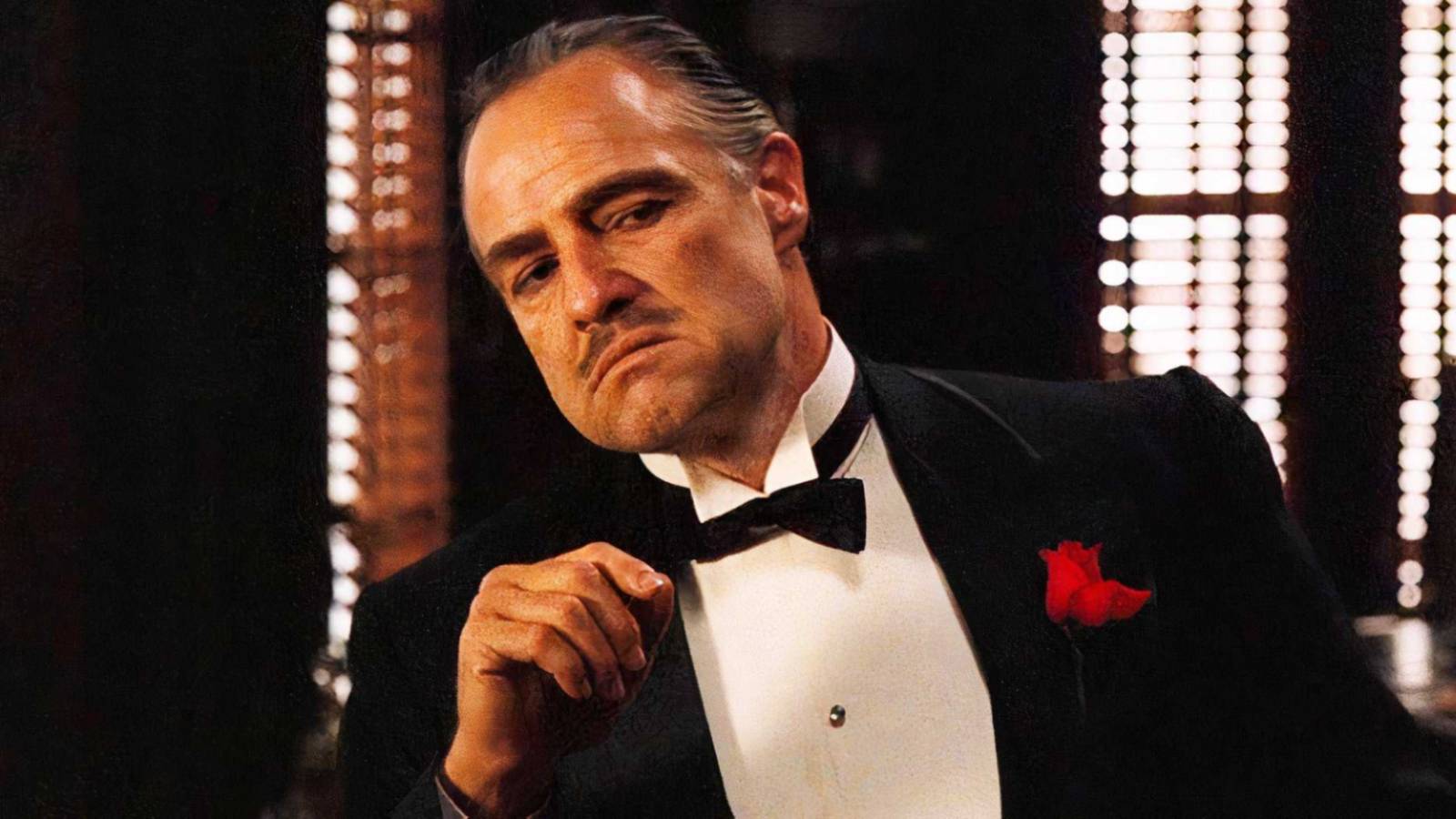
Image via Paramount Pictures Published Oct 21, 2026, 7:51 AM EDT Diego Pineda has been a devout storyteller his whole life. He has self-published a fantasy novel and a book of short stories, and is actively working on publishing his second novel. A lifelong fan of watching movies and talking about them endlessly, he writes reviews and analyses on his Instagram page dedicated to cinema, and occasionally on his blog. His favorite filmmakers are Andrei Tarkovsky and Charlie Chaplin. He loves modern Mexican cinema and thinks it's tragically underappreciated. Other interests of Diego's include reading, gaming, roller coasters, writing reviews on his Letterboxd account (username: DPP_reviews), and going down rabbit holes of whatever topic he's interested in at any given point. Sign in to your Collider account Back in 1967, Paramount Pictures optioned Mario Puzo's manuscript for The Godfather for a film adaptation, intending to make a cheap and modern gangster flick. After the book became a massive critical hit and bestseller upon publication, however, the studio knew that they needed to make a far more serious movie. The rest is history. Francis Ford Coppola took on the project and delivered what many still praise as the single greatest feature film of all time. Regardless of any subjective superlatives, however, one thing is objectively undeniable: The Godfather is among the most universally acclaimed movies the big screen has ever seen, and for good reason. There are 10 movies, however, that definitely give it a run for its money in terms of near-flawless quality. Of course, to avoid comparing apples to oranges, these must be movies that are similar to The Godfather in some substantial way. 10 'Apocalypse Now' (1979) Image via United Artists It was screenwriter John Milius who came up with the idea to adapt the plot of Joseph Conrad's classic novella Heart of Darkness into a Vietnam War film, with Francis Ford Coppola himself attached as the director. After one of the most notoriously hellish productions in the history of Hollywood, we got Apocalypse Now, now widely recognized as one of the best movies based on books in history. Coppola was on a generational run throughout the 1970s, which should make it come as no surprise that most cinephiles would agree that Apocalypse Now gives The Godfather a run for its money. It's the most perfect Vietnam War film ever made, a hypnotic descent through the River Styx right into the bowels of Hell itself. It's technically faultless, impeccably performed, and crafted with a level of psychological depth that not even The Godfather can match. 9 'City of God' (2002) Image via Miramax Films There are remarkably few crime movies from the 21st century that can truly be said to give The Godfather a run for its money, but if one had to go with one, it would undoubtedly be a masterful film that's not only the highest-rated movie of the 21st century on Letterboxd, but even higher-rated than The Godfather itself: Fernando Meirelles and Kátia Lund's City of God. It's one of the best gangster movies in film history, a gritty look at life in the slums of Rio with the perfect balance between carefully-executed shock value and deeply heartfelt character drama. It's certainly a far more brutal movie than The Godfather, and it has character writing that is just as admirably complex, visuals that are just as unforgettable, and set pieces that are almost as memorable as those from Coppola's magnum opus. 8 'Once Upon a Time in America' (1984) Image via Warner Bros. Pictures Even though he's far better known for his Westerns—spaghetti Westerns in particular, a subgenre he's practically the father of—, Sergio Leone also experimented with other genres over the course of his career. Case in point: the epic crime drama genre which produced Once Upon a Time in America, one of the best epic movie masterpieces of all time. Clocking in at nearly four hours long, Once Upon a Time in America is definitely best left for a day when you have a lot of time on your hands, but it's oh so worth every minute. In terms of scale and scope, it feels even more vast and sweeping than The Godfather; and in terms of its deconstruction of the American gangster myth, it's just as fascinatingly nuanced and layered as the 1972 classic. 7 'The Shawshank Redemption' (1994) Image via Columbia Pictures For many years, The Shawshank Redemption has been right atop The Godfather as the single highest-rated feature film of all time on IMDb, and it's not difficult at all to see the reasons why. Based on the Stephen King novella Rita Hayworth and the Shawshank Redemption, this Frank Darabont masterpiece has a claim to the title of "best prison drama of all time" so strong that it's impossible to ignore. Though it was made on a pretty modest $25-million-dollar budget, the film failed to break even at the box office in spite of the critical acclaim that welcomed it. Over three decades after its release, however, most cinephiles would agree that it's one of those movies that can change anyone's life. Deeply moving, philosophical, and human, it really is one of the most life-affirming works of art that the big screen has ever delivered. 6 'Goodfellas' (1990) Image via Warner Bros. Pictures When people talk about the greatest crime dramas of all time, Martin Scorsese's name is always bound to pop up; and when Martin Scorsese's name pops up, there's a virtual guarantee that Goodfellas will be mentioned at some point in the conversation. It's only natural, seeing as this is one of the most near-flawless crime films in Hollywood history, complete with one of the best casts of any gangster movie. Goodfellas has plenty to offer on top of Ray Liotta, Joe Pesci, and Robert DeNiro's masterful performances, however. Much like The Godfather, it's a dismantling and critique of the dark underbelly of the American Dream, demystifying the mob through a dramatization of the life and work of Henry Hill. It's kinetic, it's raw, it's authentic, and it's irresistibly entertaining from beginning to end. Collider Exclusive · Oscar Best Picture Quiz Which Oscar Best PictureIs Your Perfect Movie? Parasite · Everything Everywhere · Oppenheimer · Birdman · No Country Five Oscar Best Picture winners. Five completely different visions of what cinema can be — and what it can do to you. One of them is the film that was made for the way your mind works. Ten questions will figure out which one. 🪜Parasite 🌀Everything Everywhere ☢️Oppenheimer 🐦Birdman 🪙No Country for Old Men FIND YOUR FILM → 01 What kind of film experience do you actually want? The best movies don't just entertain — they leave something behind. ASomething that pulls the rug out — that makes me think I'm watching one kind of film and then reveals I'm watching another entirely. BSomething overwhelming — funny, sad, absurd, and genuinely moving, all at once. CSomething grand and weighty — a film that makes me feel the full scale of what I'm watching. DSomething formally daring — a film that pushes what cinema can even do. ESomething lean and relentless — pure tension with no wasted frame. NEXT QUESTION → 02 Which idea grabs you most in a film? Great films are driven by a central obsession. What's yours? AClass, inequality, and what people are willing to do when desperation meets opportunity. BIdentity, family, and the chaos of trying to hold your life together when everything is falling apart. CGenius, moral responsibility, and the catastrophic weight of a decision you can never take back. DEgo, legacy, and the terror of becoming irrelevant while you're still alive to watch it happen. EEvil, chance, and whether moral order actually exists or if we just tell ourselves it does. NEXT QUESTION → 03 How do you like your story told? Form is content. The way a story is shaped changes what it means. AGenre-twisting — I want it to start in one lane and migrate into something completely different. BMaximalist and genre-blending — comedy, action, drama, sci-fi, all in one ride. CEpic and non-linear — cutting between timelines, building a mosaic of cause and consequence. DA single unbroken flow — I want to feel like I'm living it in real time, no cuts to safety. ESpare and precise — every scene doing exactly what it needs to do and nothing more. NEXT QUESTION → 04 What makes a truly great antagonist? The opposition defines the protagonist. What kind of opposition fascinates you? AA system — invisible, structural, and almost impossible to fight because it has no single face. BThe self — the ways we sabotage, abandon, and fail the people we love most. CHistory — the unstoppable momentum of events that no single person can stop or redirect. DThe industry — the machinery of culture that chews up talent and spits out irrelevance. EPure, implacable evil — a force so certain of itself it becomes almost philosophical. NEXT QUESTION → 05 What do you want from a film's ending? The final note is the one that lingers. What do you want it to sound like? AShock and inevitability — a conclusion that recontextualises everything that came before it. BEarned emotion — I want to cry, laugh, and feel genuinely hopeful, even if the world is a mess. CDevastation and grandeur — an ending that makes me sit in silence for a few minutes after. DAmbiguity — something that leaves enough open that I'm still thinking about it days later. EBleakness — an honest refusal to pretend the world is tidier than it actually is. NEXT QUESTION → 06 Which setting pulls you in most? Where a film takes place shapes everything — mood, stakes, what's even possible. AA gleaming modern city with a hidden underside — beauty masking rot, wealth masking desperation. BA collapsing suburban life that opens onto something infinite — the multiverse of a single ordinary person. CThe corridors of power and science at a world-historical turning point — where decisions echo for decades. DThe grimy, alive chaos of New York and Hollywood — fame as both destination and trap. EVast, indifferent landscape — desert and highway where violence arrives without warning or reason. NEXT QUESTION → 07 What cinematic craft impresses you most? Every great film has a signature — a technical or artistic element that makes it unmistakable. AProduction design and mise-en-scène — every frame composed to carry meaning beneath the surface. BEditing and tonal control — the ability to move between registers without losing the audience. CScore and sound design — music that becomes inseparable from the dread and awe of what you're watching. DCinematography as performance — the camera not recording events but participating in them. ESilence and restraint — what's left unsaid and unshown doing more work than any dialogue could. NEXT QUESTION → 08 What kind of main character do you root for? The protagonist is the lens. Who you choose to follow says something about you. ASomeone smart and resourceful who makes increasingly dangerous decisions under pressure. BSomeone overwhelmed and ordinary who turns out to be capable of something extraordinary. CA brilliant, tortured figure whose gifts and flaws are inseparable from each other. DA self-destructive artist whose ego is both their superpower and their undoing. EA quiet, principled person trying to make sense of a world that has stopped making sense. NEXT QUESTION → 09 How do you feel about a film that takes its time? Pace is a choice. Some films sprint; others let tension accumulate slowly, deliberately. AI love a slow build when I know the payoff is going to be seismic — patience for a devastating reveal. BGive me relentless momentum — I want to feel breathless and emotionally spent by the end. CEpic runtime doesn't scare me — if the material demands three hours, give me three hours. DI want it to feel propulsive even when nothing is technically happening — restless energy throughout. EDeliberate and unhurried — I want dread to accumulate in the spaces between the action. NEXT QUESTION → 10 What do you want to feel walking out of the cinema? The best films leave a mark. What kind of mark do you want? AUnsettled — like I've just seen something I can't fully explain but can't stop thinking about. BMoved and energised — like the film reminded me what actually matters and gave me something to hold onto. CHumbled — like I've been in the presence of something genuinely important and overwhelming. DExhilarated — like I've just seen cinema doing something it's never quite done before. EHaunted — like a cold, quiet dread that stays with me for days. REVEAL MY FILM → The Academy Has Decided Your Perfect Film Is…Your answers have pointed to one Oscar Best Picture winner above all others. This is the film that was made for the way your mind works. ParasiteYou are drawn to films that operate on multiple levels simultaneously — that begin in one genre and quietly, brilliantly migrate into another. Bong Joon-ho's Parasite is a film about class, desire, and the architecture of inequality that manages to be darkly funny, deeply suspenseful, and genuinely shocking across a single extraordinary running time. Your instinct is for cinema that hides its true intentions until the moment it's ready to reveal them. Parasite is exactly that — a film that rewards close attention and punishes assumptions, right up to its devastating final image. Everything Everywhere All at OnceYou want it all — and this film gives you all of it. The Daniels' Everything Everywhere All at Once is one of the most maximalist films ever made: action comedy, multiverse sci-fi, family drama, existential crisis, and a genuinely earned emotional core that sneaks up on you amid the chaos. You are someone who responds to ambition, who doesn't want cinema to choose between being entertaining and being meaningful. This film refuses that choice entirely. It is overwhelming by design, and its overwhelming nature is precisely the point — because the feeling of being crushed by infinite possibility is exactly what it's about. OppenheimerYou are drawn to cinema on a grand scale — films that understand history not as a backdrop but as a force, and that place their characters inside that force and watch what happens. Christopher Nolan's Oppenheimer is a film about the terrifying gap between what we can do and what we should do, told with the full weight of one of the most consequential moments in human history behind it. You want your films to feel important without feeling self-important — to earn their ambition through sheer craft and the gravity of their subject. Oppenheimer does exactly that. It is enormous, complicated, and refuses easy comfort. BirdmanYou are drawn to films that foreground their own construction — that make the how of the filmmaking part of the what it's about. Alejandro González Iñárritu's Birdman, shot to appear as a single continuous take, is cinema examining itself through the cracked mirror of a fading actor's ego. You respond to formal daring, to the feeling that a film is doing something that probably shouldn't be possible. Michael Keaton's performance and Emmanuel Lubezki's restless camera create something genuinely unlike anything else — a film that is simultaneously about creativity, relevance, self-destruction, and the impossibility of ever truly knowing if your work means anything at all. No Country for Old MenYou are drawn to cinema that trusts silence, that refuses to explain itself, and that treats dread as a form of meaning. The Coen Brothers' No Country for Old Men is a film about the arrival of a new kind of evil — implacable, arbitrary, and utterly indifferent to the moral frameworks we use to make sense of the world. It is one of the most formally controlled films ever made, and its controlled restraint is what makes it so terrifying. You want your films to haunt you, not comfort you. You are not interested in resolution if resolution would be dishonest. No Country for Old Men is honest in a way that most cinema never dares to be. ↻ RETAKE THE QUIZ 5 'The Good, the Bad and the Ugly' (1966) At first glance, it may not seem like The Godfather and The Good, the Bad and the Ugly share much in common, but a look under the surface reveals two sweeping epics focused on morally ambiguous characters, with stories looking to de-mythify different eras of American history. In the case of this Italian Sergio Leone spaghetti Western, it's the Civil War period. The result is one of the most fun Westerns of all time, one that's often hailed right alongside The Godfather as one of the greatest epics of the 20th century. Where many laud Coppola's masterpiece as the ultimate American crime drama, those same people would very likely be more than willing to call Leone's magnum opus the absolute pinnacle of Western filmmaking. 4 'High and Low' (1963) Image via Toho There are many who would confidently call Japanese auteur Akira Kurosawa the greatest filmmaker in the history of cinema—and even those who wouldn't go as far as to place him right at the top would likely agree that he's at least among the best. To understand why, one needn't look much further than High and Low. Though Kurosawa was better known for his contributions to samurai cinema, it just so happens that one of his best works is a crime thriller based on the American Evan Hunter novel King's Ransom. It's one of those movies that many would say are unironically better than The Godfather, a testament to why Kurosawa has remained among the most influential filmmakers in history, influential even to Coppola himself. With its perfect three-part structure, its flawless pacing, and its downright faultless technical qualities, it's not at all exaggerated to say that High and Low rivals The Godfather's quality in practically every department. 3 '12 Angry Men' (1957) Image via United Artists The question of what the greatest film from Hollywood's Golden Age is typically brings up many different answers, but there's one that almost always comes up more than most: 12 Angry Men, a film so perfect that it's almost hard to believe that it was Sidney Lumet's debut as a director. Adapted by Reginald Rose from his 1954 teleplay, it's one of the most powerfully theatrical movies in the history of cinema. 12 Angry Men is also one of the best must-watch movies of the 1950s, serving as both a critique of the American justice system during the McCarthy era and a deeply human tale about truth and judgment. It may seem abundantly simple on the surface—certainly simpler than a movie as massive as The Godfather—but it's precisely in that technical simplicity that it finds the room to be so emotionally and thematically hard-hitting. 2 'Citizen Kane' (1941) Image via RKO Radio Pictures There's one film from Hollywood's Golden Age that people often bring up when the question of whether there's any movie better than The Godfather is brought up: Orson Welles' Citizen Kane, easily one of the most universally acclaimed movies of all time. This is also a film that makes it difficult to believe it was a debut, but indeed, Orson Welles' first venture into filmmaking absolutely revolutionized the art form. Through its groundbreaking camerawork, unparalleled narrative structure, and never-seen-before ambition, Citizen Kane completely re-defined what Hollywood cinema was capable of during Hollywood's Classical period. Much like The Godfather, it's all about a man's rise to power at the expense of his values, and it may very well be the quintessential Hollywood character study. 1 'The Godfather Part II' (1974) Image via Paramount Pictures You'd be hard-pressed to find anyone who would be unwilling to admit that if there is any one film that gives The Godfather a run for its money, it's the sequel that many still recognize as one of those rare sequels that are even better than their predecessor: The Godfather Part II, which tracks Vito Corleone's rise to power and Michael Corleone's spiritual downfall in parallel. Part prequel, part sequel, The Godfather Part II is so massive yet so perfectly structured that it may very well be the most ambitious gangster movie of all time. Regardless, what's undeniable is that it's a practically flawless masterpiece that's even bigger, more epic, and more emotional than The Godfather. It's visually delightful, the performances are phenomenal, and the entire third act is one of the most enrapturing in the history of cinema. The Godfather Part II Release Date December 20, 1974 Runtime 202 minutes Cast Al Pacino Don Michael Corleone
10 Movies That Give 'The Godfather' a Run for Its Money
Full Article
Original Source
Read the full article at Collider →KhanList aggregates and links to publicly available news content. We do not host full articles from third-party sources. Always verify important information with original sources.