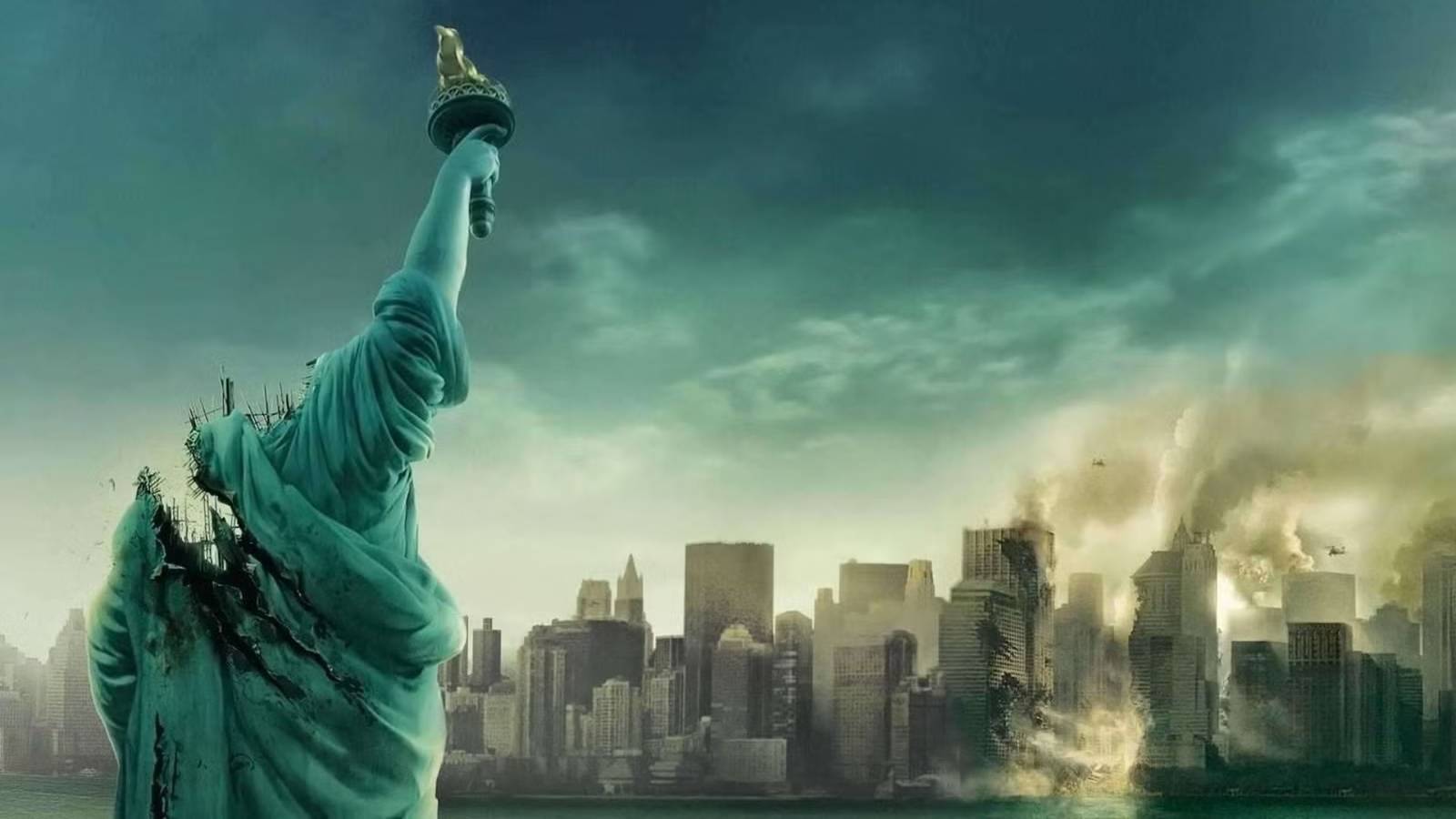
Published Jul 25, 2026, 8:10 PM EDT Shawn S. Lealos is an entertainment writer who is a voting member of the Oklahoma Film Critics Circle. He has written for Screen Rant, CBR, ComicBook, The Direct, The Sportster, Chud, 411mania, Renegade Cinema, Yahoo Movies, and many more. Shawn has a bachelor's degree in professional writing and a minor in film studies from the University of Oklahoma. He also has won numerous awards, including several Columbia Gold Circle Awards and an SPJ honor. He also wrote Dollar Deal: The Story of the Stephen King Dollar Baby Filmmakers, the first official book about the Dollar Baby film program. Shawn is also currently writing his first fiction novel under a pen name, based in the fantasy genre. To learn more, visit his website at shawnlealos.net. Found footage horror movies changed everything about horror when The Blair Witch Project came out, but that wasn't the first film in that subgenre, and it isn't the best either. Found footage horror refers to movies that show the action from the recordings taken of the sequence of events, whether that is people using a video recorder or phone to record the events, or from unique items like news footage or security camera footage. In all these cases, the idea is that something bad happened, and the movie is put together to show how the tragedy occurred, usually from the point of view of the victims who either died or disappeared. In many cases, these movies are low-budget affairs, as shooting something as found footage eliminates much of the production cost from the movie, since elaborate camera setups and framing take away from the idea that these events really happened, which is a big selling point. The original found footage movies were often sold on the idea that these are true stories and the viewer is watching actual footage from the events to see what happened. That is how The Blair Witch Project became such a worldwide phenomenon. More recent examples clearly don't care about presenting things as a real-world story, since they involve anything from monsters and alien invasions to supernatural otherworldly experiences. Trollhunter (2010) Trollhunter is a unique found footage horror movie for several reasons. First, this is a Norwegian dark fantasy found footage film, and it succeeds just as well in the subgenre as the more popular American releases. It is also from an accomplished director in André Øvredal (The Autopsy of Jane Doe), and he does a great job in combining the tropes of found footage with the idea of a kaiju-level threat in the Norwegian trolls. The movie follows three film students from Volda University College, Thomas, Johanna, and Kalle, who set out to make a documentary about a suspected bear poacher named Hans (Otto Jespersen) only to discover that he is actually hunting giant trolls who leave their protected habitat. Trollhunter shows that found footage is a flexible global format, not a uniquely American gimmick, and helps clear ground for later releases like Willow Creek. Host (2020) Released in 2020, Host is a found footage horror movie by Rob Savage that was an extremely short film and took advantage of the entire idea of being secluded and alone during the pandemic. The movie, which checked in at under an hour, has six friends who hold weekly Zoom meetings during the COVID-19 lockdown to keep in touch. They then hire a medium, Seylan, to conduct an online seance. As with any movie of this kind, things go wrong, and the friends end up terrorized when an evil entity attaches itself to their Zoom call. The big selling point here is that the entire movie is a recorded Zoom session, rather than a movie shot normally. Each cast member shot it remotely using their own cameras, sound, lighting, and practical effects, and even Savage directed it over Zoom. This movie was a big part of the screenlife era and helped update found footage for a new generation. Lake Mungo (2008) Lake Mungo is an Australian psychological horror film written and directed by Joel Anderson. The movie follows a family attempting to learn the truth after 16-year-old Alice Palmer drowns near a dam in the small town of Ararat. This investigation starts when they see what they think is her ghost in home video footage, so her brother Matthew sets up a camera around the house to document it. This is a very different found footage movie because it also fits into the idea of a mockumentary, as it is not a single recovered tape telling the story but a pseudo-documentary built from talking-head interviews, family home videos, news footage, and recovered phone clips, all assembled as if by a real documentary crew. Lake Mungo proves found footage can have a quieter, mockumentary-leaning feel rather than one based on jump scares. Creep (2014) Creep is found footage psychological horror film directed by Patrick Brice in his feature debut, based on a story co-written with star Mark Duplass. This is one of the more disturbing found footage horror movies, following a videographer named Aaron (Brice) who answers an ad on Craigslist to make $1,000 a day to film a man named Josef (Duplass), who says he is dying of a tumor and wants a video diary for his unborn son. The film is set up as footage from a paid videographer's day-in-the-life tapes. Aaron carries the camera because that is literally what he was hired to do, which lets Brice keep the frame in the room even when every instinct says to leave, one complaint about many found footage horror movies. Creep strips found footage down to focus on just two people, one camera, and a single relationship. REC (2007) REC is a Spanish-language found footage zombie horror film co-written and directed by Jaume Balagueró and Paco Plaza. The story follows a television reporter named Angela Vidal (Manuela Velasco) and her cameraman as they are shooting a late-night ride-along segment with Barcelona firefighters when a routine call to an apartment building turns into a viral outbreak. The format of this found footage horror movie is different because the tapes are a TV news crew's raw footage. Angela's cameraman keeps filming both because it is his job and because the building has been sealed under government quarantine, so the camera is also the only witness. The camera's night vision became one of the most copied images in the subgenre, and the forced quarantine setup and bodycam usage became synonymous in found footage from this point on. Cannibal Holocaust (1980) Cannibal Holocaust is one of the earliest known forms of the found footage horror genre, released in 1980. This Italian horror film directed by Ruggero Deodato stars Robert Kerman as anthropologist Harold Monroe, a man who leads a rescue team into the Amazon to find a missing American documentary crew who went into the rainforest to film indigenous cannibal tribes. This is where he finds their cans of exposed film. This is an early attempt at found footage, with only half the runtime as the recovered documentary footage itself. It is presented as raw 16mm reels that survivors and executives screen back to civilization to learn what happened to the crew. Cannibal Holocaust invented the idea of found footage, from the rescued reel, the diegetic film crew, and the screening-room frame story. Cloverfield (2008) Cloverfield took the ideas that movies like The Blair Witch Project and Paranormal Activity introduced, and it took them to a blockbuster level. While most found footage horror movies are low-budget affairs, Matt Reeves took the idea and showed what the movies could look like with a lot of money in the budget. Instead of a small claustrophobic story, this was a giant disaster movie with an invasion of a giant creature attacking New York City. The idea of making this found footage stretched things, as there should have been no way someone would keep filming things with a giant kaiju monster killing everyone in New York City. However, it worked well and was a box office success. That was thanks to Reeves proving that a giant creature feature could be told through one person and their handheld camera for a fraction of the cost of a movie like Godzilla. V/H/S (2012) V/H/S is easily the most creative and inventive found footage horror movie ever made. This is because this isn't a regular movie, but is an anthology where different horror genre directors put together short films using found footage and show all the different ways found footage can terrify audiences. The movie even finds a way to tie it all together, as these are found VHS tapes with the different stories playing out on each tape. Adam Wingard directed the wraparound story, while each interior segment is a different tape with its own director: "Amateur Night" (David Bruckner), "Second Honeymoon" (Ti West), "Tuesday the 17th" (Glenn McQuaid), "The Sick Thing That Happened to Emily When She Was Younger" (Joe Swanberg), and "10/31/98" (Radio Silence). V/H/S turned found footage into a sandbox for short-form experimentation. Paranormal Activity (2007) Paranormal Activity is a supernatural horror film written and directed by Oren Peli in his feature debut. The movie was shot for only around $15,000 in Peli's own San Diego home. A young couple, Katie (Katie Featherston) and Micah (Micah Sloat), believe their home is haunted. A psychic, Dr. Fredrichs, tells Katie she is being followed by a demon that feeds on negative energy, not a ghost. The structure here has Micah setting up a video camera in the bedroom to capture proof of the haunting. The film alternates between his handheld day footage and locked-off bedroom tripod shots at night, with a timecode used as a structuring device. Paranormal Activity gives found footage horror its main commercial template, with a locked-down camera in a single location and shot on a microbudget. The Blair Witch Project (1999) The movie that really started everything for the found footage horror genre is the 1999 movie, The Blair Witch Project. This movie was a massive success for two big reasons. One is that the found footage genre at the time was new and fresh, and it was like nothing people were going to theaters to see. The second was its promotional work, where the studio and filmmakers hinted that it was a true story and the movie was from real-life tapes of missing people. The film is the recovered footage from their cameras, a 16mm black-and-white film magazine for the doc itself and a Hi8 color camcorder for behind-the-scenes. A title card frames it as the missing students' raw tapes, found a year later. The cast was sent out without a full script and then pushed into different situations where they showed their actual fear. The Blair Witch Project is the film that defined found footage horror for the mainstream.
10 Found Footage Horror Movies Ranked By How They Defined the Subgenre
Full Article
Original Source
Read the full article at Screenrant →KhanList aggregates and links to publicly available news content. We do not host full articles from third-party sources. Always verify important information with original sources.