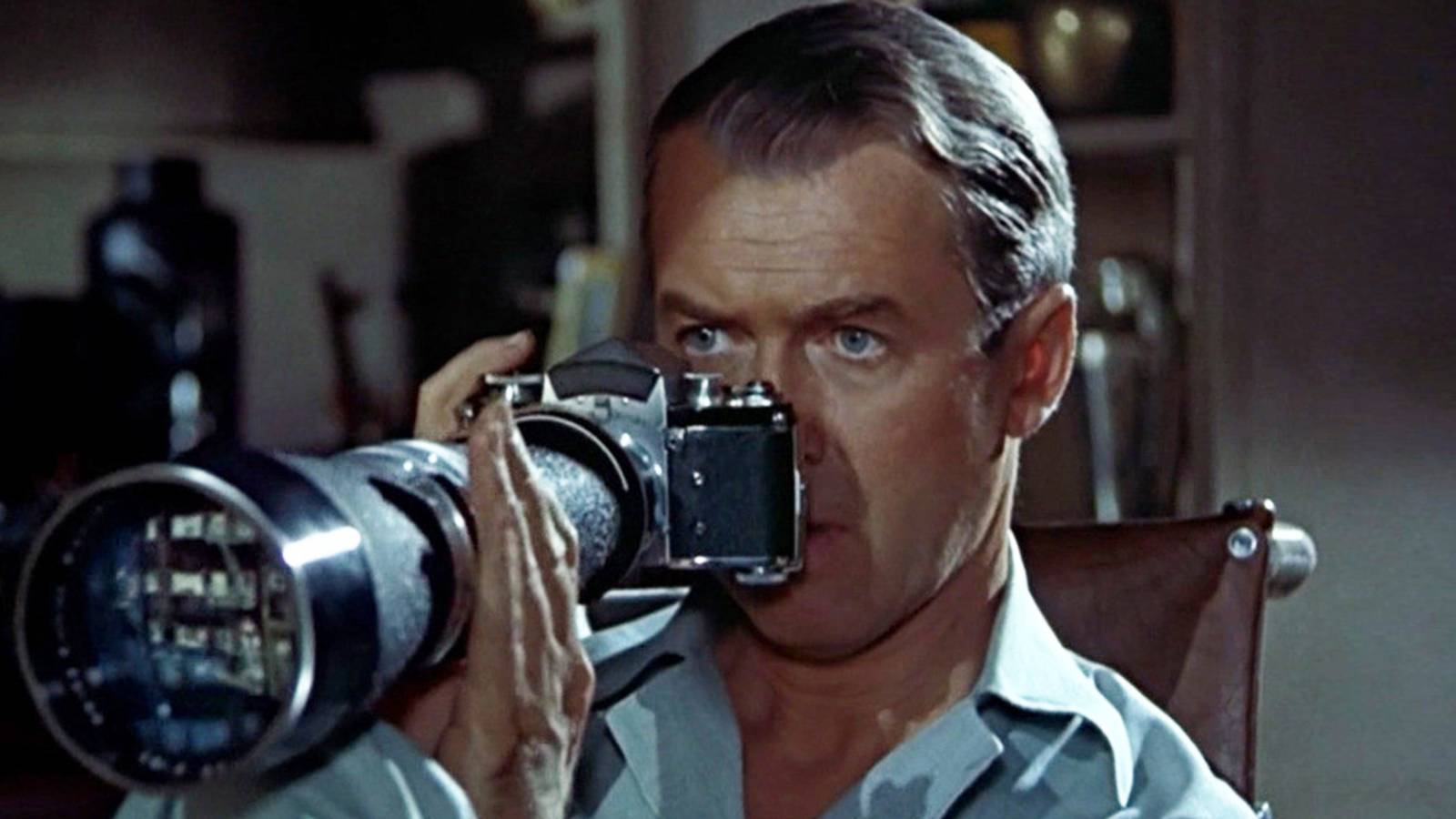
Image via Paramount Pictures Published Jul 25, 2026, 10:28 AM EDT Jeremy has more than 2600 published articles on Collider to his name, and has been writing for the site since February 2022. He's an omnivore when it comes to his movie-watching diet, so will gladly watch and write about almost anything, from old Godzilla films to gangster flicks to samurai movies to classic musicals to the French New Wave to the MCU... well, maybe not the Disney+ shows. His favorite directors include Martin Scorsese, Sergio Leone, Akira Kurosawa, Quentin Tarantino, Werner Herzog, John Woo, Bob Fosse, Fritz Lang, Guillermo del Toro, and Yoji Yamada. He's also very proud of the fact that he's seen every single Nicolas Cage movie released before 2022, even though doing so often felt like a tremendous waste of time. He's plagued by the question of whether or not The Room is genuinely terrible or some kind of accidental masterpiece, and has been for more than 12 years (and a similar number of viewings). When he's not writing lists - and the occasional feature article - for Collider, he also likes to upload film reviews to his Letterboxd profile (username: Jeremy Urquhart) and Instagram account. He has achieved his 2025 goal of reading all 13,467 novels written by Stephen King, and plans to spend the next year or two getting through the author's 82,756 short stories and 105,433 novellas. Sign in to your Collider account As explored in that now infamous Family Guy clip where Peter confesses he didn’t care for The Godfather because “it insists upon itself,” there are sometimes movies that get praised, and you hear they're great, and then you watch them, and they don’t do much for you. Worst-case scenario, you might well find yourself thinking they're totally overrated, like, if you hate a movie most people love… but what about when it’s not quite so dramatic? Enter the following movies, which are generally well-regarded, and here, they're going to be acknowledged as just fine. More along the lines of “good” than “great.” You won’t like seeing certain films here, but if you clicked on this, you accepted it might make you angry before that click was completed. Admit it. Also, if you don’t like the detached writing style here, just pretend phrases like “I believe” and “I feel” are sprinkled throughout, because this is subjective, even if it’s not being written in the first-person. And, if you have further complaints and wish to voice them, please click here. 10 'Opening Night' (1977) Image via Faces Distribution Like a fair few movies that are going to be mentioned here, Opening Night is very long, perhaps even to the point where it’s a bit self-indulgent. John Cassavetes was a filmmaker who very much did his own thing, and was a trailblazer as far as independent directors went for sure, but his movies are sometimes easier to admire than they are to genuinely feel engaged by. Opening Night is one such film. It doesn’t really build in the same way that better Cassavetes films like A Woman Under the Influence or the underrated Gloria do. It’s a rambling movie about a group of people involved with putting on a stage play, and as that titular opening night gets closer, they all get a bit more stressed about all the drama in their lives. Kind of. It doesn’t really build in the same way that better Cassavetes films like A Woman Under the Influence or the underrated Gloria do. But, like those films, Opening Night does boast a strong lead performance by Gena Rowlands, so that’s definitely something. 9 'Jeanne Dielman, 23, quai du Commerce, 1080 Bruxelles' (1975) Image via Olympic Films Credit where credit’s due, Chantal Akerman was surprisingly young when she directed the incredibly mature Jeanne Dielman, 23, quai du Commerce, 1080 Bruxelles. At least it’s fair to say that it doesn’t feel like it was directed by someone who was still in the first half of their 20s while making it, because this is a film about a middle-aged woman and the emptiness of her existence. It’s a movie about a routine that gets followed, but then unravels, albeit incredibly slowly. Jeanne Dielman, 23, quai du Commerce, 1080 Bruxelles is like an anti-epic, running for almost 3.5 hours while spanning a small period of time, having very few characters, and also being purposefully repetitive until, eventually, it’s not. It’s arduous to get through, and it’s supposed to be, but still. It asks a lot of you, as a viewer, and doesn’t give you much in return, but then again, the titular character sacrifices a lot in her life, and gets little in return, so yes… very clever, Jeanne Dielman, 23, quai du Commerce, 1080 Bruxelles. You're still a waste of time, but at least you're a thematically effective waste of time. 8 'Secrets & Lies' (1996) Image via FilmFour Distributors A little like John Cassavetes, Mike Leigh has a distinctive style that he pretty consistently sticks to, with about as much variety as you get being the fact that some of his films are dramedies, or dark comedies, while others are more straightforward dramas. In either instance, there’s usually a good deal of realism and solemnity, with a slow pace usually found alongside all that dourness. Secrets & Lies is one of many movies of his that aren’t particularly exciting or entertaining, yet it’s not really trying to be, because this is a drama about what happens after a woman connects with her birth mother and finds she wasn’t who she expected. And there are some secrets and lies that get kept, and then get revealed. What a twist. Look, it’s okay. It’s fine, it’s cool. 7 'All About Eve' (1950) Image via 20th Century Fox There was a lot Joseph L. Mankiewicz did throughout the years he was active, and he did conclude his filmmaking career on an incredibly strong note, thanks to Sleuth (1972) being his final directorial effort. All About Eve might well be the most celebrated film he directed, though, from about two decades earlier. It’s the one that won a bunch of Academy Awards, at least. It’s a movie about people being endlessly snarky at each other for a runtime that nears 2.5 hours, for some reason. If you click with the dialogue here, and like the actors, it’s probably glorious, but if you find it’s not really working for you early on, then little about how it plays out later is going to win you over. You can single out numerous elements here that are technically well executed, sure, but as to what they all add up to… not sure. Just not sure. Don’t get this one. Help. 6 'Ordet' (1955) Image via A/S Palladium Ordet is a very slow-moving drama about faith, and even if you're not particularly wild about the film, it does feel like it achieves what it (seemingly) set out to do. There are some family members who are all dealing with following their religion in their own personal ways, and they grapple with some very personal issues very internally, so Ordet does demand a viewer’s attention, for what that’s worth. It’s not a particularly eye-opening or interesting film, though, unless you find yourself really relating to one or more of the personal journeys being undertaken here. It has something of a distinctive atmosphere, and so maybe you'll find Ordet kind of haunting at times, but it’s also likely going to be too hard to penetrate – or really care about – for other people. 5 '3 Women' (1977) Image via 20th Century Fox If you prefer psychological dramas to psychological thrillers, and don’t mind things getting quite surreal at points, then 3 Women might be your kind of thing. Robert Altman was definitely doing something a little unexpected here, which has to be admired, since so many of his best-known movies have huge ensemble casts and feel very spontaneous, while 3 Women has fewer main characters, and there is also a greater feeling of purposefulness to it all. That being said, it does still drift and seems keen to confound at times, but there are probably things to unpack here if you're willing to put in the time analyzing and/or rewatching it. It’s got that haunting quality to it, which is something, even if, in the moment, it’s a difficult film to really get immersed in and blown away by. 4 'Rear Window' (1954) Image via Paramount Pictures The good thing about Alfred Hitchcock is that you can find yourself slightly underwhelmed by a couple of movies of his, here and there, and you’ve still got so many more to dig into. He was prolific for sure, and he made a number of movies that are pretty much masterpieces during that time, so it was a bit of a quality and quantity kind of thing. He got stuff done on both fronts. With Rear Window, this one is often considered one of his very best, but since it’s here, and what “here” is has already been established… uh… you know. It’s good. Like, actually, conceptually, it’s amazing. To have a character who’s stuck in an apartment, and then filming pretty much the entire movie from his perspective, it’s all very immersive. It’s just a shame that much of the film’s so slow, and it plays out like a mystery story where there’s little to no actual mystery as to what’s happened, and what’s going to happen. Also, the part near the end where the footage of people running and reacting to an alarming sight is so goofy in a way it’s probably not supposed to be. 3 'The Leopard' (1963) Yes, The Leopard is a lengthy film, at just over three hours, so it can be expected to feel long… but not this long, right? It goes on and on, perhaps to reflect a certain emptiness within the privileged lifestyles many of its characters live, but there’s an eventual repetition when it comes to how it drives home that point again, and again, and again. Also, for all the lavish costumes and party scenes, there’s one battle set piece early on that’s woefully directed and executed, looking like a film within a film (like, if one of the characters were directing a movie somehow, and they weren’t good at directing, you might show such a sloppy scene and have it be a fake-out; a movie within a movie). Though longer, you're better off watching War and Peace, another epic from the 1960s that has better scenes of lavishness and opulence, and then it also has war sequences that actually look impressive. 2 'Cries and Whispers' (1972) Image via Svensk Filmindustri Cries and Whispers is noteworthy for being one of the (relatively) few films not in the English language to be nominated for Best Picture, doing so decades before one actually ended up winning Best Picture (2019’s Parasite). It’s also an Ingmar Bergman film, so you can rely on it being emotionally intense and visually engaging while boasting at least a couple of good performances. It’s also really tedious, to be honest. Like, it’s well-made to some extent, so calling it an outright terrible movie would be dramatic, yet it’s hard to see what other people see in this. So many other Bergman films are worth your time before this one. It’s too mopey, despair-filled in a borderline comical way, and almost like a parody of arthouse cinema, rather than a genuinely great example of an arthouse film. 1 'The Man Who Shot Liberty Valance' (1962) Image via Paramount Pictures Saving what’s probably the most brazen hot take for last, here’s The Man Who Shot Liberty Valance. If you were still waiting to hurl rotten produce, and made it this far without making any of it airborne, feel free to fling all that moldy stuff now. But also, this is still a good Western, and is admirable for being a little heavier and weightier than your typical John Wayne film. He’s fine here, as he usually is, and James Stewart is also good, because James Stewart couldn’t really help but be good, whatever he was in. If you're in the mood for something deliberately dry and somber, The Man Who Shot Liberty Valance might scratch that itch. There are far better subversive Westerns, and it’s not nearly as good as The Searchers, which was another John Wayne and John Ford collaboration that stands as an early revisionist Western of sorts, but this is fine. It’s a tricky one to get excited about, but you can more or less see why it’s considered a classic.
10 Classic Movies That Are Good, Not Great
Full Article
Original Source
Read the full article at Collider →KhanList aggregates and links to publicly available news content. We do not host full articles from third-party sources. Always verify important information with original sources.