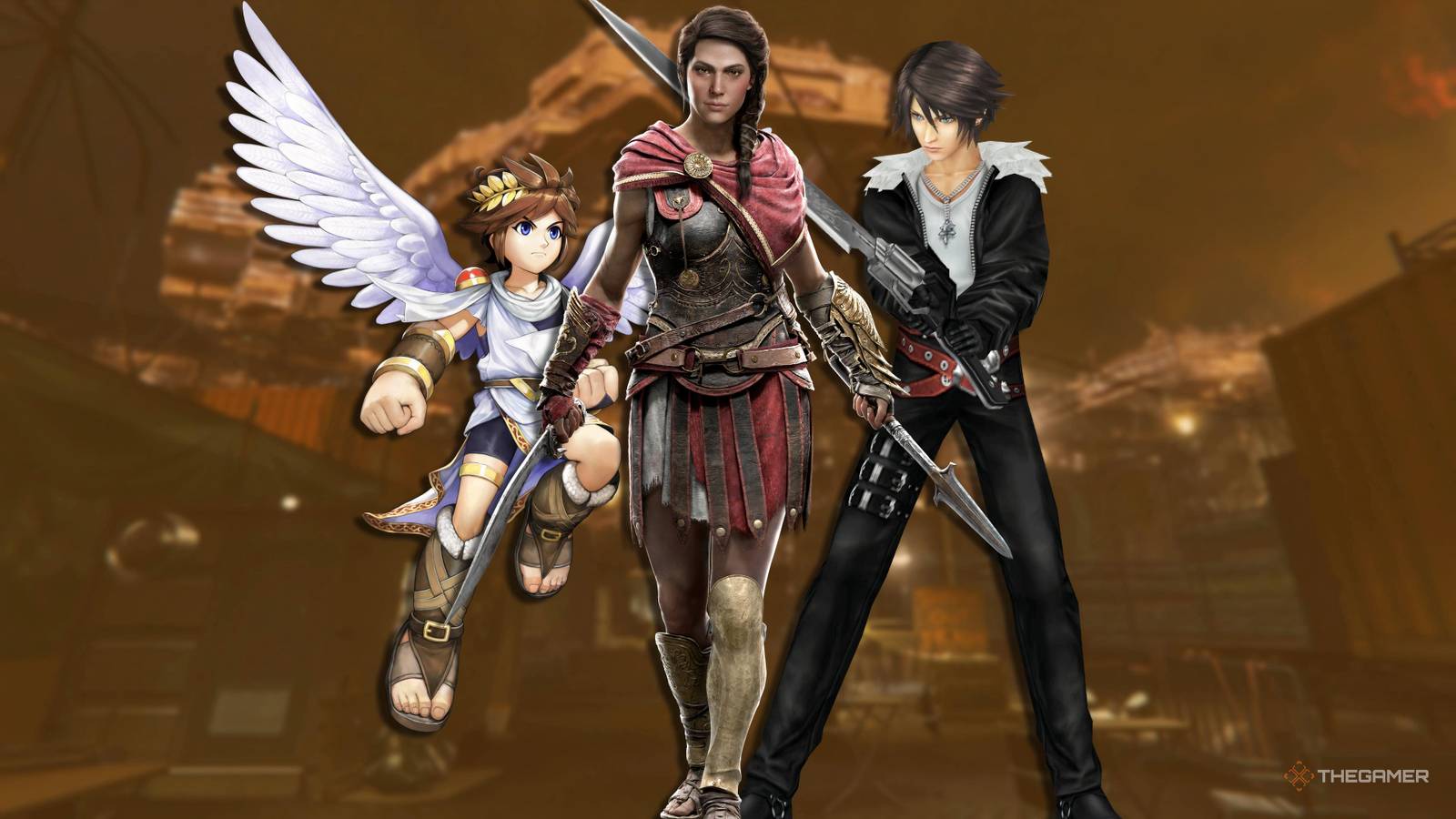
Published Jul 24, 2026, 7:30 AM EDT Ryan Thompson-Bamsey has been an Editor at TheGamer since 2021. He has specialized in RPGs, grand strategy games, and visual novels, reviewing major releases in franchises from Square Enix, Larian Studios, and Paradox Interactive. Ryan has served multiple times on the jury for the Indie Cup awards, and has mentored many emerging writers in the games industry. He has covered some of the biggest releases of recent years, including leading the site's coverage of Baldur's Gate 3, Dragon's Dogma 2, and plenty of other massive RPGs. Mythology and science fiction are usually treated as opposites: one looks backwards at gods, the other forwards at machines. Plenty of games borrow a name from each column and call the result 'worldbuilding'. Just naming a spaceship Icarus is not a fusion of anything. The games below go the full mile. In each of them the myth is the whole point. Gods run on hardware, and the old stories turn out to have been describing engineering all along. These games put the pantheon and the technology in the same box, and several of them are much stranger than you might think when you first look at them. 10 Asura's Wrath Mantra is the energy source that keeps Asura's gods in business, and it is harvested from human souls. That one design decision turns the Shinkoku pantheon into an extraction industry with a supply chain, giving a Hindu-Buddhist cosmology the moral shape of a fossil fuel company. Asura is one of eight Guardian Generals, thrown out of heaven and spending the game punching his way back up through former colleagues who command warships the size of moons. The game presents all of it as an anime series, complete with episode breaks and a to-be-continued card. 9 Deus Ex Two artificial intelligences drive the plot, and Ion Storm named them after a father and a son. Daedalus built the labyrinth. Icarus was constructed specifically to hunt Daedalus down. When the pair merge, the result calls itself Helios, in other words, the sun, which is what killed Icarus in the original story. A myth about hubris gets re-enacted by software that never once mentions its source material. The title supplies the other half of the joke, since deus ex machina is literally the god who descends from the machinery to resolve an ending nobody earned. Twenty-six years on, the final choice still has more thought behind it than most modern endings. 8 Zone Of The Enders: The 2nd Runner Zone of the Enders has two orbital frames of note: Jehuty and Anubis, named after two gods of Egyptian mythology. Everyone knows Anubis, but I'd wager fewer people know that Jehuty (or Djehuty, rather), is Thoth, the Egyptian god of wisdom. Thoth recorded the verdict at the weighing of the heart, Anubis worked the scales. The entire game is those functions pointed at each other across Jupiter's moons at ludicrous speed, piloted by an ice miner who wants no part of any of it. Thematically, it's a pretty good blending of myth with science. 7 Kid Icarus: Uprising Pit cannot fly on his own. Palutena grants him five minutes at a time, after which his wings burn, and divine assistance arrives implemented as a cooldown timer. The series's revival on the 3DS spends its opening hours on standard Greek business, with Medusa restored and a war over the underworld, then drops a mechanical alien hive called the Aurum into the middle of it. Watching a pantheon confront a problem its mythology has no vocabulary for is the best joke in the game. Loot is randomised too, so Dyntos the forge god is effectively running a stat-rolling service, so that counts for something. 6 Final Fantasy 8 Guardian Forces are installed rather than bound spiritually to a person in Final Fantasy 8. Junctioning binds Shiva or Bahamut to a character's nervous system to unlock stat bonuses and magical abilities, and the game states outright that heavy use costs the user their memories. It's a magic system that, in great Final Fantasy tradition, is expansive and well-developed. Around that sits the most science-fictional world the series ever built (yes, even moreso than Final Fantasy 7), from the hidden technocratic superpower of Esthar to a spaceship named after the Norse apocalypse. Squaresoft turned divinity into firmware with a running cost, and no other Final Fantasy has committed to the idea half as hard. 5 Prey Arkane put an automaton and a Greek monster in the same sentence: Talos was a bronze giant built to patrol a coastline, animated by fluid held in by a single sealed plug, Typhon was the youngest child of Gaia and the father of every monster worth naming. Prey drops you onto a station called Talos I, overrun by shapeshifting Typhon, playing a protagonist whose personality has been installed and wiped often enough that the automaton question stops being decorative. The names there doing a ton of thematic labour while you batter a coffee mug with a wrench. 4 Enslaved: Odyssey To The West Ninja Theory kept the furniture of Journey to the West and rebuilt every piece as equipment. Tripitaka becomes Trip, a survivor who fits Monkey with a headband salvaged from a downed slave ship — the golden circlet, now a shock collar wired to her pulse. The somersault cloud returns as a hover disc he rides while dodging fire from derelict war machines. Sun Wukong's punishment beneath a mountain becomes a two-hander through an overgrown, depopulated America, with Andy Serkis in the capture suit and Alex Garland on the script. The PC port was scruffy and always has been; the adaptation underneath it is unusually sharp, and nothing since has managed the same trick with the source. 3 Assassin's Creed Odyssey AC's answer to where the Olympians came from is that they were a previous civilisation with better engineering. Hardly a new idea, though Odyssey commits harder than most. The Fate of Atlantis expansion sends Kassandra into Elysium and the underworld and reveals both as constructed environments, administered by Isu going by names like Persephone and Hades. Poseidon ran Atlantis as a governance experiment that got away from him. The Staff of Hermes Trismegistus turns out to be a battery that stops its holder ageing. By the end, the pantheon resembles a management structure that lost control of its own facilities, which is a bleaker read on Greek myth than the source material usually gets. 2 Soul Hackers 2 The god that matters here is not on the demon roster. Aion is an artificial intelligence formed from the accumulated data of the network, which calculates that the world ends shortly and spins off two agents to stop it happening. Ringo is one of them, and she raises the recently dead by hacking into their souls. Everything else runs on the standard Devil Summoner shtick, with deities from half a dozen pantheons negotiated with and filed away as summonable assets. Atlus even named its machine god after a Gnostic aeon. Honestly, I could have written about basically any of the Persona/SMT games here, but Soul Hackers 2 is the one that screams sci-fi/mythology maship. 1 The Talos Principle 2 Croteam built a puzzle series around a machine named after a myth about a machine. For the second time in this article: Talos was the bronze automaton of Crete, which the player character also is, more or less. In the first game a voice calling itself Elohim — the Hebrew plural used for gods — issues instructions and forbids one particular tower, an arrangement that historically goes one way only. The sequel opens in a robot city called New Jerusalem, humanity long extinct, its successors arguing about whether curiosity is worth what it costs. The puzzles are largely there to give you something to do between arguments about whether any of it counts. Fun? Yes, surprisingly.
10 Best Games That Combine Mythology And Science Fiction
Full Article
Original Source
Read the full article at Thegamer →KhanList aggregates and links to publicly available news content. We do not host full articles from third-party sources. Always verify important information with original sources.