
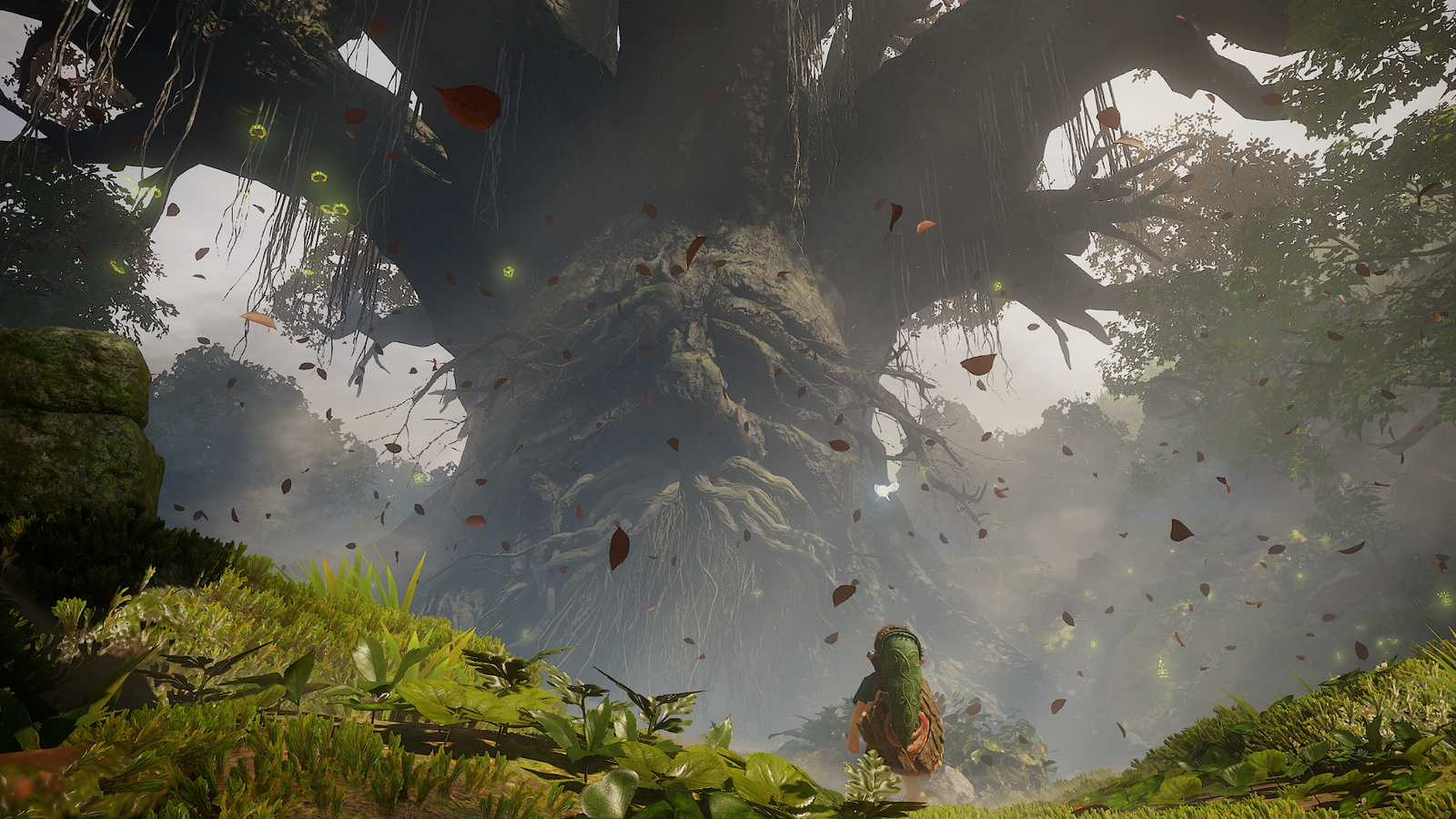
Published Nov 8, 2026, 8:00 PM EST Zelda: Ocarina of Time and World of Warcraft: Forever were made for different reasons than most remakes, and you can tell This is what we want from remakes Image: Nintendo EPD/Nintendo Patch Notes is a weekly newsletter bringing you the best of Polygon, sent on Fridays and published on the site on Sundays. You can subscribe here. Why are there so many video game remakes these days? We think we know the answer. New ideas are hard to come by, and big games are harder, more expensive, and take longer to make than ever before. Even a new sequel in an already-popular franchise is a huge, risky undertaking. But game companies need reliable products to put on the shelves quicker than they can make new ones. Remakes answer that need, as well as keeping back catalogs relevant for an industry whose relentless technological advances swiftly render classics obsolete. That's all accurate. But what if the game developers working on remakes had reasons of their own for revisiting the classics — reasons that weren't just learning their way around Unreal Engine 5, plugging a gap between new releases, or answering market forces? We got an emphatic answer this week, in the form of not one but two remarkable new versions of two of the greatest and most influential games ever made. Those two games, released on consecutive days, are The Legend of Zelda: Ocarina of Time and World of Warcraft: Forever. A few months ago, I said that we need to decide what we want from remakes. This is what we want. These games have some similarities in their approach to remaking a classic, and some differences. Both games make smart modernizations while working hard to retain the spirit of the original. Ocarina of Time is a faithful recreation of a masterpiece that takes few liberties with its content and design, but makes a forceful departure in its lavish and technically dazzling art style. WoW: Forever preserves the original WoW's art beneath a subtly impressive new rendering layer, and is built out from the same content. But it makes substantial additions, gets its hands dirty under the hood of the design, and, with its promise of a fixed progression cap and "horizontal" expansion, even seeks to boldly recontextualize WoW — and MMOs in general, and maybe even live-service games — in a new form. In both cases, the developers have talked in interviews about their desire to preserve and carry forward something intrinsic about the games' design that they think has been lost in modern games. In a Nintendo "Ask the Developer" interview, Zelda producer Eiji Aonuma spoke about his desire to educate a new generation of Zelda developers who worked on Breath of the Wild and Tears of the Kingdom and weren't intimately familiar with the intricate mechanical mesh of classic Zelda design. "By learning the game structure and development style behind the original The Legend of Zelda: Ocarina of Time, and by actually rebuilding it as a full remake, it may trigger new insights that they can carry forward into future development," Aonuma said. "If we could achieve that, I thought it would be incredibly valuable. That’s what led us to the conclusion that now is the right time to revisit The Legend of Zelda: Ocarina of Time once again." It's incredible to think that Nintendo's primary motivation in mounting this expensive production might have been bolstering institutional knowledge. But that's what makes Nintendo Nintendo. Meanwhile, at Bizzard, a desire to see and play a "Classic Plus" version of WoW bubbled up naturally among the developers at the same time as it did in the WoW Classic community. This makes sense, since the WoW Classic team was mostly staffed by enthusiasts of the original game. It was the small, enterprising Classic team that experimented with the idea during the Season of Discovery event and then pitched it to leadership. Lead Forever designer Kris Zierhut, who admits to having "drifted away" from modern WoW, explained it to me as a kind of thought experiment, a chance to imagine a different path the game might have taken. "Imagine if that team from 2004 — you know, Jeff Kaplan, and Eric Dodds, and Tom Chilton, and Scott Mercer, Pat Nagle, all those people — they've given them two more years to develop the game and add more stuff to it and perfect it," he said. "What would they have done with the time?" What Zierhut and Aonuma are articulating is not a desire to preserve these epochal game designs for posterity. It's a desire to get inside them and explore them, find out what they can teach us, and maybe point out some things we've lost to progress — like an epic adventure game that puts craft before sheer scale, or a live-service game that's about the journey and not the destination. Both these remakes were made with sincerity, passion, and above all, purpose. You don't have to take my word for it, or the developers'; you can tell when you play them. That's why they're so exciting, and how they honor two classics while bringing them alive for a new generation of players. Don't be too quick to dismiss remakes as cynical cash-grabs and schedule fillers. They can be beautiful acts of creation in their own right. Plus this:
Zelda: Ocarina of Time and WoW: Forever Are the Good Kind of Remakes
Full Article
Original Source
Read the full article at Polygon →KhanList aggregates and links to publicly available news content. We do not host full articles from third-party sources. Always verify important information with original sources.