
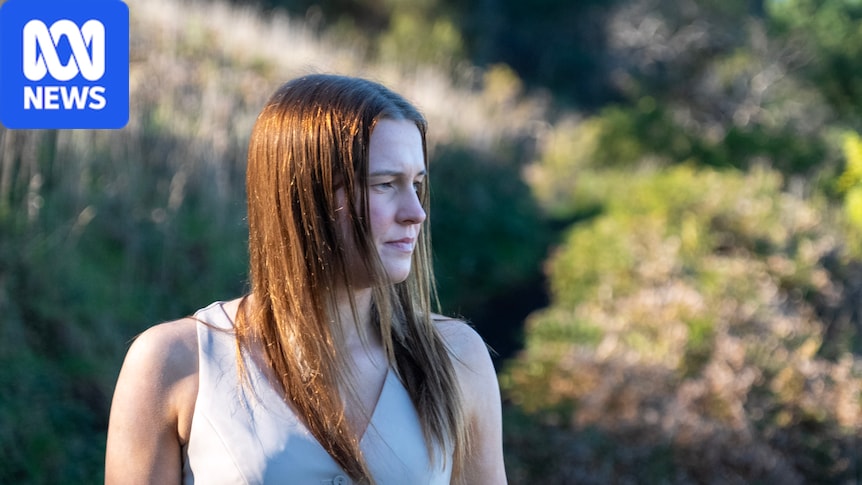
The proposed introduction of mining and fracking to a South Australian food bowl has young people considering what it could mean for their future. The Limestone Coast's economy has been dominated by agriculture since early European settlers dug drains to create some of the most productive farmland in SA. But mining and fracking are positioning to become a part of the region's economic future. Gomoroi woman and climate and youth advocate Jazmin Bingham, 19, said it represented a change in what the future could hold for local jobs, communities and the environment. Jazmin Bingham is a member of Seed, an Indigenous youth-led climate advocacy group. (ABC South East SA: Sam Bradbrook)"Young people are generally not at the table when decisions are being made and that's just the way it is, and things just need a change," she said. "Our lands are so sacred and so rich. That's why the agriculture and primary industries are so strong down south."But to strip that from us and not even just First Nations communities, but farmers. As soon as fracking gets underway and rare earth mining gets underway, you can't restore the land to what it was." Gas debate bubbling awayFracking, or hydraulic fracture stimulation, has proved controversial on the Limestone Coast over its potential effects on the region's groundwater system.Conventional gas extraction has occurred in the South East for more than a century.But in May, the SA government announced legislation to repeal a 10-year moratorium on fracking in the region, introduced in 2018. The bill will fail without support from state parliament's crossbench, but Premier Peter Malinauskas has made it clear the moratorium will lapse in 2028.Millicent teenager and Wattle Range Council Youth Advisory Council chair Zoe Moore, 16, wrote a letter to the premier against the fracking ban ending. Zoe Moore says young people should be engaged in proposed change for the region. (ABC South East SA: Sam Bradbrook)She said it was an important time for young people to be engaged in the decisions being made around them. "If we always have the same older generations making decisions for us, it will continue to impact us longer than it will impact them," she said. An alternative Greens bill to ban fracking permanently in the region has passed the Upper House, but will be defeated in the Lower House by Labor's sizeable majority. Mining and energy minister Tom Koutsantonis said the state needed cheap gas to meet its energy needs and grow the economy. Tom Koutsantonis has backed gas as a way to grow the economy. (ABC News: Ashlin Blieschke)"If we want to make things here, we need the cheap inputs of energy and one of those cheap inputs of energy is gas," he said. "The idea of locking it up and importing it from somewhere else, given that we've got it here, is the antithesis of what young people need in this state. "Long-term jobs require cheap energy and cheap energy comes from an abundance of gas." Rare earth pushNaracoorte farmer Joe Schultz's land falls inside the exploration area for a proposed rare earth mine in the Wrattonbully region. Joe Schultz is the third generation of his family to farm in the region. (ABC South East SA: Sam Bradbrook)Developer Australian Rare Earths (AR3) is expected to finalise an application to dig for the critical minerals in the coming months. The 28-year-old is a member of the Limestone Coast Sustainable Futures Group, set up in opposition to the proposal. Mr Schultz said the possibility of mining had him thinking twice about investing in the land and his future. "I feel like a young farmer here trying to carve my way out and carve my life into a beautiful farming career, and I've got so many other things that I never thought I would even consider," he said. Joe Schultz is thinking twice about investing in his farming future. (ABC South East SA: Sam Bradbrook)"I have challenges coming at me and they're all coming at once, and I just feel very misheard and taken for granted as a young farmer."The mining and processing of rare earths is dominated by China, with the federal government making moves to ensure domestic supply. The minerals are used in a range of products including electronics, batteries and renewable energy technology such as wind turbines. AR3 director Travis Beinke said he believed rare earth mining and farming could work together. Travis Beinke says the proposed Koppamurra project could create stable future jobs and complement farming. (ABC News: Lincoln Rothall)"We believe that by introducing a new industry like mining in the region, there is a great opportunity to establish new jobs in the region where the youth of today may have to sometimes leave their home towns for study and ongoing work opportunities," he said. The project has an initial expected operating time of 12 years, and the company planned to create about 100 jobs. "Mining provides an alternate economic contributor to the region in times where farming can go through tougher times depending on seasons," Mr Beinke said.
Youth want a voice amid controversial fracking and mining proposals
Full Article
Original Source
Read the full article at Abc →KhanList aggregates and links to publicly available news content. We do not host full articles from third-party sources. Always verify important information with original sources.