
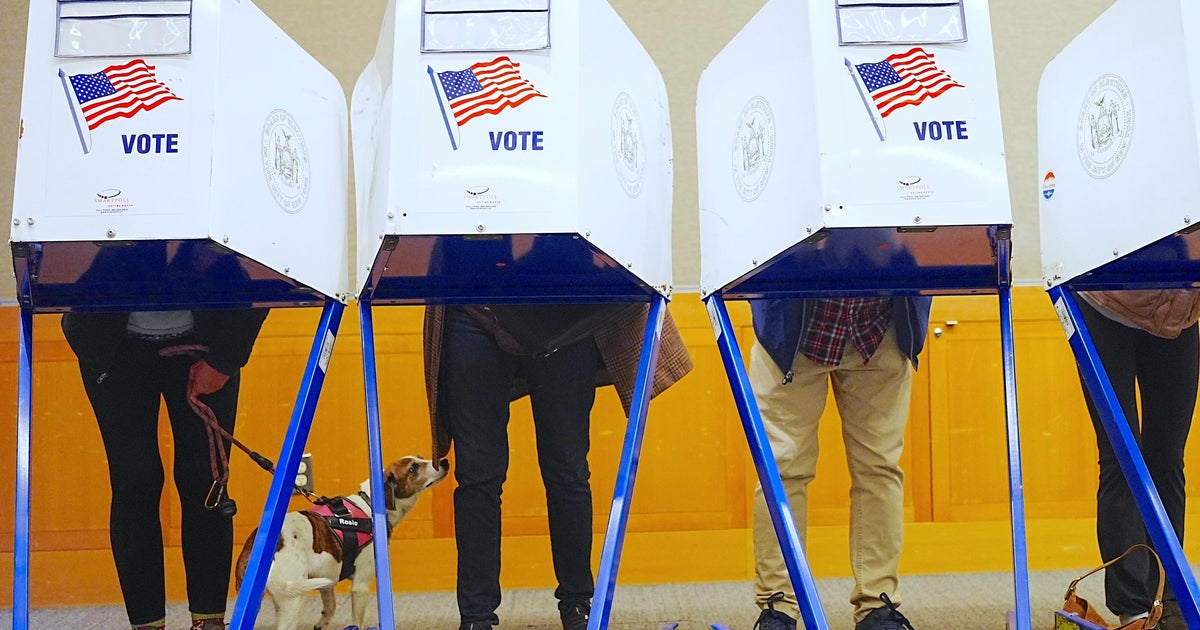
October 28, 2026 / 5:43 PM EDT / CBS News Add CBS News on Google Brody Saner, a college student in Kansas says he believes it's his duty to vote."If there's something you're not happy with, go out and vote. Do your part to change it." Early voting is underway throughout the country in the 2026 midterm elections and Election Day is Tuesday, Nov. 3. All 435 seats in the House are on the ballot, and voters in 35 states will be electing senators, 36 states will be voting in governor's races and there are more than 150 ballot measures across 40 states. The people and policies elected will shape the future of the Iran War, AI regulation and so much more. However, midterm elections tend to draw millions fewer voters than presidential, despite being "arguably more opportune moments for voters to get what they want," according to Professor Donald Green, a Columbia University political scientist who has spent three decades studying voting, "because relatively small shifts in the overall vote can lead to dramatic shifts in policy."Here's what's at stake and why the experts say showing up matters: Why is voting important in general? "Your vote is your voice," said Kansas voter Tracy Preisser when asked why she thinks it's important to vote. And it's true. Voting decides who writes the rules communities live under. At the national level, which party controls the House and the Senate is at stake. And whether the Democrats or the Republicans win will determine whether Congress acts as a check or an enabler on presidential power for the final two years of Donald Trump's presidency. Locally, candidates down the ballot vote play a part in deciding taxes, the price of a doctor's visit, school funding, or who sits on the bench in a local court. But a CBS News/YouGov poll conducted found that most voters don't believe that either party has a plan to make people better off. The majority of voters believed that they wouldn't be better off financially regardless of which party wins the electorate. This sentiment is leading some voters to consider sitting this election out. "I just don't trust anybody at this point enough to vote for them, Republican [or] Democrat," says Kansas farmer Mandy Sieren. "I think they're all crooked."To that, Green would argue that "although they might be dissatisfied with both parties, typically it comes down to the candidates themselves, and [voters] have to make an informed choice one way or the other," he said.Why does your vote in midterm elections matter? By some metrics, midterm elections are when a person's vote can matter the most, because less people participate in them. In the 2022 midterms, 46% of eligible voters cast ballots, compared to 65% in the 2024 presidential elections. The smaller the electorate, the more weight each ballot carries. And the margins can be razor-thin. In Republican Rep. Lauren Boebert race in the 2022 midterm election, she held onto her Colorado seat by 546 votes. In 2024, Democrat Adam Gray won California's 13th Congressional District by just 187 votes. And in 2020, Republican Mariannette Miller-Meeks won her Iowa House race by just six votes. This round of elections is expected to have some equally contentious races. But Green says voting isn't only about an individual's ballot. What matters, he said, is who shows up as a group. "It may be surprising to them how attentive politicians are… to which groups vote at high rates and which groups don't," says Green. He says that this is the reason that candidates tend to pay more attention to older voters, who are most likely to vote, and issues important to young and poor people, who vote less frequently, "are often devalued." How could votes in the 2026 midterm elections impact our country? Midterm elections are when voters most often change the course in Washington, and are a check on the president's power halfway through a term. The president's party has lost seats in 37 of the past 41 midterm electionsAnd this time around, control of both chambers of Congress is in play, and the margins couldn't be slimmer. In the house, Republicans currently hold a narrow majority. Democrats need a net gain of just three seats to win control. In the Senate, Democrats need a net gain of four seats to flip the chamber. Whoever controls Congress will decide whether more funding for the Iran War is approved or if AI regulation is proposed, amongst countless other pieces of potential legislation. Meanwhile, more than 30 states are electing governors, with competitive races from Georgia to Ohio. Governors have immense power over the fate of the data center buildout, because of their power to approve moratoriums, decide on tax breaks, and appoint utility commissioners. And there are 41 ballot initiatives on data centers across 13 states. In New York City, voting is personal for poll worker Sandra Strother. She says her uncle was killed trying to vote in Alabama in the 1950s because he was an African American. "That's my great motivator" she says for why she makes time not just to vote herself, but to ensure others can too. Watch: Voters speak about sense of discouragement ahead of midterms 03:43 Watch: Voters speak about sense of discouragement ahead of midterms (03:43)
"Your vote is your voice": A look at why voting matters
Full Article
Original Source
Read the full article at Cbsnews →KhanList aggregates and links to publicly available news content. We do not host full articles from third-party sources. Always verify important information with original sources.