
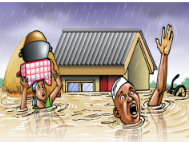
The authorities can still do more to minimise the impact of floods The rainy season has peaked, creating an unfortunate potential of avoidable deaths and destruction of property due to a lack of mitigation planning. But more concerning is the latest warning that residents of 24 states and the Federal Capital Territory (FCT) stand a high risk of heavy flooding between September 27 and October 10. The warning was contained in a flood prediction issued by the National Flood Early Warning Systems Centre under the Erosion, Flood, and Coastal Zone Management Department. In an advisory signed by its Director, Usman Abdullahi Bokani, the department attributed the heightened risk to heavy rainfall, rising river levels, saturated soil, increased surface runoff, drainage surcharge, and elevated soil moisture. States with communities classified under the critical-risk category cut across the six geopolitical zones in the country. Across Nigeria today, there are unending stories of anguish thrown up by submerged homes and vehicles in communities and settlements. The real challenge is that the authorities responsible for mitigating the impact of floods seem to have no actionable plans for these unfortunate Nigerians. Yet, on 25 June, Vice President Kashim Shettima directed a shift from reactive response to proactive preparedness, saying the direction of the administration leaves no room for ambiguity in combating flood and other climate-related disasters. According to Shettima, preparedness, coordination, and early action must become the standard practice of how risk is governed in the country. But words are cheap. With its urbanisation rate put at 5.5 per cent yearly and considered one of the highest in the world, the number of Nigerians at risk or vulnerable to flood hazards is high. It therefore came as no surprise that a recent heavy rainfall extended to many parts of the Southwest, flooding the Lagos-Ibadan Expressway, from Ogere to the Sagamu inter change. This was despite repeated Nigerian Meteorological Agency (NiMet) warnings on residents of coastal states to prepare for a heightened risk of flash flooding, as it forecasts sustained and widespread rainfall across southern Nigeria. And without immediate adaptation measures, many Nigerians are now being plunged into further misery due to flooding. As we have repeatedly highlighted, flooding does enormous damage to the ecosystem and destroys public utilities. It also elevates the risk of hunger and malnutrition because of disruption of farmlands and commercial losses for farmers engaged in subsistence farming. But perhaps most significant is that we have lost thousands of people to flooding in the past decade while millions remain displaced. One needs to quickly recall the devastating effect of flooding in various parts of the country in times past. In the flood of 2012, according to the National Emergency Management Agency (NEMA), no fewer than 665 people died while the World Bank estimated losses at about $6.7 billion. More than three million people were displaced across the country. Meanwhile, the Ecological Fund was established in 1981 to pool resources that would help mitigate natural disasters like flooding. From inception, the fund originally constituted one per cent of the Federation Account but was later reviewed upward to three per cent. Unfortunately, the management of the fund has been marred with controversy, essentially due to the discretionary powers given to the president in the disbursement. Such is the abuse of the Fund that officials of both the federal and state governments now see it essentially as a slush fund to be deployed for all manner of things. However, at a period when the forces of nature are raging, Nigeria seems to be at the mercy of the environment. By ignoring early warnings in the past, several farms, roads, bridges, and homes have been submerged, and several lives have been lost. We should do everything to avert these serial tragedies.
YET ANOTHER FLOOD WARNING
Full Article
Original Source
Read the full article at Thisdaylive →KhanList aggregates and links to publicly available news content. We do not host full articles from third-party sources. Always verify important information with original sources.