
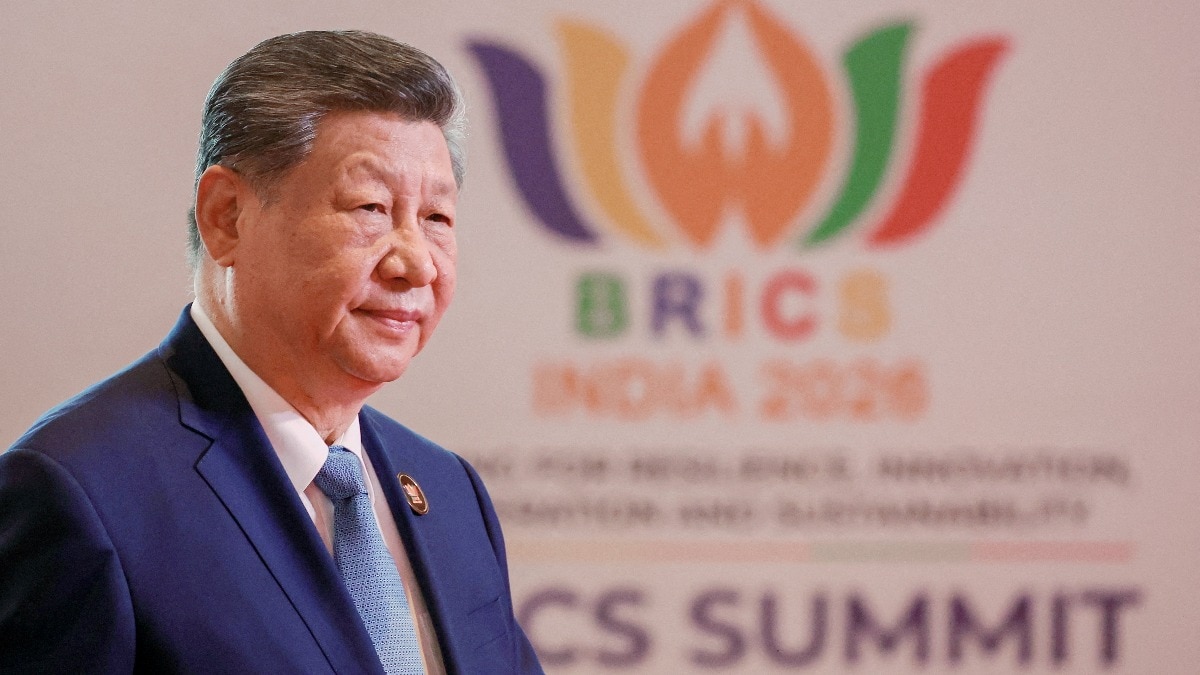
Xi urged deeper BRICS cooperation in New Delhi and unveiled five initiatives across AI, trade and manufacturing. Modi, speaking at the same summit, warned against weaponising technology and critical minerals as the bloc weighed supply-chain resilience.China's President Xi Jinping attends the BRICS summit in New Delhi. (Photo: Reuters)Chinese President Xi Jinping on Sunday called for deeper BRICS cooperation and a stronger collective voice for the Global South, unveiling five initiatives spanning artificial intelligence, trade, digital economy, smart manufacturing and technology talent while rejecting the principle that global affairs should be dictated by power. "The logic of "might makes right" does not hold, and should have been discarded long ago," he said.Speaking on the second and final day of the BRICS Summit in New Delhi, Xi urged member countries to make greater use of their links with emerging markets and developing nations while protecting stable industrial and supply chains. He also backed efforts to create a large, integrated market that could strengthen economic cooperation and support development across the bloc.The Chinese leader's remarks came as India sought to place inclusivity, resilience and cooperation at the centre of its BRICS presidency. Prime Minister Narendra Modi, speaking at the summit, cautioned against the "weaponisation" of technology and critical minerals, a message delivered in Xi's presence and carrying significance amid China's dominant position in global rare-earth supply chains.XI'S FIVE INITIATIVES FOR BRICSSeeking to turn BRICS' growing economic weight into more practical cooperation, Xi unveiled five initiatives covering artificial intelligence, trade and investment, the digital economy, manufacturing and technological talent. The proposals were outlined in a statement released by China's Ministry of Foreign Affairs following his address. The first initiative focuses on open-source and inclusive artificial intelligence. China proposed creating a BRICS AI open-source community to encourage cooperation in developing and applying large language models. The plan also includes specialised AI seminars and training courses, with Beijing seeking to build what it described as an open ecosystem for artificial intelligence.Trade and investment formed the second pillar of Xi's proposal. Under the trade and investment facilitation initiative, China suggested establishing a BRICS special economic zone partnership, including an intelligent portal that would allow member countries to coordinate policies and promote more open economic activity. Beijing also plans to host the BRICS Forum on Trade in Services next year and invited member countries to take part. Turning to the digital economy, the third initiative calls for greater coordination among BRICS countries through a digital ecosystem cloud platform. China said the proposal would bring together digital skills training, technological exchanges and industrial alignment, with the broader aim of helping member countries expand their digital industries.Manufacturing is at the heart of the fourth proposal. Through the intelligent manufacturing cooperation initiative, China said it was ready to help fellow BRICS members develop smart factories and establish relevant standards and norms. The initiative is intended to support the transformation and upgrading of manufacturing industries as countries seek to modernise their industrial bases.The fifth initiative centres on people and expertise, with China proposing a science and technology talent development initiative. Beijing wants to establish a BRICS engineer cultivation alliance to jointly develop engineering talent and promote mutual recognition of competency standards. It will also launch a youth exchange programme focused on scientific and technological innovation, aimed at creating a stronger pipeline of skilled talent for the bloc.PM MODI WARNS AGAINST 'WEAPONISATION' OF TECHNOLOGYThe proposals came against a backdrop of growing competition over technology, manufacturing capacity and critical minerals. Putting inclusivity at the heart of his closing remarks, PM Modi warned that the weaponisation of technology and critical minerals could undermine economic growth and shared development."The weaponisation of technology and critical minerals can hinder our shared progress. Therefore, we have emphasised inclusivity in the adoption of technology," Modi said at the BRICS session on "Resilience, Innovation, Cooperation and Sustainability".The comments are particularly significant given China's major role in processing rare earths and supplying materials essential to advanced manufacturing and clean-energy technologies. Beijing tightened export controls on rare earths and other critical materials last year during its trade confrontation with the United States, although some restrictions have since been eased.For India, reliable access to critical minerals is increasingly important as New Delhi seeks to expand domestic manufacturing, advanced technology production and clean-energy industries. PM said the BRICS logistics supply chain cooperation framework would help make "our supply chains more reliable and resilient".CHINA TO HOST BRICS SUMMIT IN 2027The summit also set the stage for the next phase of BRICS cooperation, with Xi announcing that China will host the BRICS summit in 2027.After Xi announced China's 2027 presidency during the leaders' closing session, PM Modi greeted him on the upcoming Chinese chairmanship. The Chinese embassy in India and state news agency Xinhua also confirmed the announcement.India hosted the 18th BRICS Summit in New Delhi on September 12 and 13, bringing together leaders of the grouping's 11 member countries, along with representatives of partner countries and international organisations.- EndsPublished By: Satyam SinghPublished On: Sep 13, 2026 16:51 IST
Xi Jinping's five-point plan for more powerful BRICS
Full Article
Original Source
Read the full article at Indiatoday →KhanList aggregates and links to publicly available news content. We do not host full articles from third-party sources. Always verify important information with original sources.