
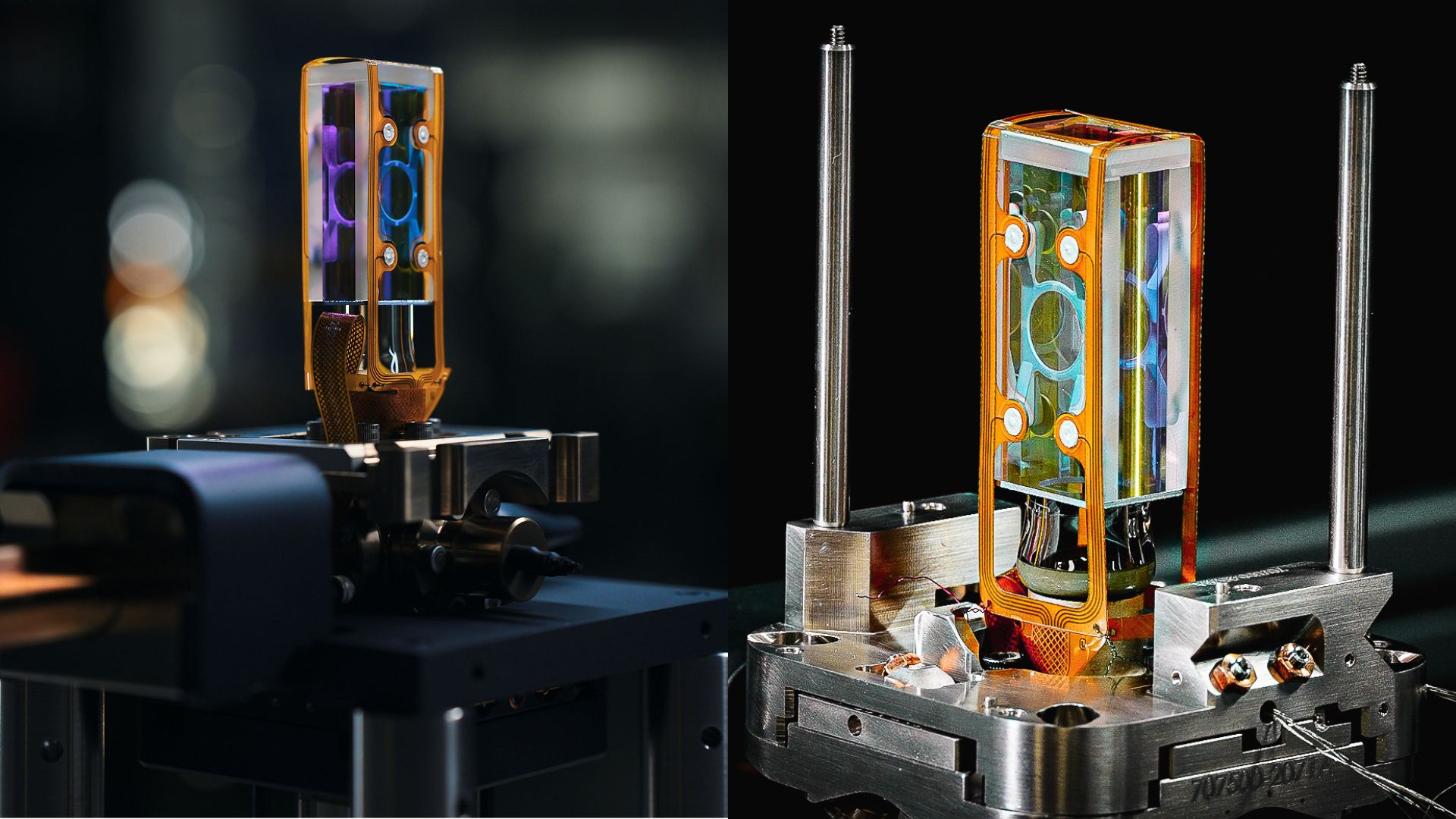
NASA has awarded Infleqtion $20 million to advance a mission developing what could become the world’s first quantum gravity sensor in space. The new funding brings NASA’s total investment in the Quantum Gravity Gradiometer Pathfinder mission to $40 million. NASA’s Jet Propulsion Laboratory leads the effort. The program now moves into a critical hardware development phase. Engineers will build and test major components before preparing the instrument for a future orbital demonstration. Infleqtion expects the spacecraft to launch into low Earth orbit in 2030. Measuring gravity from orbit The proposed instrument uses ultracold rubidium atoms to detect tiny differences in Earth’s gravitational field. Those measurements could eventually offer a sharper view of changes occurring beneath and across the planet’s surface. Scientists could use future gravity instruments to track shifting groundwater and melting ice. They may also reveal changes in underground natural resources. Existing satellite missions already map Earth’s gravity. NASA’s GRACE and GRACE-FO spacecraft have monitored gravity changes for decades. Quantum sensing could introduce a different measurement approach. Infleqtion will develop the atomic physics package at the center of the new instrument. That system includes the vacuum chamber, lasers, and electronic controls needed to manipulate the atoms. The sensor will cool rubidium atoms to temperatures approaching the pico-Kelvin scale. At those extreme temperatures, researchers can precisely control the atoms for gravity measurements. Dana Anderson, Infleqtion’s chief science officer, said the field has moved beyond simply proving quantum technology works. “We are no longer testing the quantum technology itself,” Anderson said. “We are testing ways to use it in the space environment.” The Pathfinder mission will focus on demonstrating whether that technology can operate under orbital conditions. Testing quantum sensing before launch Infleqtion will now construct an initial sensor head and an electronics engineering unit. Engineers will test those systems at the Einstein Elevator in Hannover, Germany. The facility creates short periods of microgravity through a specialized drop tower system. Those tests will help researchers evaluate the sensor before committing hardware to space. The work also draws from earlier experiments aboard the International Space Station. JPL and Infleqtion previously worked on NASA’s Cold Atom Lab, which studied ultracold atoms in microgravity. Matt Kinsella, Infleqtion’s chief executive officer, said developing flight-ready quantum hardware requires years of engineering and testing. “Every milestone brings quantum sensing closer to enabling entirely new ways to observe our planet from orbit,” he said. NASA expects the current development phase to continue through 2027. Path toward future sensors The Pathfinder will not deliver a finished science instrument for routine Earth observation. Instead, it will test the technology needed for more capable quantum gravity missions. NASA and its industry partners plan to complete instrument hardware development during the next three years. The program would then move toward a flight demonstration. Success could reduce technical risks for future high-resolution gravity instruments. Such systems could eventually strengthen U.S. capabilities in Earth observation and space-based sensing. They may also support resource monitoring and long-term security planning.Researchers must turn an exceptionally sensitive laboratory system into hardware that can survive launch and operate reliably in orbit. That transition will determine whether quantum gravity sensing can become a practical tool for observing Earth from space.Get the latest in engineering, tech, space & science - delivered daily to your inbox.Aamir is a seasoned tech journalist with experience at Exhibit Magazine, Republic World, and PR Newswire. With a deep love for all things tech and science, he has spent years decoding the latest innovations and exploring how they shape industries, lifestyles, and the future of humanity.
World’s first space-based quantum gravity sensor to map Earth’s shifting water and ice
Full Article
Original Source
Read the full article at Interestingengineering →KhanList aggregates and links to publicly available news content. We do not host full articles from third-party sources. Always verify important information with original sources.