
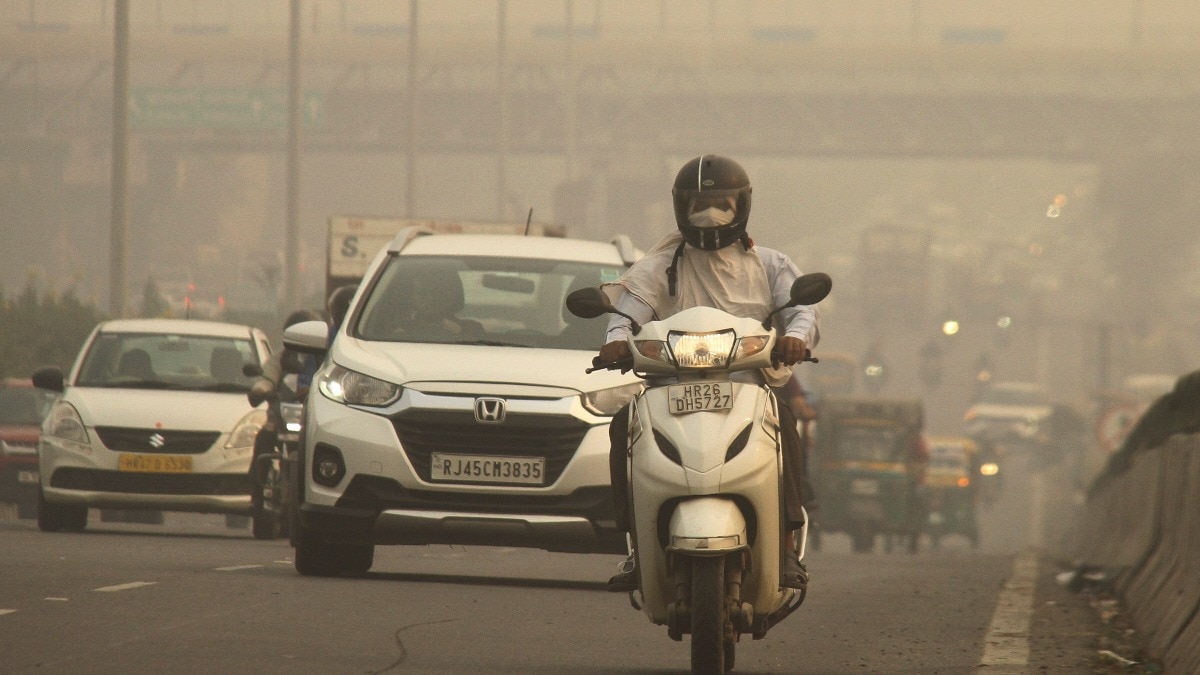
The UN has warned that global warming could cross the 1.5°C threshold, but temperatures could eventually fall again. For India, the risks are significant if the world crosses the threshold.People commute amid low visibility after deterioration in air quality in Delhi-NCR. (Photo: PTI)The world is entering an era in which crossing 1.5°C of global warming is increasingly unavoidable, the UN Environment Programme (UNEP) has warned. But it is not a point of no return.UNEP’s new Limiting Overshoot report says the world can still limit how high temperatures rise, adapt to the damage and eventually bring warming back down.The lower the peak and the shorter the time spent above 1.5°C, the lower the risks to people and nature. Children run across a parched riverbed amid a heatwave. (Photo: PTI) The number 1.5°C refers to the rise in the planet’s average temperature compared with pre-industrial levels. It does not mean every place on Earth will warm by exactly 1.5°C. For India, however, the significance of 1.5°C is a bit more significant, a bit more immediate, and already visible.EXTREME HEAT AND ERRATIC MONSOONIndia is particularly exposed because its population, agriculture and economy are highly dependent on climate-sensitive systems. A man takes rest on a hot summer day, in New Delhi. (Photo: PTI) The World Bank says more than 80% of India's population lives in districts at risk from climate-induced disasters, including extreme heat, floods, droughts and cyclones.Recent research offers another warning.A 2026 study found that India's average summer maximum temperature rose by about 1°C between 1981 and 2020, while heatwave frequency, duration and intensity also increased. A woman covers herself and a kid amid an ongoing heatwave, in New Delhi. (Photo: PTI) Another 2026 study found that uncompensable heat stress, which is heat and humidity so severe that the human body cannot adequately cool itself, is spreading across India and could increasingly affect the monsoon months, not just summer.Warming also threatens India's water and food security.El Nino, meanwhile, is only expected to amplify some of the problems. An elderly man carries water in containers amid water scarcity. (Photo: PTI) A recent study found that greenhouse warming could strengthen the connection between El Nino and Indian monsoon droughts, potentially increasing risks to food production and could also worsen India's already rising problem of water scarcity.A WARNING FOR THE HIMALAYASThe consequences also extend beyond just heat and rainfall.India's rivers depend heavily on the Hindu Kush Himalaya (HKH), where glaciers are rapidly losing ice. A view of damaged and half-buried buildings following flash floods in Nepal. (Photo: PTI) ICIMOD reported earlier this year, in 2026, that glacier ice-loss rates across the region have doubled since 2000.The changes threaten water security while also increasing risks from floods and other mountain hazards.The recent tragedy in Nepal that took the lives of more than 1,000 people is an example to keep in mind when it comes not just to climate change but also climate injustice facing the Global South.Climate justice points to the simple fact that countries like Nepal have made only a negligible contribution to global greenhouse gas emissions, yet their mountains, glaciers and vulnerable communities face severe climate risks. A man covers himself and a child amid a heatwave at Taj Mahal, in Agra. (Photo: PTI) Risks are being fuelled by the quantum leaps taken by the other developed nations that have also inflicted environmental damage on such a scale that the consequences are rippling through regions across the world.CAN COP31 HELP?That is why the next UN climate summit, COP31 in Antalya, Turkiye, from November 9 to 20, 2026, carries an additional focus and importance. The COP30 delegation is pictured in Brazil. (Photo: AP) Countries will need to turn climate promises into deeper emissions cuts while strengthening adaptation and climate finance for vulnerable nations, something India vehemently made a case for in the last round of climate talks at COP30 in Brazil.The 1.5°C threshold is not a cliff, but it's also a significant warning that every fraction of warming avoided means less heat, less water stress, fewer climate risks and more room for people to adapt.India, particularly, needs to pay heed.- EndsPublished On: Sep 3, 2026 10:47 IST
World to face 1.5°C warming : What disasters are waiting for India?
Full Article
Original Source
Read the full article at Indiatoday →KhanList aggregates and links to publicly available news content. We do not host full articles from third-party sources. Always verify important information with original sources.