
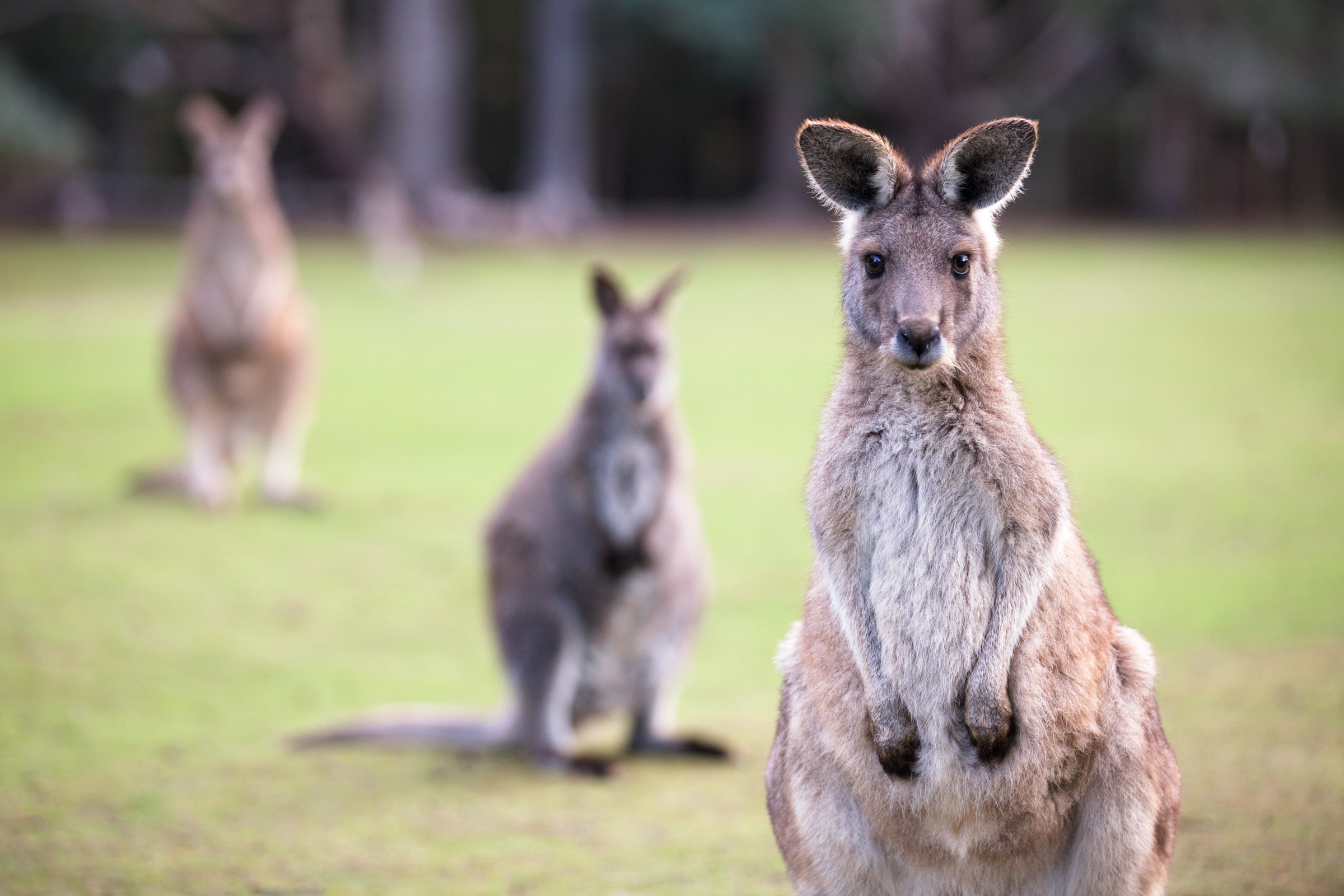
World Kangaroo Day celebrates the iconic Australian animal and the special place it has in the country’s environment and First Nations cultures.Kangaroos, and the broader macropod family, are losing habitat from worsening drought and bushfires in Australia. Critically endangered species, including Gilbert’s potoroo and the mala, face extinction amid added pressures from climate change.There are growing concerns over super El Niño, expected to bring increased droughts, extreme heatwaves and severe bushfires in 2026-2027.Balancing urban development and prioritizing conservation will be critical to protecting species from worsening climate events. CANBERRA — World Kangaroo Day, on Oct. 24, celebrates one of Australia’s national symbols and the macropod’s special place in the country’s environment and First Nations cultures. In 2026, as “super El Niño” wreaks havoc across the globe, it is an opportune time to reflect on how climate change has affected the country’s iconic animals. There are dozens of species — 59 to be exact — belonging to the macropodoidea (meaning large-footed) superfamily living in Australia. The four main species are the red kangaroo (Osphranter rufus), which is the largest in size; the western grey kangaroo (Macropus fuliginosus); the eastern grey kangaroo (Macropus giganteus); the antilopine kangaroo (Osphranter antilopinus). These kangaroo species are abundant in Australia, with a total population estimated to range between 30 million and 50 million, depending on drought and rainfall cycles. Their numbers have been considered so high that state-level governments have introduced controversial cull programs to reduce populations. Lesser-known varieties include the smallest macropod species in the world: the musky rat-kangaroo (Hypsiprymnodon moschatus), typically weighing around just 500 grams (1.1 pounds); the critically endangered Gilbert’s poteroo (Potorous gilbertii); and Australia’s only two species of tree-kangaroo, the Lumholtz’s tree-kangaroo (Dendrolagus lumholtzi) and the Bennett’s tree-kangaroo (D. bennettianus), which live in the forests of Far North Queensland. For the smaller species of kangaroo and wallaby, quokka, bettong and potoroo, which also belong to the macropod superfamily, the situation is dire. Six species of kangaroo have already gone extinct since the colonization of Australia, and 11 of the 50-plus species that remain are listed by the IUCN as Endangered or Critically Endangered. Red kangaroos at Sturt National Park, New South Wales, Australia. Image by PotMart186 via Wikimedia Commons (CC BY-SA 4.0). Droughts and bushfires Australia has experienced 14 of its 15 warmest years on record in the 21st century owing to climate change, marked by periods of severe drought and intense bushfires. These have placed increasing pressure and taken a devastating toll on kangaroos, with more lasting effects on the critically endangered, lesser-known kangaroo species. Impacts of climate change are being felt across the kangaroo species, including the most populous ones. For example, during a decade-long drought that began in 2000, it has been estimated that kangaroo populations in eastern Australia, primarily red kangaroos, eastern and western grey kangaroos, fell by around 30 million. By 2014, their numbers bounced back to around 47 million. A WWF study of the 2019-2020 Black Summer bushfires, one of Australia’s worst wildfires, estimated that up to 143 million mammals, including more than 60,000 koalas and 5 million kangaroos and wallabies, were displaced, injured or killed. “Population crashes from both events [drought and fires] are well documented. Do these events change where they reside?” Daniel Ramp, founder and director of the Centre for Compassionate Conservation at the University of Technology Sydney, told Mongabay. “We do not really know how well populations [of kangaroos] recover, as our understanding of population trajectories is typically very coarse, at large landscape levels.” Antilopine kangaroo (Osphranter antilopinus) in Western Australia. Image © Benoît Guillon via iNaturalist (CC BY-NC 4.0). Scientists also caution about other adverse effects on macropods. “Under climate change, increased extent and severity of wildfires and droughts will lead to higher mortality rates and less food, shelter and water resources for kangaroos, which could cause increased conflict with farmers,” Elizabeth Brunton, research fellow at the University of the Sunshine Coast in Queensland, told Mongabay. In an interview with Mongabay, Euan Ritchie, professor of applied ecology and conservation research at Deakin University in Melbourne, pointed out that consecutive days of extreme heat may lead to physiological stress. Weakened individuals, such as sick or young kangaroos, can die from dehydration and overheating caused by physiological stress. Research shows that when kangaroos seek shelter or water in extreme heat, they are more vulnerable to predators. Ritchie also said invasive plants such as gamba grass (Andropogon gayanus) and buffel grass (Cenchrus ciliaris) are spreading in grasslands, increasing fire severity by creating massive fuel loads and burning at higher temperatures. “Climate change may also lead to more prolonged and severe droughts, meaning drinking water is harder to find for kangaroos, which is already a limited resource in many regions, especially the arid zone and tropical regions during the dry season,” he said. Gamba grass (Andropogon gayanus) in the Northern Territory. Image by Btcpg via Wikimedia Commons (CC BY-SA 3.0). Critically endangered macropods For some macropod species, including five listed as either Endangered or Critically Endangered by the IUCN, increasingly severe fires and drought periods could push them into extinction. The Rufous-Hare wallaby (Lagorchestes hirsutus), a small macropod species also called the mala, was declared extinct on the Australian mainland in 1991, largely due to predation by introduced foxes and feral cats, as well as intense bushfires resulting from changes in fire management practices. Climate change now threatens remaining mala populations in island habitats and attempts to reintroduce the species in areas around Uluru. Recent population surveys estimate that fewer than 150 Gilbert’s potoroos remain in the wild in Western Australia. Yet, their numbers are under threat from climate change and bushfires that have become more frequent and more intense. “While species may be able to adapt to some extent, there will be limits, in large part depending on the speed and severity of climate change,” Ritchie said. “This is particularly problematic for species such as Gilbert’s potoroo and the Northern bettong, which have small population sizes, are already geographically restricted and are far more ecologically specialized as compared to many larger kangaroo and wallaby species.” Brunton agreed. “For macropod species with low population sizes and isolated populations, the increased risk of high-severity fires is a significant concern,” she told Mongabay. “Gilbert’s potoroo populations are particularly at risk from impacts of fire since the mainland population declined drastically following a severe fire in 2015.” A Rufous-Hare wallaby (Lagorchestes hirsutus) in the Northern Territory. Image © delanyd via iNaturalist (CC BY-NC 4.0). Fears over “super” El Niño As Australia’s summer months approach, there is a concern about the likely effects of “super” El Niño. The natural weather event typically brings hotter and drier weather in the Southern Hemisphere, often with deadly consequences for wildlife. During the 2015-16 El Niño phase, there were reports of mass kangaroo starvation in central Queensland. From 2015 to 2016, Queensland recorded a further reduction of 3.6 million kangaroos in its annual population surveys. The 2026-27 event is expected to smash historical records. Scientists have warned that it could result in increased droughts, extreme heatwaves and severe bushfires in Australia later on this year and early next year. According to a spokesperson for Wildlife Victoria, in preparation for El Niño, the wildlife emergency response charity is already coordinating with the Department of Energy, Environment, and Climate Action “to determine how we can support the government’s response to any state-level fire emergencies.” “While the government leads the response on active firegrounds, the risk to native wildlife does not end when the flames have been extinguished,” the spokesperson told Mongabay. “The aftermath of a bushfire can have longer-term impact on all species due to prolonged habitat loss and food and water shortages.” Threats from deforestation, urban development and changed water resources in Australia are compounding with the impacts of worsening climate events, scientists say. “We do know that rates of habitat loss are reducing the amount of canopy available in both temperate and semi-arid ecosystems, driven by cattle farming, and that wildlife access to water is increasingly being restricted by farming practices such as exclusion fencing,” said Ramp of UTS. Emergency services working in the Australian bush to combat the damage caused by bushfires in January 2020. Image by BLMIdaho via Flickr (CC BY 2.0). What can be done? Focusing on sustainable development can help kangaroos and other wildlife better manage the impacts of worsening fires and droughts, say experts. Strategies including engagement with Indigenous-led fire management practices, restoring natural waterways and enforcing legislation that prevents deforestation can reduce the incidence of extreme bushfires, which devastate wildlife. These strategies can also help preserve thermal refuges for animals in distress. “Current and future land use practices, including urbanisation, could hinder macropod species’ ability to adapt to climate change, and environmental planning for these landscapes needs to take potential range shifts and climate refugia into account,” Brunton said. Banner image: Eastern grey kangaroos (Macropus giganteus) in the Tasmanian Devil Conservation Park. Image by Shane Lin via Flickr (CC BY-NC 2.0). As Australia’s kangaroo numbers rise, record cull renews calls for other control methods Citations: Dawson, S., Dawson, C., Kennedy, M. S., Kreplins, T. L., Linnell, J. D., & Fleming, P. A. (2024). Knowledge and values drive acceptability of lethal control of kangaroos among the Australian public. Biological Conservation, 289, 110416. doi:10.1016/j.biocon.2023.110416 Lunney, D., Purcell, B., McLeod, S., Grigg, G., Pople, T., & Wolter, S. (2018). Four decades of research and monitoring the populations of kangaroos in New South Wales: one of the best long-term datasets in Australia. Australian Zoologist, 39(4), 784-800. doi:10.7882/AZ.2018.040 Juillard, L. Q., Wooster, E. I., Zawada, K. J., Bonsen, G. T., & Ramp, D. (2025). Extreme temperatures can intensify predator–prey interactions. Animal Behaviour, 225, 123242. doi:10.1016/j.anbehav.2025.123242 Cite this articleCooper Williams (2026). World Kangaroo Day: How climate change impacts Australia’s macropods. Mongabay Conservation news. DOI: https://doi.org/10.66709/news-333569 Credits Topics
World Kangaroo Day: How climate change impacts Australia’s macropods
Full Article
Original Source
Read the full article at News →KhanList aggregates and links to publicly available news content. We do not host full articles from third-party sources. Always verify important information with original sources.