
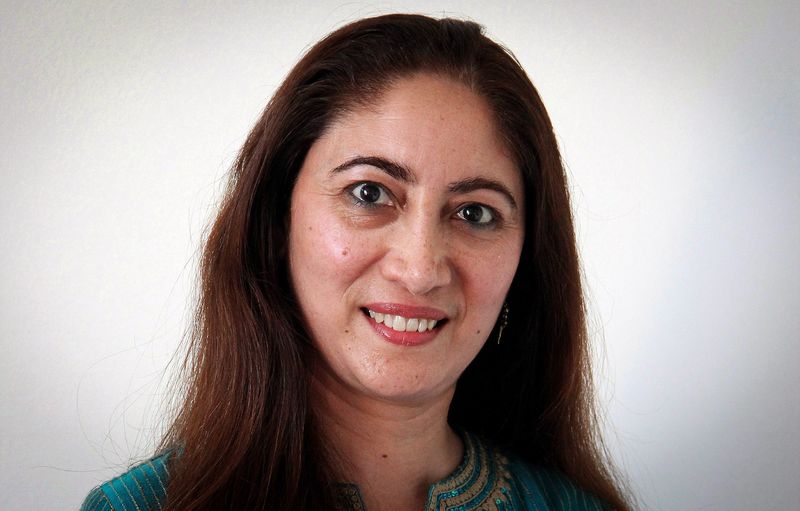
Dr Nasheeta Peer is the Chief Specialist Scientist within the Non-Communicable Diseases Research Unit at the South African Medical Research Council (SAMRC). She has worked there for 22 years, with a focus on the epidemiology and prevention of cardiovascular risk factors. As an NRF C1-rated scientist, her expertise lies in diabetes, hypertension, dyslipidaemia (cholesterol issues), obesity and tobacco smoking. Peer authored a 2022 study that investigated the links between hypertension and experiencing gender-based violence. Abuse led to high blood pressure partly or entirely because it triggers mental health issues, and binge drinking. The study found that women need psychological support and other interventions to lower their blood pressure. Another paper she is working on found that hypertension and poor mental health, (including depressive or anxiety disorders) may have a two-way relationship: the presence of hypertension is more likely to increase the risk for mental illnesses, and vice versa. Unhealthy ‘choices’ Some risk factors for hypertension are passed down through families. Others can be changed. The National Strategic Plan on Non-Communicable Diseases (2022-2027) points out that reducing the levels of tobacco use, unhealthy diet, physical inactivity, harmful use of alcohol and air pollution would help reduce the level of non-communicable diseases. Beyond healthcare and state action, the plan said engagement was needed to address the social and commercial determinants of health and behaviour change. Commercial determinants of health are the “private sector activities that affect people’s health, directly or indirectly, positively or negatively,”, according to the World Health Organization. Peer has written about this subject, in the paper “Predators in the park: multinational corporates versus population health”. She added that public measures needed to address the physical, economic and socio-cultural environment to enable individuals to make healthier choices. “While the South African government has acknowledged the need to address the rising burden of CVD [cardiovascular disease] risk factors with policies and guidelines... translating them into effective programmes remains elusive and challenging.”Civil society and other stakeholders need to hold the government accountable, and ensure awareness for screening for hypertension and diabetes, she said. More than that, tobacco legislation needs to be strengthened and enforced, as “we have, unfortunately, fallen far behind other African and low- and middle-income countries in this field”. There is a link between binge drinking and developing high blood pressure. Dr Nasheeta Peer believes alcohol marketing should be banned in South Africa. (Photo: iStock) Peer thinks that alcohol advertising should be banned. “These falsely promote positive connotations of happiness, success and wealth with alcohol consumption. Studies have also demonstrated a clear link between poor mental health and low psychosocial wellbeing with problem drinking, and are in sharp contrast to the images portrayed in the media.”In another study, Peer looked at alcohol control strategies in Africa. The total alcohol per capita among alcohol consumers was the second highest in world regions (19.5 litres): 19% of sub-Saharan men could be classified as binge drinkers. Friendship groups that may influence individual attitudes should be targeted to change behaviour when it comes to drinking. Unhealthy environmentFood marketing tended to promote less healthy foods (high in fat, sugar, and salt) which were widely accessible and cheaper, she said. “It is of little surprise that the epidemic of overweight/obesity has flourished without an appropriate public health response.”The environment in South Africa made it difficult to live healthier, especially for the poor majority, whose choices were limited by the lack of availability of healthy foods, limited knowledge and monetary costs, she said. “Changing the environment is beyond the control of the healthcare sector and requires input from motivated stakeholders in other government departments.” These interventions need to be at a national and local level, but the Department of Health needs to drive the integrated, comprehensive and multi-sector policies for the prevention of cardiovascular disease and NCDs. A recent study reports that fewer than 10% of hypertensive men and only 13% of women in SA are aware of their condition. Among those treated, just 14-21% achieve adequate blood pressure control.While levels of detection, treatment and control of hypertension had improved between 1998 and 2016, these levels remained suboptimal, Peer said. Changing minds, then hearts So where does South Africa need to go with the population approach to tackling diabetes and hypertension? According to Peer, there need to be:Measures to improve awareness/knowledge of diabetes and hypertension, and easier access to screening and treatment for these conditions (workplace programmes, after hours public clinics, mobile clinics). Policies to make healthier eating and physical activity an easy choice (this would be beyond the healthcare sector). Concerted attempts to change cultural attitudes to diets, physical activity, tobacco smoking and binge drinking.South Africa has experience treating HIV/Aids and can use that model to screen for non-communicable diseases like hypertension and diabetes. (Photo: Supplied / Source) Peer echoed her PhD thesis; unlike acute illnesses where patients are treated for a short time, cardiovascular disease care relies on people consistently taking their daily medications, changing lifestyles and returning for follow-up assessments. This means the focus needs to be on a patients’ central role in their own healthcare. They need to be helped by healthcare providers, families, support groups and communities. This also means that knowledge and advice has to be given in a culturally relevant way. One must be aware of the complex socio-cultural determinants of obesity, she said. “These range from perceptions of what constitutes an ideal body shape and size with the preferred form being overweight, to food availability and portion sizes. In African cultures, being overweight is acceptable and even desired, as it is perceived to be associated with dignity, respect, wealth, strength, attractiveness, happiness and health, and with women being well treated by their husbands,” she went on to say. “Moreover, in the context of the high prevalence of the HIV/Aids epidemic in South Africa, excess body weight is associated with a lack of this disease.”Education is required, especially when people are unaware of the link between obesity and increased cardiovascular disease risk. Priority shift, and task shift South Africa has experience with the successful treatment and care of HIV/Aids patients. South Africa moved the care of uncomplicated HIV/Aids patients to lower-level healthcare workers, such as specially trained nurses and adherence counsellors in clinics. This improved the quality and access to care, and consistent taking of medication.In view of budgetary constraints, a task-shifting model for cardiovascular disease management warranted consideration, Peer said. Task-shifting is when the care of a patient is reallocated to a healthcare provider with a lower training level. A South African nurse works at a free health clinic giving HIV/Aids information and testing blood sugar levels and blood pressure at the Living Hope centre in Masiphumelele, Cape Town, on 1 December 2016. (Photo: Nic Bothma / EPA) Introducing community healthcare workers as part of an outreach programme could reduce the pressure felt at primary healthcare facilities. Beyond that, using trained workers for support groups could improve the care. This would need close monitoring and evaluation by managers at district and sub-district levels, she explained. As Peer outlined in her thesis, the major challenge is the shortage of appropriately trained healthcare providers, and an already overburdened workforce in South Africa. While specialised training and teams are required, human resources already account for 50-70% of healthcare expenditure in South Africa. So, there need to be cost-effective solutions for improving cardiovascular disease care. At a clinic level, community healthcare workers could provide education, check blood pressure and glucose levels and administer basic urine tests while specifically trained nurses could prescribe medication and refer complicated patients to doctors. What are the risk factors? Currently, there is no clear policy for the screening of cardiovascular disease risk factors in South Africa. Together with the management of people with known risk factors in dedicated programmes, the ultimate goal should be early identification of people with asymptomatic and previously undiagnosed risk factors, Peer outlined in her thesis. “Besides, the country lacks the staff, facilities and funds to implement population-based screening programmes, especially in view of the HIV/Aids pandemic,” she told Daily Maverick. Screening programmes target people with high-risk characteristics – such as older age, high body mass index or waist circumference, the presence of a known risk factor or family history. The International Diabetes Federation and the American Diabetes Association, among other organisations, recommended brief screening questions around these issues, along with physical activity levels. However, a questionnaire had not been validated for Africa, she said. Community health workers could implement one, while closely monitored, at clinics, social development pay points or other government services, she said. Screening for non-communicable diseases could also be incorporated into the current HIV Counselling and Testing campaign, which had already tested more than 13 million individuals for HIV. Early detection and treatment for non-communicable disease risk factors would result in efficient and cost-effective management because of decreased complications and hospital admissions, she said. DMPeer is an Associate Professor at the Department of Medicine in the Faculty of Health sciences at University of Cape Town (UCT). She has collaborated with UCT as an Honorary Research Associate since 2015. She is also an Associate Editor for the: BMC Public Health, as well as the Academic Editor for the: PLOS Global Public Health. She has received the best publication in diabetes award, presented by the Society for Endocrinology, Metabolism and Diabetes of South Africa in 2013 and 2015, and an award in the International Society of Hypertension New Investigator Oral Presentation category in 2021.
WORLD HEART DAY: Silent killer, simple fix? How to save SA from hypertension
Full Article
Original Source
Read the full article at Dailymaverick →KhanList aggregates and links to publicly available news content. We do not host full articles from third-party sources. Always verify important information with original sources.