
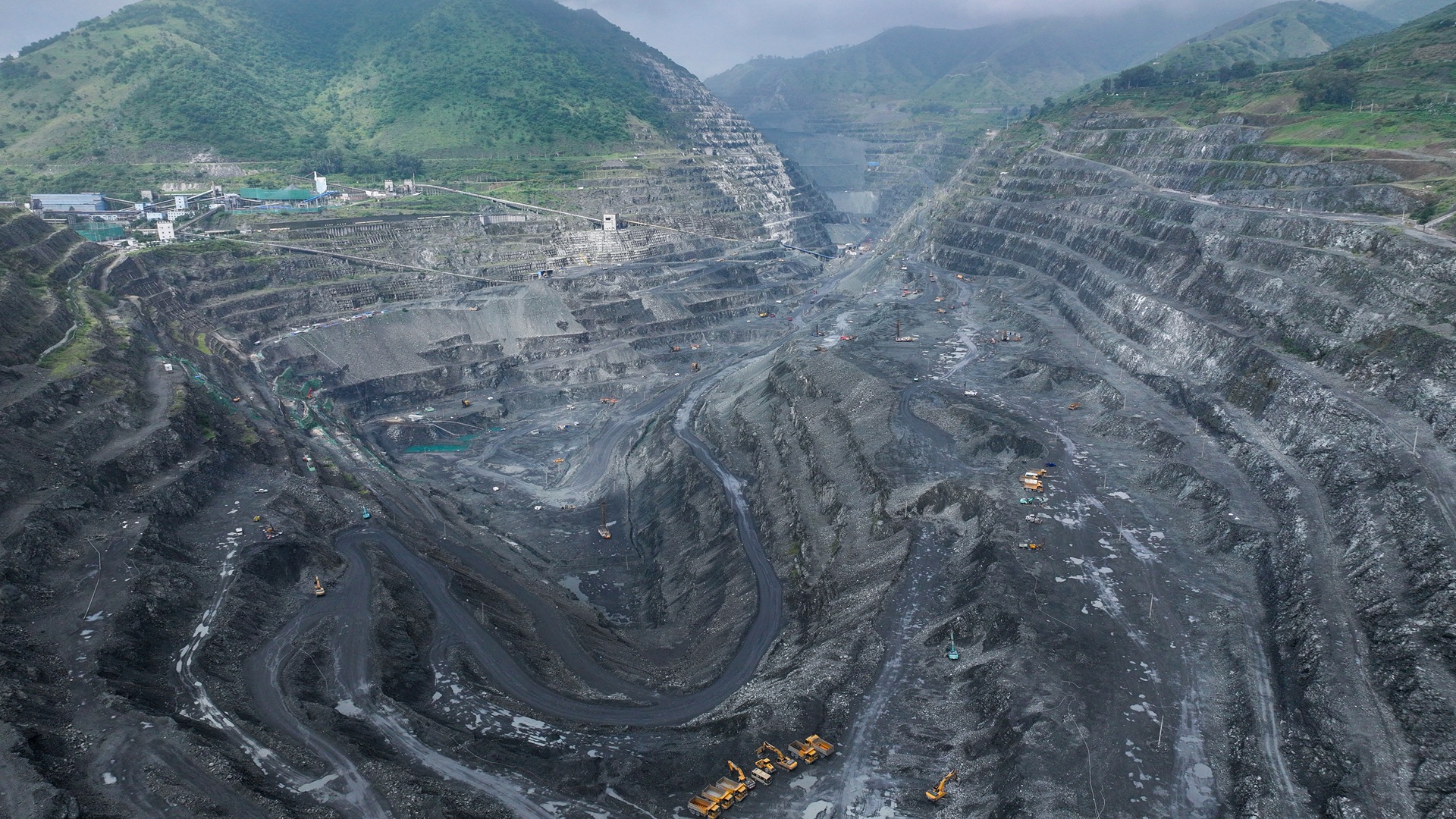
The largest iron ore magnetization roasting project in the world, which can convert discarded mine tailings into high-grade iron concentrate, has begun operations in China. The world’s first facility, located in Anshan, Liaoning Province, was brought online after passing official acceptance tests, the Chinese Academy of Sciences (CAS) revealed last Tuesday. It is now operating steadily at full capacity. The Institute of Process Engineering (IPE) under CAS revealed that the production line could process 6.13 million US tons (5.56 million tonnes) of refractory iron ore and tailings per year. The technology can take ultra-low-grade tailings with just 11 percent iron and turn them into concentrate with an iron grade of 65 percent. Chinese researchers stated that this is the first technology in the world to process such low-grade iron tailings at an industrial level. They believe it could reduce the nation’s heavy reliance on iron ore imports. China is the world’s largest iron ore consumer. It uses over half of the world’s iron ore but has long relied on foreign suppliers for more than 80 percent of its needs. Its biggest iron ore suppliers include Australia, Brazil, India, and South Africa. At the same time, the country holds the world’s fourth-largest iron ore reserves. That said, much of this ore is low-grade. Approximately half is considered difficult to process economically using conventional technologies. To tackle the challenge, the team at CAS’ Institute of Process Engineering (IPE) developed a fluidized-bed magnetizing roasting method. Iron minerals are separated from waste based on their magnetic properties. Still, conventional magnetic separation is less effective when iron concentrations are extremely low, or the minerals have weak magnetic properties. The new process relies on controlled roasting to alter the magnetic properties of iron minerals, allowing them to be separated more efficiently. It can precisely control how long particles remain inside the reactor. It achieved an iron mineral conversion rate of 98 percent. In addition, the process consumes just 0.82 gigajoules (GJ) of energy per ton of ore, or around 35 percent less than existing technologies. Decades in the making South China Morning Post (SCMP) revealed that the technology took decades to develop. Research into using magnetizing roasting for low-grade iron ore dates back to the 1950s and 1960s at the Institute of Chemical Metallurgy. Zhu Qingshan, PhD, a professor and head of the research team, revived efforts to industrialize the technology in 2004 and spent more than two decades refining the process. The Anshan facility consists of three production lines. Each of them is capable of processing 1.85 million tonnes (2.04 million US tons) annually. Its construction began in March 2024. Meanwhile, full-process testing followed in September 2025, and the facility officially entered operation in January 2026. The project is also a huge part of state-owned steelmaker Ansteel Group’s broader plan to reprocess 24 million tonnes (26.46 million tons) of iron tailings annually. Its potential reach is, however, considerably larger. The CAS team estimated that the technology could help unlock nearly 30 billion tonnes (33.07 billion tons) of difficult-to-process iron ore and almost 10 billion tonnes (11.02 billion tons) of iron-bearing tailings across China. The technology has already been licensed to projects with a combined annual processing capacity exceeding 15 million tonnes (16.53 million tons). Get the latest in engineering, tech, space & science - delivered daily to your inbox.Based in Skopje, North Macedonia. Her work has appeared in Daily Mail, Mirror, Daily Star, Yahoo, NationalWorld, Newsweek, Press Gazette and others. She covers stories on batteries, wind energy, sustainable shipping and new discoveries. When she's not chasing the next big science story, she's traveling, exploring new cultures, or enjoying good food with even better wine.
World-first plant in China turns 5.56 million tons of mine waste into iron each year
Full Article
Original Source
Read the full article at Interestingengineering →KhanList aggregates and links to publicly available news content. We do not host full articles from third-party sources. Always verify important information with original sources.