
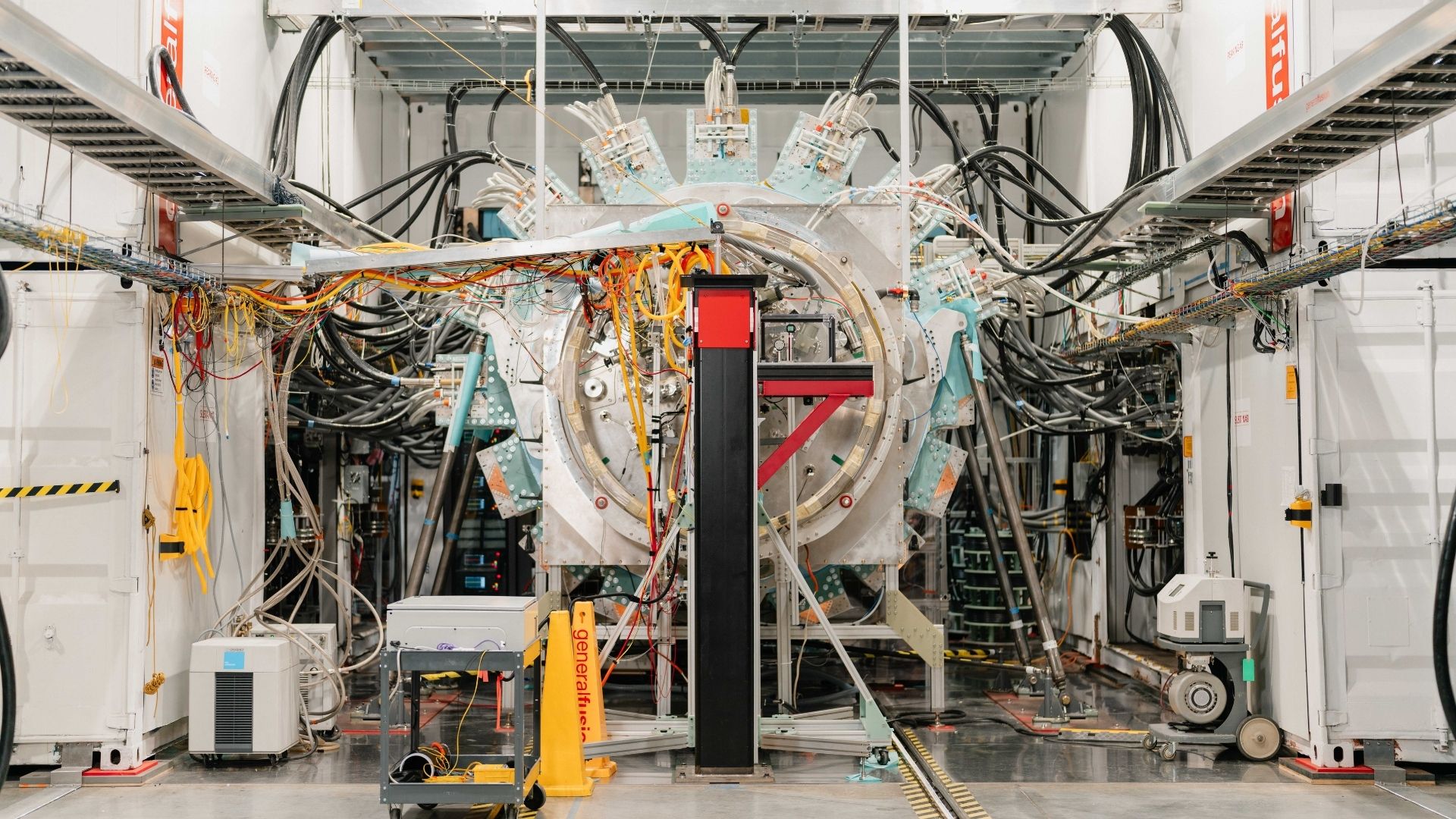
Scientists have superheated a trapped plasma to more than 12 million degrees Celsius (21.6 million degrees Fahrenheit). This milestone crosses a crucial threshold for commercial fusion energy. The benchmark was achieved by Canadian technology firm General Fusion inside its experimental prototype, the Lawson Machine 26 (LM26). The device reached electron temperatures of 1.1 kiloelectronvolts (keV) just before peak compression. In fusion physics, surpassing 1 keV is an internationally recognized milestone. Only a handful of experimental reactors worldwide have ever reached it. “General Fusion has a two-decade track record of achieving industry-first milestones in Magnetized Target Fusion supported by a substantial body of peer-reviewed scientific literature,” said Greg Twinney, Chief Executive Officer at General Fusion. “We built LM26 to achieve important technical milestones that will help get us to a first-of-a-kind plant in the next decade, and step-by-step we are advancing on this path.” New mechanical approach to fusion Until now, every laboratory that passed this mark used massive superconducting magnets or high-powered lasers. General Fusion chose a different path. It uses a mechanical method called Magnetized Target Fusion (MTF). It is the first machine in history to hit this temperature using low-speed, physical compression. Most modern fusion ventures rely on extremes. Some fire enormous lasers at fuel pellets for mere nanoseconds. Others trap plasma inside intricate magnetic cages. General Fusion instead injects magnetically confined plasma into a chamber and crushes it over several milliseconds using a contracting solid metal wall. Mechanical compression of the fuel avoids the need for rare, delicate materials. Commercial plants will use a circulating liquid-metal barrier. This layer absorbs damaging neutron radiation and intense heat. As a result, engineers can build the reactors using conventional industrial metals. Overcoming the diagnostic challenge Proving the temperature of the reaction required a delicate diagnostic setup. The plasma sits inside a collapsing metal liner. Because of this tight enclosure, measuring the core without disturbing the reaction was a major technical hurdle. To solve this, engineers partnered with the UK Atomic Energy Authority (UKAEA). The UK national laboratory operates flagship fusion facilities at Culham. The joint team deployed Thomson scattering, a gold-standard diagnostic method that shines a laser beam through the plasma. By measuring how light scatters off high-energy particles, researchers can calculate temperature with high precision. The diagnostic hardware relied on a custom polychromator built at Culham’s Diagnostic Innovation Center of Excellence. Data from the test is now published on the company’s portal and submitted to an academic journal for peer review. International race toward nuclear fusion The breakthrough comes amid an international race to deliver limitless, low-carbon electricity to power grids facing record demand. The Vancouver-based company is backed by Canada’s Strategic Response Fund and advised by the US firm General Atomics. Technicians are already refitting the LM26 machine. Engineers are currently boosting the device’s compression systems to target 10 keV, or roughly 100 million degrees Celsius. That milestone will lead toward the Lawson criterion. This balance of heat, density, and confinement time is required to produce net electricity. If these engineering milestones hold, General Fusion expects to build its first operational grid pilot plant around 2035. Get the latest in engineering, tech, space & science - delivered daily to your inbox.An active and versatile journalist and news editor. He has covered regular and breaking news for several leading publications and news media, including The Hindu, Economic Times, Tomorrow Makers, and many more. Aman holds expertise in politics, travel, and tech news, especially in AI, advanced algorithms, and blockchain, with a strong curiosity about all things that fall under science and tech.
‘World-first’ 1 keV fusion milestone set without lasers or superconducting magnets
Full Article
Original Source
Read the full article at Interestingengineering →KhanList aggregates and links to publicly available news content. We do not host full articles from third-party sources. Always verify important information with original sources.