
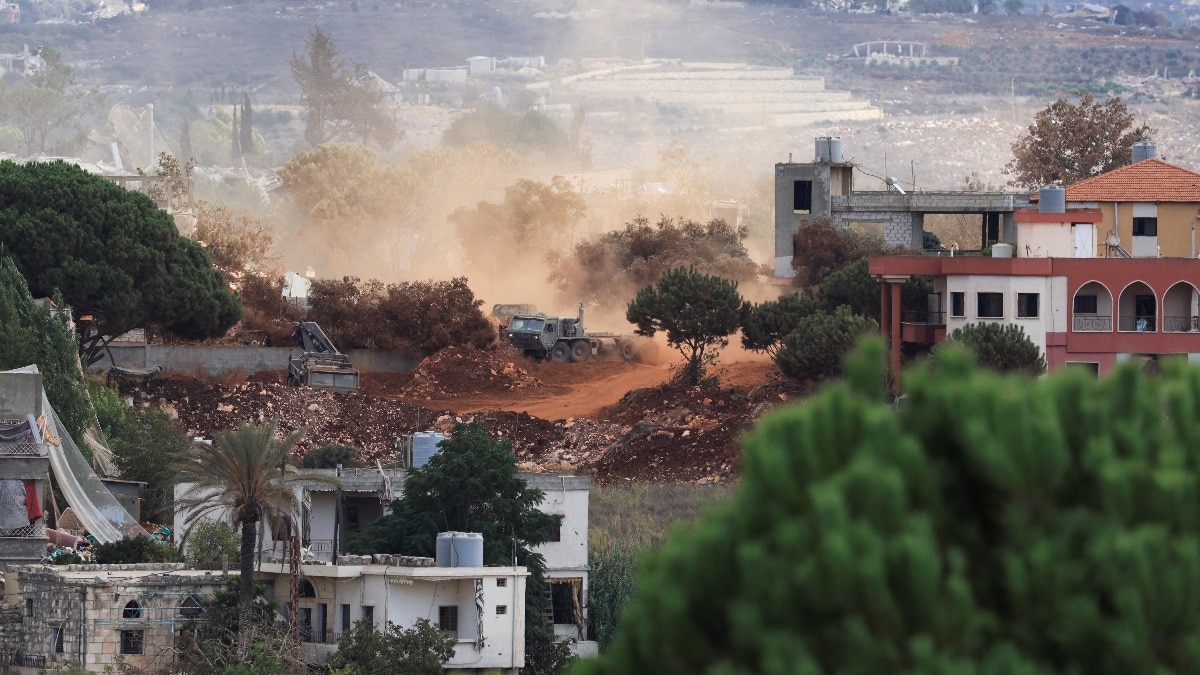
Iran accused the US and Israel of fuelling instability in West Asia through military aggression, while rejecting Israel's claims of ensuring regional security, questioning its anti-terrorism stance after Israeli envoy Reuven Azar's interview with India Today.The Iranian embassy accused Israel of projecting itself as a guarantor of regional security while attacking Arab countries and occupying their territories. (Photo: Reuters)New Delhi,Oct 9, 2026 15:14 ISTIran on Thursday accused the United States and Israel of fuelling instability in West Asia, saying the region’s insecurity stemmed from Israel’s military actions and Washington’s support for Tel Aviv. The Iranian embassy in India said regional security could not be achieved through military strikes, occupation, assassinations and civilian killings, asserting that “security is not created through bombing, assassination and the killing of civilians”.The statement came a day after Israeli envoy to India Reuven Azar warned of a possible new wave of radical Islamist terror attacks and flagged security threats facing India and Israel in an interview with India Today on Wednesday, while speaking on the attempted hijacking of a Flydubai flight.In what appears to be a response to Azar’s remarks, the Iranian embassy accused Israel of projecting itself as a guarantor of regional security while attacking Arab countries and occupying their territories.In the statement, shared on X, the Embassy of the Islamic Republic of Iran in India issued a statement on Thursday, accusing Israel and the United States of being the main sources of insecurity and instability in West Asia. In its statement, the Iranian embassy said recent developments in West Asia had demonstrated that the region's instability stemmed from Israel's "aggressive, occupying and war-mongering policies" and the comprehensive support it received from the United States."For years, the countries of the region believed that the United States and the Zionist regime could guarantee their security," the embassy said, questioning who attacked Qatar, targeted Beirut, reduced Gaza to ruins and continued to occupy Syrian territory, including the Golan Heights. Statement by the Embassy of the Islamic Republic of Iran in India in Response to the Baseless and Misleading Remarks of the Ambassador of the Zionist Regime (8 October 2026) The developments in West Asia over recent years have once again demonstrated that the main source of insecurity and instability in the region is not the peoples of the region, but rather the aggressive, occupying and war-mongering policies of the Zionist regime and the comprehensive support provided by the United States to this regime. For years, the countries of the region believed that the United States and the Zionist regime could guarantee their security. But today, a simple question is before public opinion across the region: Who attacked Qatar? Who targeted Beirut? Who turned Gaza into ruins? And who continues to occupy parts of Syrian territory, including the Golan Heights? A regime that, on the one hand, speaks of “peace,” the “Abraham Accords” and the normalization of relations with the countries of the region, and on the other hand attacks Arab countries, occupies Arab territories and, by killing more than 70,000 innocent people in Gaza, has perpetrated one of the greatest crimes in history, can never present itself as a defender of regional security. Security is not created through bombing, occupation, assassination and the killing of civilians. The crimes of the Zionist regime in Gaza and its attacks on Lebanon and other countries of the region have revealed the true nature of this regime and its policies more clearly than any claim. The attempt to portray the people of Gaza and Lebanon as “proxies” is nothing but an attempt to divert public attention from reality. The people of Gaza and Lebanon are proxies of no country. They are human beings who are fighting for their land, security, dignity, right to life and human rights. One cannot ignore decades of occupation, displacement, killing and deprivation of a people of their basic rights, and then explain their resistance merely through political labels. Over the past year, at a time when the Islamic Republic of Iran was subjected to military aggression by the Zionist regime and the United States, the people of the world witnessed that Iran, despite 47 years of sanctions, pressure and threats, stood firm against two regimes equipped with nuclear weapons and was able to defend its territorial integrity and national security. Today, like a phoenix that has emerged from the heart of the fire, Iran is fully prepared to defend its national sovereignty and territorial integrity and to confront any military aggression. The real power of a “resurrected nation” cannot be changed through psychological operations, political propaganda and media narrative-building. Today, global public opinion is witnessing the realities of the region more than ever before. The political and moral isolation of the Zionist regime at the recent session of the United Nations General Assembly, the increase in popular protests and the widespread international reactions to its crimes in Gaza show that public opinion no longer easily accepts distorted narratives. The people of the region still remember the images and reports concerning the practical support of the Zionist regime for armed elements in Syria and the treatment of wounded individuals affiliated with ISIS in the hospitals of this regime. Therefore, those who portray themselves as defenders of the fight against terrorism cannot expect the people of the region to forget their historical memory. And finally, the world must remember one fundamental reality: the history of Palestine did not begin on 7 October. 7 October cannot be separated from decades of occupation, displacement, settlement-building, killing, assassination, repression and deprivation of the Palestinian people of their most basic rights. If 7 October is to be discussed, history must be viewed from 1948; one must ask what has happened to the Palestinian people, particularly the people of Gaza, over the past decades that has led to such a response. No nation and no society can be deprived of its rights forever and be expected to remain without a response to history. Undoubtedly, the final victory belongs to those peoples who struggle for the liberation of their land, the defense of their rights and human dignity, and the achievement of freedom and justice.— Iran in India (@Iran_in_India) October 8, 2026Iran accused Israel of contradicting its stated commitment to peace and the Abraham Accords by attacking Arab countries and occupying Arab territories.The statement also cited the killing of more than 70,000 people in Gaza, arguing that Israel could not portray itself as a defender of regional security while carrying out military operations and causing civilian deaths."Security is not created through bombing, occupation, assassination and the killing of civilians," the embassy said.It added that a regime which spoke of peace and normalisation while attacking Arab countries and occupying their territories could not present itself as a guarantor of regional security.The Iranian mission also rejected attempts to portray the people of Gaza and Lebanon as proxies of other countries, describing them instead as people fighting for their land, security, dignity, right to life and human rights."The people of Gaza and Lebanon are proxies of no country," the statement said, adding that decades of occupation, displacement, killings and deprivation of basic rights could not be ignored while explaining Palestinian and Lebanese resistance solely through political labels.PREPARED TO DEFEND SOVEREIGNTY: IRANThe embassy also referred to the military strikes carried out by Israel and the United States against Iran over the past year, claiming that Tehran had stood firm despite 47 years of sanctions, pressure and threats.It said Iran remained prepared to defend its national sovereignty and territorial integrity against any military aggression, adding that psychological operations, political propaganda and media narratives could not diminish the country's strength."Today, like a phoenix that has emerged from the heart of the fire, Iran is fully prepared to defend its national sovereignty and territorial integrity and to confront any military aggression," the statement said.The Iranian mission further argued that international public opinion was increasingly questioning Israel's actions, pointing to protests and international reactions to the war in Gaza as evidence of what it described as the country's growing political and moral isolation."The political and moral isolation of the Zionist regime at the recent session of the United Nations General Assembly, the increase in popular protests and the widespread international reactions to its crimes in Gaza show that public opinion no longer easily accepts distorted narratives," the embassy said.IRAN QUESTIONS ISRAEL’S ANTI-TERRORISM CLAIMSThe Iranian embassy questioned Israel's anti-terrorism claims, citing reports of its alleged support for armed groups in Syria and treatment of wounded ISIS-linked individuals in Israeli hospitals. It said those claiming to fight terrorism could not expect people in the region to forget their past actions."The history of Palestine did not begin on 7 October," the statement said, arguing that the conflict must be viewed in the context of decades of occupation, displacement and repression. "If 7 October is to be discussed, history must be viewed from 1948," it added.The embassy said the Palestinian struggle was rooted in the pursuit of freedom and justice, asserting that "the final victory belongs to those peoples who struggle for the liberation of their land, the defence of their rights and human dignity".- Ends
World can see the truth: Iran accuses US, Israel of fuelling West Asia instability
Full Article
Original Source
Read the full article at Indiatoday →KhanList aggregates and links to publicly available news content. We do not host full articles from third-party sources. Always verify important information with original sources.