
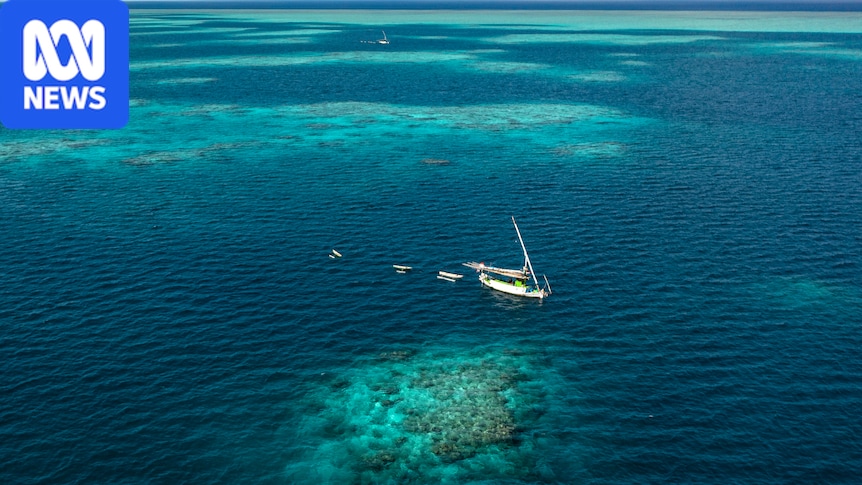
A coalition of experts, fishers and conservationists has launched a fresh offensive against Woodside's proposed $30 billion Browse gas project, accusing the company of "dramatically understating" the risks of an oil spill off the pristine Kimberley coast. The project, which Woodside says will produce enough gas to power 800,000 homes, is currently before WA's Environmental Protection Authority (EPA).The company amended its proposal last year after it was handed a preliminary rejection, relocating a drill centre away from critical turtle nesting grounds and decreasing its overall project footprint.Key to the adjustments was minimising the chance of a spill, the fallout of which threatened to be "catastrophic", according to Woodside's initial report to the EPA. Massive oil spill modelledSimulations by the company showed a Browse well blowout could haemorrhage nearly 900,000 barrels of condensate over 77 days, roughly 30 times bigger than the 2009 Montara spill, considered one of the worst oil disasters in Australian waters.A 77-day release could spread through eight reefs, nine marine parks and three Indigenous Protected Areas. (ABC News/Woodside)Woodside described "severe and potentially irreversible" impacts, reaching as far as Indonesia and Timor-Leste, and killing coral and marine animals including whales.But the company said a catastrophe was "highly unlikely" and the more "credible" scenario would unfold over 12 hours, leaching about 5,600 barrels of condensate off Scott Reef in the Timor Sea.Scott Reef is Australia's largest standalone oceanic reef and a refuge for thousands of aquatic creatures and shorebirds.Woodside said it had several strategies to mitigate the effects of a spill, including dual pyrotechnic shear rams, a nascent technology using controlled explosives to sever and seal a compromised well or drill pipe almost instantaneously.System may still failEnvironmental consultant Rick Steiner warned Woodside's oil spill containment methods were not guaranteed to work, noting that in the world's biggest-ever accidental marine oil spill, last-ditch shear rams of a different type failed to activate at Deepwater Horizon.The American is a specialist in major clean-ups, having been drawn into the industry by the Exxon Valdez spill off Alaska in 1989.The 1989 Exxon Valdez disaster happened when an oil tanker struck a reef off Alaska. (Reuters: Mike Blake)"The maximum credible spill scenario in Woodside's revised plan is a perfect example of the industry dramatically understating risks of a project, and overstating their response capabilities," Mr Steiner said."With doubly redundant backup systems, which are absolutely essential, the system can still fail quite simply."His reservations are shared by one of Woodside's most significant competitors.Chevron Australia, in response to public submissions about its own gas exploration plans off WA in 2024, dismissed pyrotechnic shear rams as unable to be "function tested" because they may only be fired once.Timing doubtsOther mechanisms Woodside said it would rely on during a spill, including capping stacks, used to plug a blowout, and relief wells, which divert pressure, were also criticised by experts.Woodside says the activation of dual pyrotechnic shear rams vastly reduced its most credible spill scenario. (ABC News/Woodside)Macquarie University professor of energy law Tina Soliman-Hunter said both required significant lead times to deploy."I can't even fly to Singapore in 12 hours, let alone mobilise a capping stack, which is industry standard to deal with a well blowout," Dr Soliman-Hunter said.An independent review by John Wright, one of the architects of the Deepwater Horizon response, raised similar concerns.Commissioned by Woodside, the review said there were multiple factors that could mean the mobilisation of a capping stack and relief well took "longer than planned".Woodside's modelling outlined potentially lethal impacts on migrating whales. (Supplied: Alex Westover, Wendy Mitchell/Greenpeace)Mr Wright nevertheless endorsed the project as meeting global standards for its current stage of development.Fisherman's fearsA Woodside spokesperson said responding to any offshore oil spill was "challenging", but the company had poured substantial resources into prevention and rapid management.The spokesperson added that additional planning for capping stack deployment and relief well capability would be undertaken ahead of any future drilling."Woodside has made clear our commitments, informed by credible science, that are designed to manage and minimise potential impacts, with clear objectives and controls," the spokesperson wrote in a statement.Fishing guide Peter Tucker, a former chair of the Save the Kimberley campaign, said the risks were most keenly felt by those on the ground.Peter Tucker says a lot of businesses are worried about what would happen if a spill occurred. (ABC News: Andrew Seabourne)"[A spill] would be the end of my business; that would be the end of a lot of businesses on the Kimberley coast," he said.Documents obtained under the Freedom of Information Act suggest the federal environment department asked the National Offshore Petroleum Safety and Environmental Management Authority (NOPSEMA) to investigate the possibility of a Browse oil spill last year.Broome-based environmental group Environs Kimberley and Greenpeace Australia Pacific want the findings to be released.Gas and condensate from Browse would be processed at Woodside's North West Shelf facilities near Karratha. (ABC News: Chris Lewis)"What the Western Australian community is asking for is transparency," Environs Kimberley executive director Martin Pritchard said."If we've got the risk of an oil spill that would kill a reef and cover the Kimberley Coast, the public needs to know about it."The ABC revealed in May that final departmental advice on whether to approve the Browse project would be handed to federal Environment Minister Murray Watt before the end of the year.
Woodside oil spill plan under fire as approval decision nears
Full Article
Original Source
Read the full article at Abc →KhanList aggregates and links to publicly available news content. We do not host full articles from third-party sources. Always verify important information with original sources.