
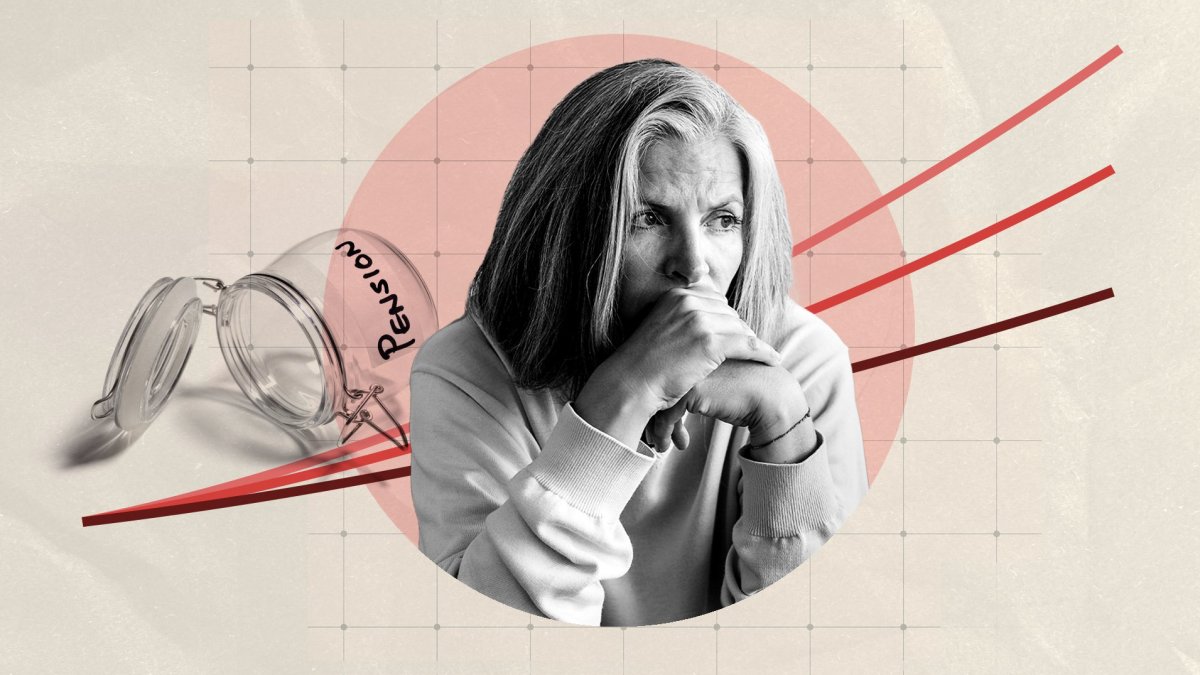
Women are often used to having less in retirement than men – but there is one common, often overlooked, reason for why they are unable to save as much. Almost a million women in the UK have had to leave their jobs as a result of menopausal symptoms, with the effects going far beyond just physical or emotional. Menopause usually affects women in their late forties and early fifties and can cause symptoms like brain fog, memory issues, hot flushes and migraines – but it can also have an “enormous” impact on women’s finances, according to experts. Around 60,000 women are out of employment because of perimenopause or menopause, representing around £1.5bn a year in lost earnings, according to the Department for Work and Pensions. Shorts Not only do women lose their income but also the ability to save into a workplace pension at a time when they would probably be at their peak earning capacity. Elissa Dobson, 54, is one such person who experienced this. She had to walk away from her job in senior leadership in the healthcare sector when she was 46 because of the menopausal symptoms she was experiencing. Elissa, from Cheshire, said: “I was getting increasing amounts of anxiety, which I had never really had before, but particularly brain fog, and there was a real moment when I sat in a meeting with colleagues who I’d worked with for nearly 10 years, and I literally could not remember their names. I thought I had dementia. It was quite frightening.” Elissa admits she never really thought about her pension Elissa was on a salary of over £50,000 and was contributing around 10 per cent of her salary every month to her pension – but since leaving her job, she hasn’t been contributing. She said: “My lifestyle had to completely change when I left my job. I went from quite a nice car to a little runaround. Holidays have been off the agenda for a number of years. The things you’d call luxuries suddenly weren’t there any more because you don’t have a secure salary.” Elissa was slowly draining her savings, withdrawing £5,000 to £10,000 a year and admits “there isn’t a lot left”. She’s not alone. Modelling done by Royal London found a woman on a £40,000 salary with a pension pot of £100,000 who stopped working at 50 would be £126,000 worse off in retirement than someone who remained in work until 67. Clare Moffat, pensions and tax expert at Royal London, said: “Women leaving the workplace because of symptoms risk storing up a long-term crisis, with many reaching retirement with substantially less financial security than they had envisaged.” Elissa has now retrained as a midlife wellbeing coach and workplace wellbeing specialist and hopes to start contributing to a self-invested personal pension (SIPP) in the next two to three years. “I don’t even think about the age I will be able to retire. Now that I retrained as a coach I might be coaching until I am 70 or 80, if that’s what I have to do,” she explained. “There was always an assumption that if I worked in a career, then your pension and everything would be there, and then when that is taken away it becomes quite a frightening position to be in. “There are probably some conversations and decisions that I either should have made or could have made in the past couple of years, but I didn’t because I just wasn’t aware of it.” Aside from the physical impact, menopausal concerns add to the existing gender pension gap with a recent report by the Pensions Policy Institute finding that women aged 55 to 59 have 54 per cent less pension wealth than their male counterparts. It never occurred to Caroline that menopause would impact her financially Caroline Milne, 50, also did not realise the effect menopause would have on her family finances. She was a nurse for 20 years and believed she would stay in that role until she retired. “I was not at all prepared for the impact that perimenopause would have on me, especially so much younger and more severely than I had believed it would at 43 years old.” Caroline was experiencing severe menstrual bleeding, anxiety, loss of confidence, brain fog, which affected her ability to articulate herself well, and memory issues, meaning she could forget important things during her shift. She first decided to take a step back from her job but soon used up all her sick leave and so left the NHS in 2023. “Leaving meant a loss of around £1,300 a month to our family income, and I had stopped paying into my pension. We had to tighten everything,” Caroline said. She was contributing 9 per cent of her salary to her NHS pension for about 20 years but has no idea how much she has saved. She also has gaps in her National Insurance contributions, so is not on track to receive the full state pension. “I always thought I wouldn’t work beyond 67, I wasn’t really thinking about my pension,” she explained. Gina Miller, founder of digital investment platform MoneyShe, said that having gone through menopause and breast cancer herself, she knows how quickly a midlife health issue can upend a household budget. “None of this is women’s fault. Our pension system was built around an uninterrupted, full-time career, and anything that interrupts it – caring, part-time work, a health condition – is quietly penalised. “Women already retire with far less than men, and menopause can widen that gap at the very moment there’s least time left to close it.” Caroline is not currently contributing to a pension and recently set up her own business to coach other women going through menopause but has no idea how long she will need to work for now to make up for the income she has lost. “I was blindsided. I wasn’t ready for the impact menopause was going to have on me mentally, physically and psychologically. But it never occurred to me that it would have a financial impact on me.” She never thought she’d lose her job. “That’s why I never really thought about my pension because I felt very safe. Everyone talks about how good an NHS pension is and that was a real safety net. “Although it’s not completely gone, I’ve not fully filled it to whatever it would have been if I’d stayed in my career another 15 or 20 years.” Catherine Morgan, a personal finance expert, author and host of the It’s Not About the Money podcast, said: “Women may have to reduce their hours, turn down a promotion, or leave a role they have spent years building because their symptoms feel unmanageable and their workplace hasn’t adapted to their needs. “Then, years later, they look at their pension and realise they can’t afford to stop. Thus, menopause can simultaneously push women out of work early and keep them working longer.” Five tips to stop menopause affecting your financial future Review your pension whenever your work situation changes. If menopause leads to reduced hours, a role change or a temporary break from work, understand what this could mean for your pension as early as possible. Don’t miss out on employer contributions. One of the quickest ways to boost retirement savings is ensuring you’re contributing enough to receive the maximum employer contribution available. Check your state pension record. Women who have had caring responsibilities, career breaks or periods of reduced work should check their National Insurance record and State Pension forecast. Consider your relationship status and plan accordingly. Couples should discuss how periods of reduced earnings will affect both partners. Where appropriate, third-party pension contributions can help maintain retirement savings during periods of lower earnings. For unmarried couples, keeping beneficiary nominations and retirement plans up to date is particularly important. Take a fresh look at your overall retirement position. Track down any lost pension pots, review contribution levels and consider increasing how much you pay in after a pay rise, bonus or return to full-time work.
Women in their 40s and 50s left £126,000 worse off in retirement due to menopause
Full Article
Original Source
Read the full article at Inews →KhanList aggregates and links to publicly available news content. We do not host full articles from third-party sources. Always verify important information with original sources.