
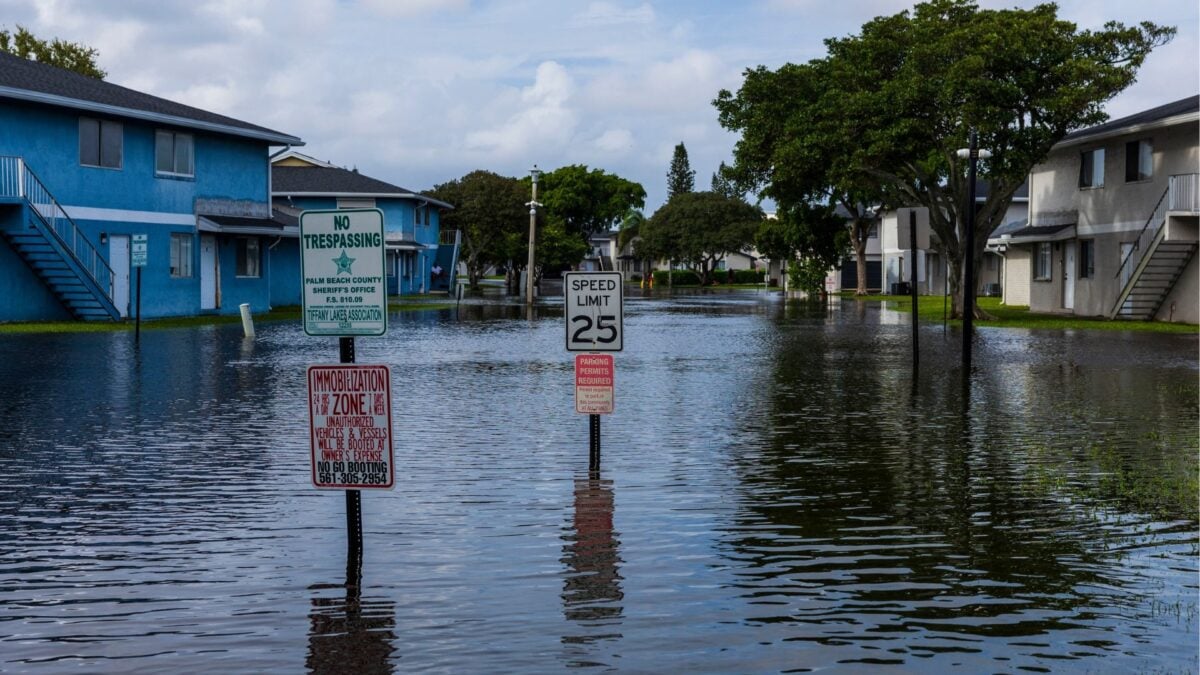
A series of extreme rainfall events unfolding across the U.S. could be a prelude to a sopping super El Niño winter. For three straight days, deluging rain has battered Florida, with rainfall totals as high as 2 feet (0.6 meters) recorded along the Space Coast and central parts of the state. Catastrophic flash flooding led to hundreds of water rescues and killed two people in Palm Bay, one of whom died in a vehicle. Meteorologists are calling this a one-in-1,000-year rainfall event, and it’s not over yet. In a statement issued early this morning, the National Weather Service (NWS) said Southeast Florida could continue to see heavy rain for “at least another day.” Meanwhile, skies are finally clearing over the Southwest, where up to 7 inches (18 centimeters) of rain fell between Saturday and Monday. Widespread flash flooding forced hundreds to evacuate and killed one person who was swept into a drainage tunnel in Flagstaff, Arizona, the Associated Press reports. Local police later discovered a second body in a drainage area, and while the death appears to be weather-related, the cause has yet to be determined. Officials say cleanup and repair efforts could take weeks. Now, that storm system has moved into the Central U.S., bringing soggy conditions to the Great Plains, Upper Midwest, Mississippi Valley, and the western Gulf Coast. The threat of flooding in these regions remains low, but it’s possible that inclement conditions could suppress voter turnout for the midterm elections today. And looking ahead to next week, NWS forecasters expect an atmospheric river to funnel heavy amounts of moisture into West Coast states from November 10 to 12. The agency says there will be a high risk of heavy precipitation from northern California through the Northwest, with a risk of flooding at lower elevations. Experts say a record-strong El Niño is largely fueling the scourge of torrential rain. “Recent extreme rainfall is likely just the start of what will become a rough winter across the United States,” meteorologist Ben Noll posted on X today. How El Niño influences US rainfall El Niño begins with a weakening of trade winds that normally blow east to west across the equatorial Pacific Ocean. This pushes warm water from the western Pacific into the central and eastern tropical Pacific. When water temperatures in this region rise, the warming pumps huge amounts of heat and moisture into the atmosphere, altering weather patterns across the globe. This phenomenon causes the jet stream to shift southward and eastward over the contiguous United States, which tilts the odds toward wet, stormy weather across the southern tier from California to the Southeast. Every El Niño unfolds differently, so specific impacts are never guaranteed. But stronger events tend to favor the expected outcomes, and this is shaping up to be the strongest El Niño on record. At the same time, global warming is creating a wetter atmosphere, increasing the risk of extreme rainfall. El Niño compounds human-driven warming and helps the atmosphere soak up even more moisture, like a sponge. It’s no wonder August 2026 was both the hottest and most humid month on record. In October, the National Oceanic and Atmospheric Administration (NOAA) released its winter outlook, which forecasts temperature and precipitation trends across the United States from December through February. The maps clearly reflect El Niño’s influence, with wetter-than-average conditions expected across the southern tier from the Southwest to the Southeast and along the East Coast. Thus, these past few days of wild weather were a preview of what we might expect to see this winter, when El Niño is in full swing. But they also foretell long-term risks associated with our changing climate. As fossil fuel pollution continues to drive up global temperatures, extreme rainfall will increasingly threaten lives and infrastructure.
Winter Hasn’t Even Started, and El Niño Is Already Drenching the US From Coast to Coast
Full Article
Original Source
Read the full article at Gizmodo →KhanList aggregates and links to publicly available news content. We do not host full articles from third-party sources. Always verify important information with original sources.