
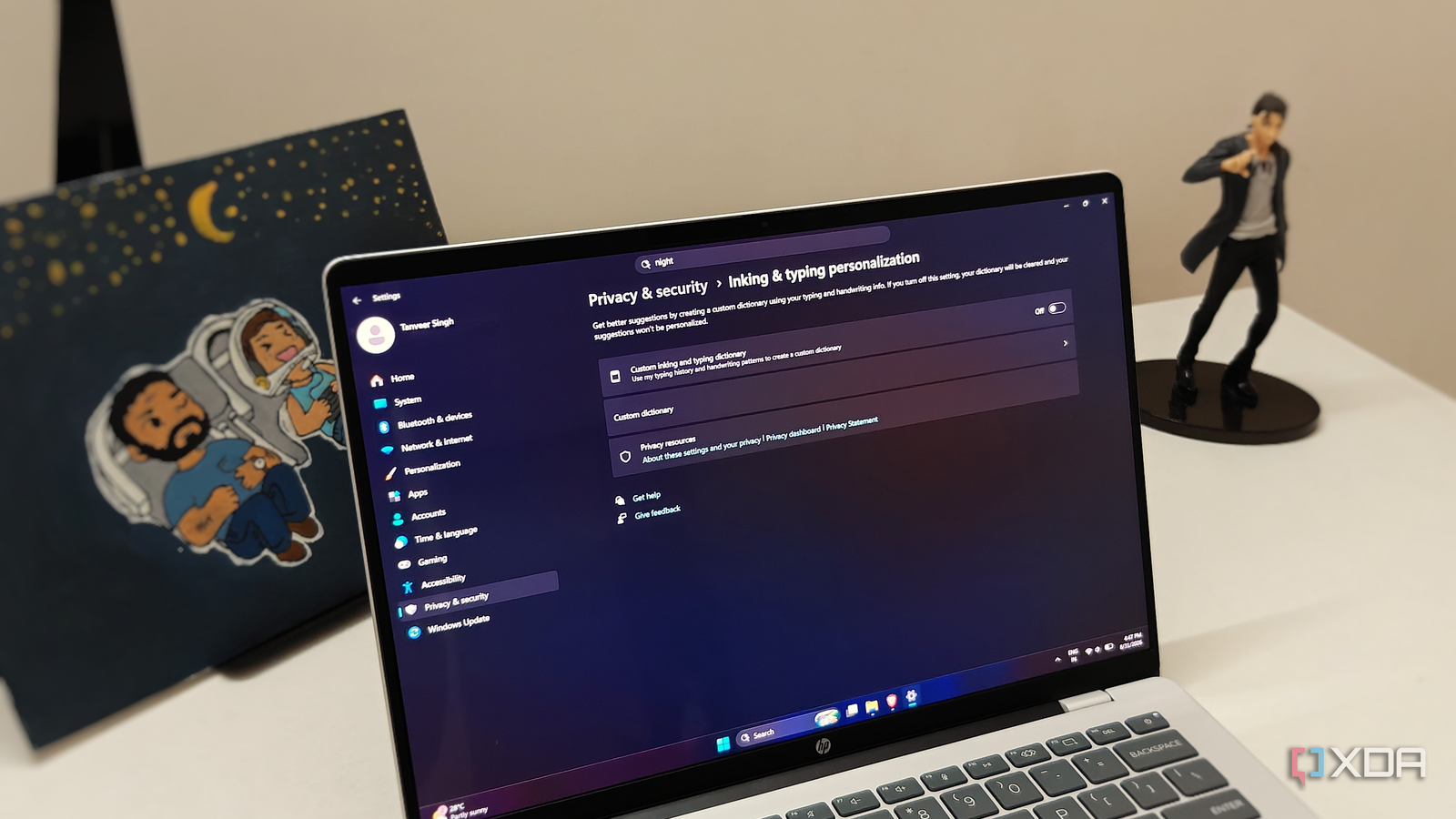
Published Sep 6, 2026, 8:00 PM EDT After a 7-year corporate stint, Tanveer found his love for writing and tech too much to resist. An MBA in Marketing and the owner of a PC building business, he writes on PC hardware, technology, and Windows. When not scouring the web for ideas, he can be found building PCs, watching anime, or playing Smash Karts on his RTX 3080 (sigh). Windows doing something unsavory isn't news these days. The enshittification of Windows 11 is well-known, and even the average user knows about Microsoft's push for more advertising, AI slop, and data tracking. Moving to Linux has always been an option, but abandoning Windows isn't easy for everyone. So, the love-hate relationship goes on. That said, there's a lesser-known telemetry feature that has existed since the Windows 10 days, and it's recording what you type on your computer. Inking & typing personalization operates anonymously, but I would disable the feature if I were you. Windows wants to improve typing suggestions It acts innocent, but I like being a skeptic Microsoft states that it "will collect samples of content you type or write" to improve the language recognition and suggestion capabilities of your apps and services. Many people have never even heard of Inking & typing personalization, but it has been sending your typing data to the cloud for over a decade, ever since the feature was introduced in Windows 10. Microsoft claims any collected samples are anonymized, so that they can't be traced to a particular user. The problem is whether that assurance is enough for a privacy-focused user. These days, installing a fresh copy of Windows 11 involves heavy debloating before the OS feels like one's own. Inking & typing personalization is just another intrusive Windows 11 feature that might slip through the cracks. It's not a malicious keylogger Credit: Towfiqu Barbhuiya (Pexels) Microsoft assures it doesn't record passwords, emails, or sensitive data. So, it's not a keylogger that records every keystroke in real time. That would be scandalous, sort of like Windows Recall (ahem!). Still, the moment your data leaves your computer, it carries a risk of being compromised. Microsoft may be anonymizing the samples it collects, but I wouldn't trust the company 100%. I like to keep my keystrokes local As should anyone who cares about privacy I've had Inking & typing personalization disabled ever since I was on Windows 10. It was part of the customary Windows telemetry cleanup that many users had to perform before their systems could be considered "usable." I'm never comfortable with any telemetry feature masquerading as customization, personalization, or otherwise helpful. My motto with Windows is "never trust, and always verify." If you haven't disabled this feature yet, I suggest doing it right away. You'll lose your custom dictionary, but that's something I've missed on my smartphone, not my PC or laptop. You'll find the setting in Privacy & security > Inking & typing personalization in Windows settings (Win + I). While you're at it, disable Send optional diagnostic data in Diagnostics & feedback on the previous screen. This prevents Microsoft from collecting data about your browsing behavior, app usage, and more. The company wants its fingers in every pie, and the onus lies on you to turn off as many intrusive "features" as you can. Many Windows users still don't know their typing data is being logged Anonymous or not, people shouldn't be comfortable with their keystrokes (even samples) being recorded and shipped to a Microsoft server somewhere. These settings shouldn't even be enabled by default. Debloating Windows or disabling telemetry features is still done only by a tiny niche of users, with the majority being blissfully unaware of the reality.
Windows has been sending your typing data to Microsoft this whole time, and a single toggle can disable it
Full Article
Original Source
Read the full article at Xda-developers →KhanList aggregates and links to publicly available news content. We do not host full articles from third-party sources. Always verify important information with original sources.