
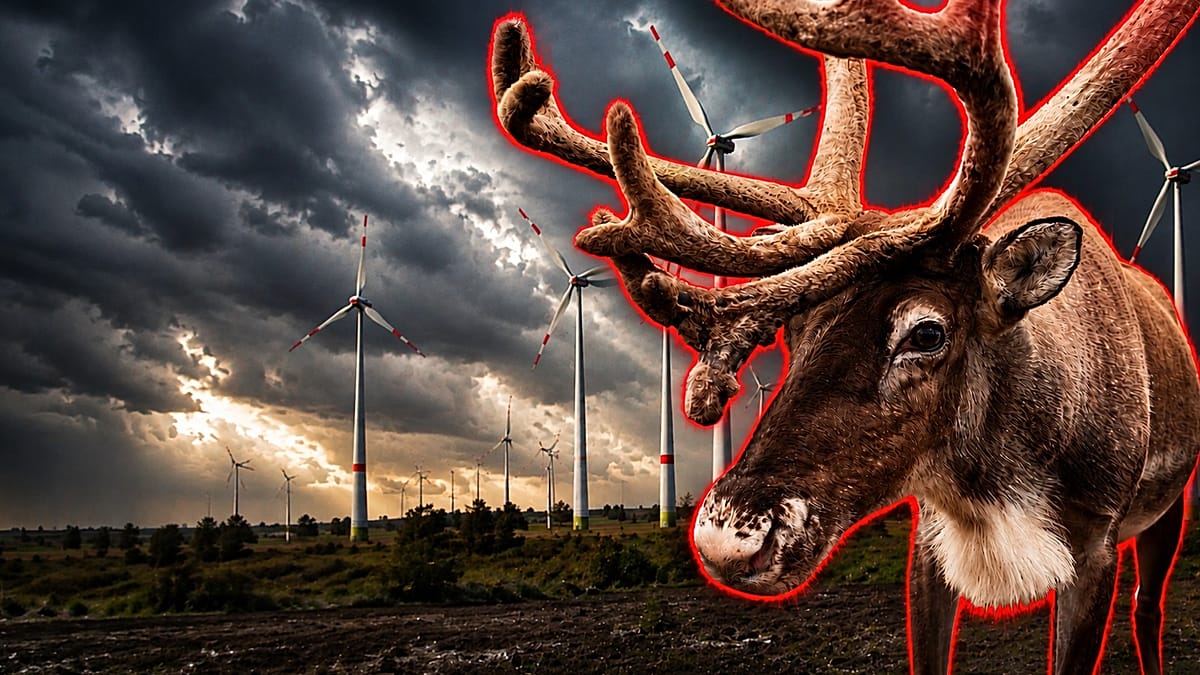
Published on 14/09/2026 - 12:41 GMT+2 Norway made history on 6 March 2024 when it settled on a new deal for peaceful coexistence between the Sámi community and one of Europe's largest onshore wind power sites. ADVERTISEMENT ADVERTISEMENT The agreement granted Sámi reindeer herders more winter grazing land, partly free electricity and the right to veto potential future wind farm concessions in exchange for allowing 151 turbines operated by Roan Vind to remain in the coastal Fosen district. Nevertheless, two years later, the story was turned on its head by a false social media narrative with hundreds of thousands of views, which claimed that Norway's Supreme Court had ordered the turbines to be removed. The posts alleged that the court had done so because the wind turbines were causing the birth of deformed reindeer. As is often the case with fake stories, there was a grain of truth in it: the court did rule in 2021 that the operating licences for the wind farm were invalid, but only because the project violated the Sámi people's cultural rights, not because of any health issues in animals. Where did the deformed reindeer conspiracy come from? This conspiracy feeds into a bigger theory claiming that the turbines cause health problems related to their infrasound and low-frequency noise, generally between 35 and 45 dB. For example, some allege that they cause tinnitus, ear pain, vertigo, and even back pain and accelerated ageing. However, a large body of scientific work says that there is no evidence linking living close to properly installed wind turbines with adverse health effects. "Based on the findings and scientific merit of the research conducted to date, it is our opinion that the weight of evidence suggests that when sited properly, wind turbines are not related to adverse health effects," says a paper published in the National Library of Medicine. "This claim is supported (and made) by findings from several government health and medical agencies and legal decisions," it continues. "Other hypotheses suggest the stress could be connected to unpleasant visual cues, or even a general sense of concern about the turbines." Indeed, some people living near wind turbines have reported headaches, stress and sleep disruption, but researchers suggest that these are caused by annoyance, visual cues or even the nocebo effect (where people experience real symptoms because they expect something to be harmful), rather than the sound that wind turbines may make. In any case, there are no scientific reports of any deformed reindeer being born in Norway or elsewhere because of wind turbines.
'Wind turbines cause animal malformations': True or false?
Full Article
Original Source
Read the full article at Euronews →KhanList aggregates and links to publicly available news content. We do not host full articles from third-party sources. Always verify important information with original sources.