
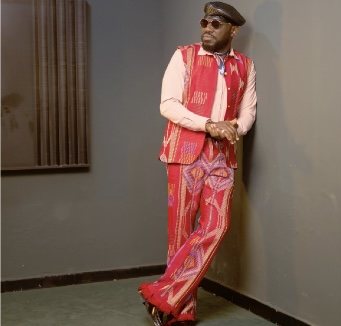
Vanessa Obioha writes that award-winning Nollywood filmmaker Willis Ikedum has built his career around asking questions, challenging conventions and refusing to accept that things cannot be done differently. It’s been a busy period for Nollywood filmmaker Willis Ikedum following the release of his musical film ‘Sweet 16.’ It is one of the few feature-length film musicals to emerge from Nollywood. But Ikedum, who started as an actor, has never been one to stay within familiar territory. Although, the film has already enjoyed a strong opening weekend, and much of that success can be attributed to Ikedum’s relentless promotional drive. On the day we met, he had just flown to Lagos from Port Harcourt, where the movie was shot. Two days later, he was already back in Abuja, where he is based. In between his movements, he was making calls, checking emails, going on media tours and even streaming church services. Ikedum, it turned out, does not play with his faith, something he traces to his upbringing. But his restlessness goes beyond promoting a film. It is part of a larger desire to improve things around him. He cited his foray into filmmaking as an example. His father had wanted him to be a lawyer. Although he admitted that he loved the charisma of lawyers, he did not see himself becoming one. He only did pre-law studies before switching to Theatre Arts, a decision he largely credits to Nigerian Queen of Box Office, Funke Akindele. According to him, they met on a set in Enugu in 2003. At the time, Akindele was gaining fame for her role in the teen health series ‘I Need to Know.’ She told him bluntly that she was studying law mainly for her parents and had no inclination to become a lawyer. Her true passion, she told him, was the film industry, and she encouraged him to pursue his own interest in it. Thus, Ikedum ended up studying Theatre Arts at the University of Port Harcourt. His earlier acting credits include ‘The Billionaire’s Club.’ Filmmaking came in 2010. “Mostly because what I’ve been seeing was subpar to me at that time, and I knew I could do better,” he explained. That desire to improve things appears to be part of his personality. “I’m not an onlooker. I’m that guy who wants to solve problems. For instance, there is a building in Abuja where I used to visit. A very fine place, but it’s not been run well. I keep telling the owner to do something about it. When I visited the place this year, there’s been no change, and I just approached him and told him that I wanted to buy the building. That’s my kind of person.” The same mindset has followed him into filmmaking. He recalled his goal of winning an Oscar and how he was among the early voices advocating for a Nigerian film to be submitted to the Academy Awards. “I realised that there was no Nigerian film that had been submitted to the Oscars at the time.” Nigeria has since made several attempts, although no Nigerian submission has yet made it to the final shortlist. For Ikedum, one of the challenges lies in the technical quality of Nigerian productions, particularly sound. “We don’t have the kind of sound quality required of Oscar movies. Only Genevieve Nnaji’s ‘Lionheart’ was able to achieve that, because she did the sound mixing in Berlin.” But the film was disqualified because it didn’t meet the requirements of the awards for the International Feature Film category, which is dedicated to films made outside the US and has most of its dialogue in a local language. High-quality sound mixing, as Ikedum puts it, is very expensive and not every filmmaker can afford it. The closest studio in Africa with the kind of sound mixing he wanted is in South Africa. For ‘Sweet 16,’ he went even further, employing the services of Pinewood Studios in the US. “That’s the home of the James Bond franchise.” His decision to make a musical film was also driven by the absence of similar works in Nollywood. “I ask a lot of questions, and when I asked why we didn’t have a musical film, I didn’t get any answer, so I knew I had to do it.” That question led him into a world of research and test shoots. He watched films such as the 2016 award-winning Hollywood musical La La Land and began studying the technical demands of making a musical. “One of the things I discovered was that the way you mic for dialogue is not the way you mic for singing,” he said. “There’s a way you mic for singing that the sound would come as if the person is speaking from the nose.” To ensure that the actors performed well alongside the singing, he brought in a music director, a language coach and a choreographer. “These three experts were on set because the whole music was sung on set. It wasn’t pre-recorded.” The result is ‘Sweet 16,’ which tells the story of a privileged, sassy young girl, played by Daisy Eugene, whose extravagant expectations for her sixteenth birthday take an unexpected turn when she uncovers deep secrets about her family’s true status. The film also features the late Alexx Ekubo, whom Ikedum described as a brother. “He was the first person to listen to the music after we finished recording. He loved all the music.” At the premiere, Ikedum recalled how audiences were emotionally moved each time Ekubo’s scenes appeared. “Some members of the audience cried whenever his face came on screen.” The film also features Julius Agwu, whom he described as someone who encouraged him when he was starting as an actor and was willing to connect him with gigs. Other actors include Mercy Aigbe, Kalu Ikeagwu, Uche Jombo, Emeka Nwagbaraocha, Denrele Edun, Yemi Alade, Angel Unigwe, Broda Shaggi and Chief Imo. The idea for the story came to him in 2016. He returned to it in 2020, while production began last year. The film had its theatrical release on August 14. The story was partly inspired by his eight-year-old daughter, who he says is sometimes influenced by Western lifestyle. “So this is me trying to draw them back and say, ‘Hey, I have a culture here. I have a culture in Nigeria. I have a culture in Africa. For example, you know that we cannot call people who are older by their first name. But it’s easy for them to do so. I go to their school and say, ‘Willis, what’s up?’ But it’s not so here. Inasmuch as you are trying to be civilised, we have a culture, and there are certain lines you can’t cross.” Family, he said, is a recurring theme in his films. “Even if it’s horror.” For Ikedum, filmmaking has taught him a few things, including patience and respect for people. “Also doggedness. I have always been a resilient guy from day one, but filmmaking heightened it. You don’t always get it from your first attempt, so you keep trying till you get what you really want to achieve.” It is perhaps this doggedness that best captures Ikedum’s journey so far. Whether it is acting, filmmaking or simply seeing something that could be done better, he is rarely content to remain an onlooker. Through filmmaking, he hopes to impact lives and, eventually, achieve the status he has long pursued — that of an Academy Awards-winning filmmaker.
Willis Ikedum: Refining Nollywood
Full Article
Original Source
Read the full article at Thisdaylive →KhanList aggregates and links to publicly available news content. We do not host full articles from third-party sources. Always verify important information with original sources.