
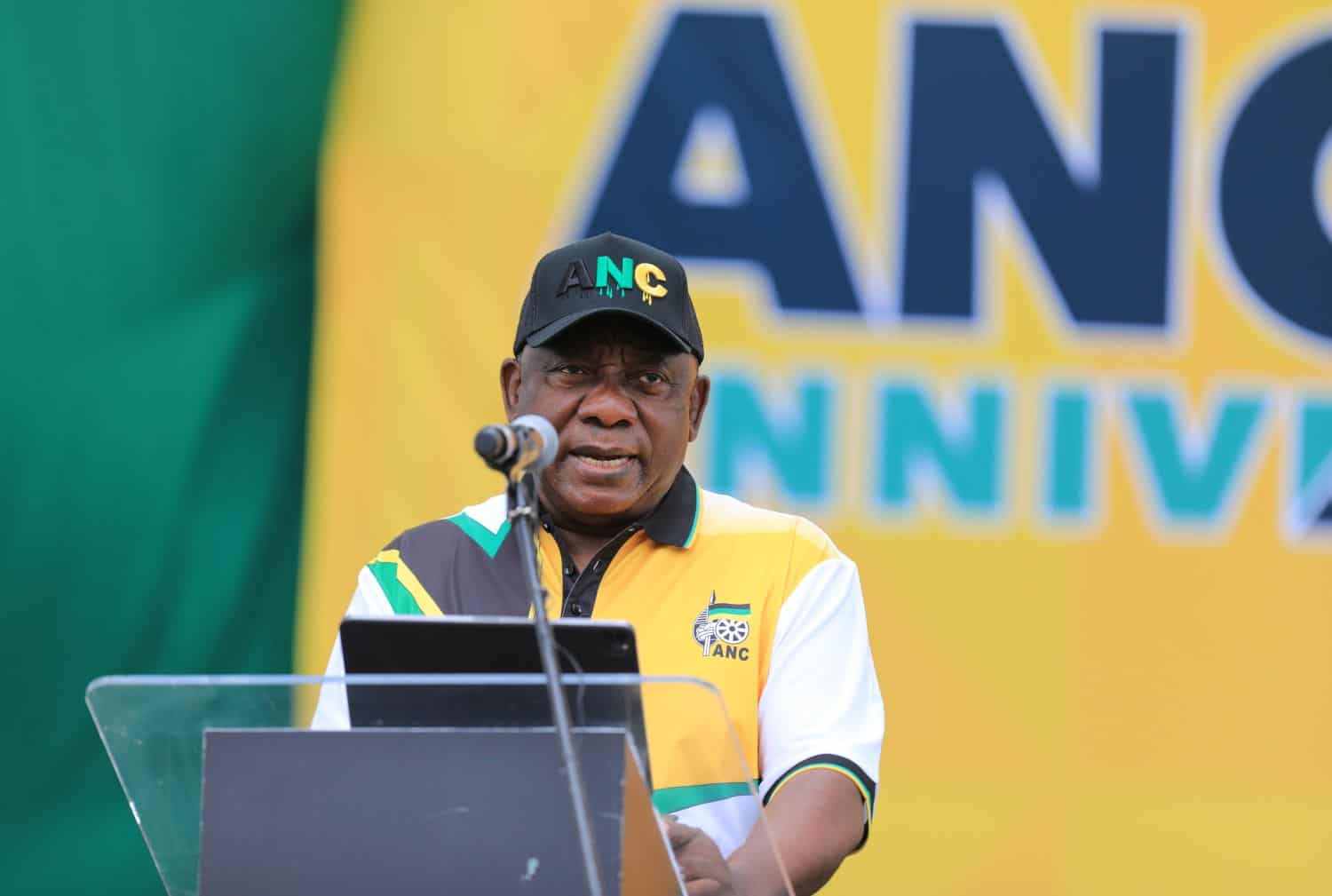
Despite the ANC's confidence, a political analyst said Ramaphosa's 90% target is too ambitious With just days to go before the local government elections on 4 November, the ANC in Limpopo is under pressure to meet President Cyril Ramaphosa’s ambitious target of securing more than 90% of the vote. Since the plea by the president, members of the party’s provincial executive committee (PEC), led by provincial chair Phophi Ramathuba, have been desperately crisscrossing the province’s five regions, trying to woo voters to vote for the ANC. Ramaphosa’s 90% plea On 29 March, at the party’s provincial elective conference at Polokwane Cricket Club, Ramaphosa praised Limpopo for giving the ANC over 70% in the 2024 elections but said he expected more. LIVE interactive map, latest news, multimedia and more! View Map “You gave us 70% plus of the votes, and thank you so much. The whole ANC relies on Limpopo to come up with the top numbers. I had expected that you would give us 90% and more, but of course, you went down. But you still gave us the highest votes. You must make it a real home of the ANC by giving us 90% in the coming local government elections,” said Ramaphosa at the time. Ramathuba said she believed officials and members of the ANC in Limpopo will be able to meet Ramaphosa’s challenge. During her visit to the Letau Apostolic Church in Turkey village, Sekororo, near Hoedspruit, last week, Ramathuba pleaded with the ANC Ward 7 branch to vote. “There are some ANC stalwarts such as Oliver Tambo who fought for this democracy we have today. Unfortunately, Tambo and others died before they could cast their votes. It is therefore very important that we pray for peace to reign during these elections. My call is therefore to plead with everyone to go to the polls and cast their votes on the 4th. My second plea is that those who will vote must vote for the ANC,” Ramathuba said. ANC provincial spokesperson Tony Rachoene echoed Ramathuba’s call. “As the ANC in Limpopo, we take President Cyril Ramaphosa’s call for us to secure more than 90% of the votes as a challenge to intensify our campaign efforts… Our objective is to win all wards and municipalities,” he said. Rachuene, who is also MEC for Public Works, Roads and Infrastructure, said the party was encouraged by its engagements with volunteers and supporters. “The unity of our structures, the commitment of our members and the mobilisation of our support base gives us confidence that we are heading towards a decisive majority,” he said. EFF and SACP Julius Malema’s EFF are expected to provide strong competition to the ANC. The SACP will also be running independently of the ANC for the first time since 1994. Rachuene, however, was dismissive of the opposition parties. “As for the EFF and the SACP, we do not regard them as significant obstacles to our electoral ambitions in Limpopo,” he said. Service delivery could hurt ANC Independent political analyst Solly Rashilo, however, said Ramaphosa’s 90% target might be too ambitious. “Although the ANC remains historically strong in Limpopo, its 73.3% performance in the 2024 provincial elections illustrates the substantial increase required to reach that target. Municipal elections are particularly influenced by service delivery, local leadership and community dissatisfaction,” Rashilo said. “Persistent challenges involving unreliable water supply, deteriorating roads, inadequate infrastructure maintenance and electricity interruptions remain major concerns. For many residents, the issue is no longer the promises made during campaigns, but whether those promises were translated into meaningful improvements in their daily lives.” Rashilo also warned that the SACP should not be ignored. “The SACP’s decision to contest independently has introduced a new dimension. It creates an alternative for traditional alliance supporters and raises questions about the unity of the tripartite alliance.” The local elections in Limpopo, he said, should not be viewed as a contest of political popularity, but also as a test of public confidence in local governance. “Historical loyalty and campaign promises remain important, but service delivery, accountability and credible local leadership will be central issues for voters,” Rashilo said.
Will the ANC meet Ramaphosa’s 90% vote target in Limpopo?
Full Article
Original Source
Read the full article at Citizen →KhanList aggregates and links to publicly available news content. We do not host full articles from third-party sources. Always verify important information with original sources.