
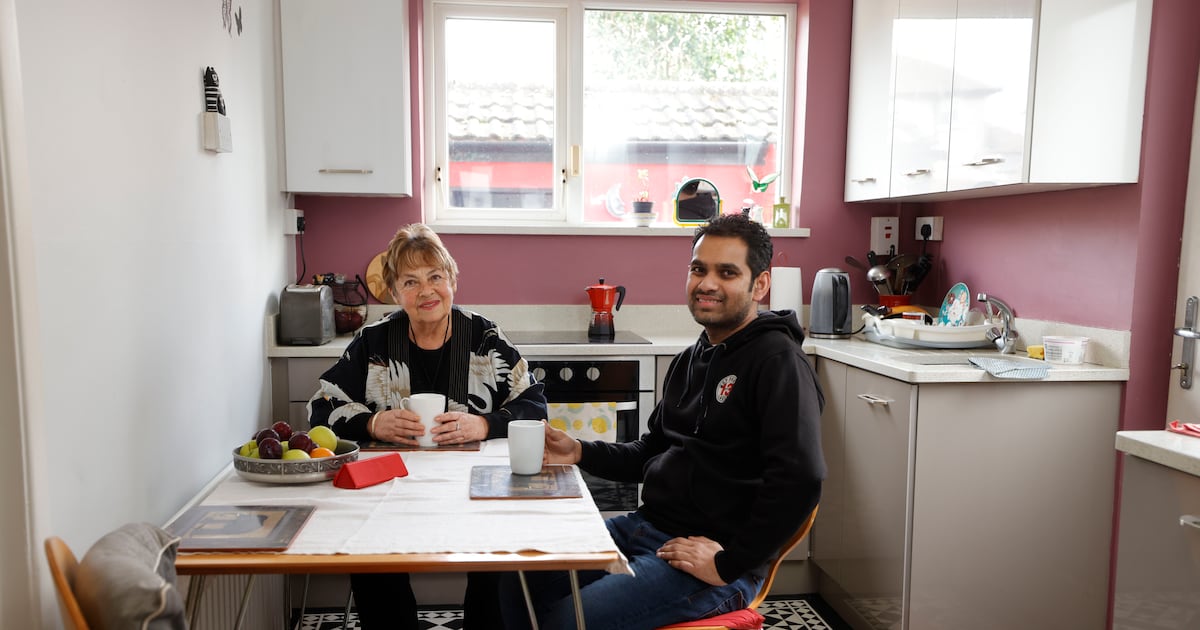
Caroline Gleeson has been renting a room in her three-bedroom home in Whitehall, Co Dublin, for 25 years. The rent-a-room scheme allows her to earn up to €14,000 tax-free while not affecting her pension entitlements. While providing her with an extra income, it also provides her with company. She has had the same tenant, a Sri Lankan chef named Nalaka, for a few years. In the budget, the Government raised the tax-free threshold for the rent-a-room scheme from €14,000 to €16,000 for people like her and those thinking of availing of the scheme. Gleeson says she remains well within the threshold, but it would be a help if she decided to rent out a second room in her home on a permanent basis. She is renting out a second room at present, but only on a short-term basis, and will still be under the tax threshold. READ MORE“If you are renting out two rooms, €16,000 is not enough,” she said. “I wish more people would do it. It makes a lot of sense. I live on my own. Also, as a senior, I’m not very techy. It helps to have somebody around who knows what they are doing.” The number of taxpayers availing of the rent-a-room scheme has almost doubled since 2020, according to the latest figures provided by the Department of Finance. The rise from €14,000 to €16,000 is the first increase since 2017. Taxpayers will now be able to earn up to €16,000 from the scheme without having to pay tax on their earnings. Rent-a-room relief can only be claimed by individual taxpayers. It is not available to corporate entities.If rental income goes above €16,000, the landlord becomes liable for taxation on all the rental income, not just the figure above €16,000. [ What are the key takeaways from Budget 2027? From income tax cuts to surprising omissionsOpens in new window ]According to figures provided by the Department of Finance, the number of taxpayer units (single or couples) claiming the tax relief increased from 9,310 in 2020 to 18,180 in 2024, the latest year for which figures are available. It rose to 10,730 in 2021, 14,180 in 2022, the first post-Covid year, and then to 16,580 in 2023. Those availing of the scheme in 2025 have until next month to file their tax returns. [ How Budget 2027 will impact families: From renters to stay-at-home parentsOpens in new window ]The Government has been promoting the rent-a-room scheme especially as a means of solving the accommodation crisis for students. The push seems to have had some success, with higher education institutions showing “digs accommodation” rising from approximately 2,000 units in 2022 to more than 5,000 by September 2026. The Minister for Higher Education James Lawless lobbied before the budget to have the threshold increased to €20,000. It did not emerge at that scale, but the Minister nevertheless welcomed the increase, describing it as a “positive and practical step towards unlocking much-needed student accommodation”. “This measure is about increasing the availability of accommodation, not increasing rents. Importantly, these are beds that can be made available immediately, without the need for planning permission or new construction,” he said. [ Ireland’s new personal investment accounts: Here’s how the scheme will workOpens in new window ]The rent-a-room scheme has also been extended to so-called garden homes, or detached cabins on homeowners’ properties. Owners will be able to avail of the tax retrospectively from July 27th. The Minister of State at the Department of Housing John Cummins delivered a robust defence of the measure which has been heavily criticised by the Opposition. “I would encourage anyone to go and see the factories that are producing top-quality product,” he said at the budget press conference. “We have a fledging industry in this country that’s producing good quality homes, and the future of housing is in modern methods of construction. It is just an option for people, nobody is forcing people to avail of this extension, but it is a sensible measure.”
Will rent-a-room scheme increase encourage more landlords to participate?
Full Article
Original Source
Read the full article at Irishtimes →KhanList aggregates and links to publicly available news content. We do not host full articles from third-party sources. Always verify important information with original sources.