
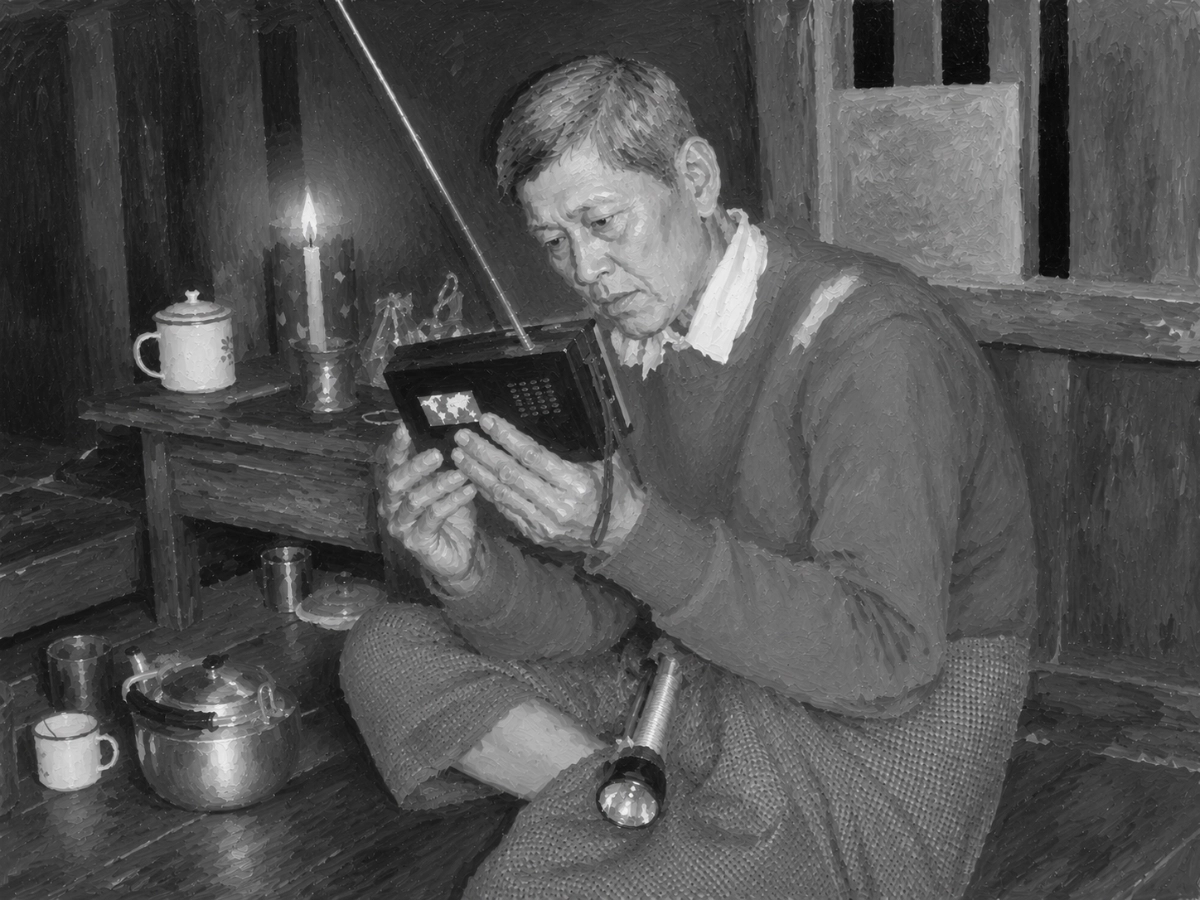
My grandfather’s earliest memories were of a time of war. When he was just a boy, two great imperial powers, Britain and Japan, vied for control of Myanmar. Disease, death, and destruction were rampant. These years were the darkest of his life. He grew up in harsh times, when almost everything was scarce. His dream was to see future generations spared from the hardships he had known. More than anything, he wanted to live in a country where people could live peacefully and not have to experience hunger. He was especially sympathetic to farmers, the people who work hardest to feed us all. He knew their lives were filled with suffering and uncertainty, and never tired of reminding us of this. “You don’t know how hard farmers have to struggle just to produce a single grain of rice,” he used to say if he ever saw us let food go to waste. Myanmar should be a land of plenty. The Ayeyarwady Delta has fertile soil and an abundance of waterways teeming with marine life. And yet the people who live there remain trapped in poverty, unable to enjoy this bounty and live with dignity. Other parts of the country are also blessed with resources that are in great demand around the world. But the people who live on the land that holds these riches are among the most impoverished on the planet. Myanmar produces plenty of natural gas, but many of its citizens cannot meet their most basic energy needs. It was not so long ago that electricity finally reached our little village. The power came and went, forcing us to reach for our candles whenever we found ourselves immersed in darkness. (This was the great leap from my grandfather’s time to ours: In his day, kerosene lamps, not candles, were the main source of light.) My grandfather did not live to see this, but I can easily imagine his reaction to these regular blackouts. He would have grabbed his trusty flashlight and started shining it around the house. “It’s just like old times,” he would say with a laugh. Despite his desire for a better life, he seemed to accept these conditions without complaint. Even as life grew steadily worse for ordinary people under military rule, he remained reluctant to place any blame on the regime in power. He would just say that it must be his fate or karma to have to live like this. Many people of his generation thought like this. To some extent, this sense of resignation was also passed down to us. I have sometimes wondered if this is why Myanmar’s dictators have managed to escape justice until now, despite all the harm they have done. A timeless scene: my grandfather offering food to monks (Photo: Myo Thant) For years, my grandfather and I had listened to his radio together, quietly tuned in to BBC and VOA broadcasts, as well as All India Radio and, later, broadcasts from the Democratic Voice of Burma. We paid close attention to the news, always hoping to detect some sign of change. Every now and then, a faint glimmer of light seemed to penetrate the gloom. While these moments always flickered out almost as soon as they appeared, my grandfather never stopped believing in Myanmar’s future. Every time the news brought some faint promise of improvement in the country’s prospects, he would ask, “Do you think it will be different this time, Grandson?” It wasn’t until 2013, however, that it actually seemed possible to answer in the affirmative. That was the year he visited me at my workplace—the newsroom of a daily newspaper. Myanmar’s draconian restrictions on news publications had just been lifted for the first time in decades and it looked as if a new era of press freedom had begun to dawn. I can never forget the sight of my grandfather holding his hands together in front of him as he entered our office. This was a man who had witnessed the horrors of war, and yet here he was, full of trepidation as he watched us do a job that could easily land any of us in prison. My grandfather stayed with me at that time in a little apartment I had rented in Yangon. He read our newspaper closely, as if it held the answer to the question that he had carried with him for most of his life: Was Myanmar finally going to become the country he had dreamed of in his youth, a country of peace and freedom? For the first time in decades, the National League for Democracy (NLD) had contested and won seats in Parliament. The military still held most of the power, but it seemed more open to change than ever. And the outside world was also beginning to treat Myanmar as less of a pariah. Eager to learn as much as he could about this dramatic transformation, he read every word we printed. Age had begun to weigh on him, but I could see in his eyes a liveliness that showed he was really beginning to feel that Myanmar’s long decades of misery and hardship might finally be coming to an end. My grandfather in 2013, reading a privately owned newspaper (Photo: Myo Thant) Of course, such thoughts were bittersweet. As he carefully read the stories in the newspaper, he also seemed to be remembering the terrible years under military dictatorship, when our family had lived in fear. The 1990s had been a stormy period for our family. My grandfather’s son—my uncle—was a member of the NLD. At a time when the junta then in power was ruthlessly arresting and torturing NLD members, our family lived through years of anxiety and anguish. But my grandfather lived out his final years believing that those days were finally over, once and for all. This is my one consolation: that he died before the military seized power again, in February 2021, plunging us all back into the darkness of the past. Now, for a second time, I am forced to live in exile. Leaving behind all the reminders of my youth—my medals for passing examinations, most of my photographs and books—I am once again in a foreign country, not knowing if I will ever return. All of these items are in the hands of relatives who stayed behind. Unable to part with them, but fearing the soldiers who might raid our home at any moment, my grandmother hid them away. Who knows if I will ever see them again. This is how we live now, with memories that have a weight of their own that is somehow greater than that of all our mementoes. I miss the books that have meant so much to me over the years. But I also miss the sights, smells, and atmosphere of my homeland. Most of all, I miss my grandfather—the grandfather who used to ask me: “Will it be different this time, Grandson?” If he were still alive now, how would I answer his question? At one time, I thought I could respond honestly in a way that would give him hope. Today, I am not so sure. But like my grandfather, I know I must keep this hope alive, if not for myself, then for the generations still fighting, and for those who will come after them.
‘Will it be different this time, Grandson?’
Full Article
Original Source
Read the full article at Myanmar-now →KhanList aggregates and links to publicly available news content. We do not host full articles from third-party sources. Always verify important information with original sources.