
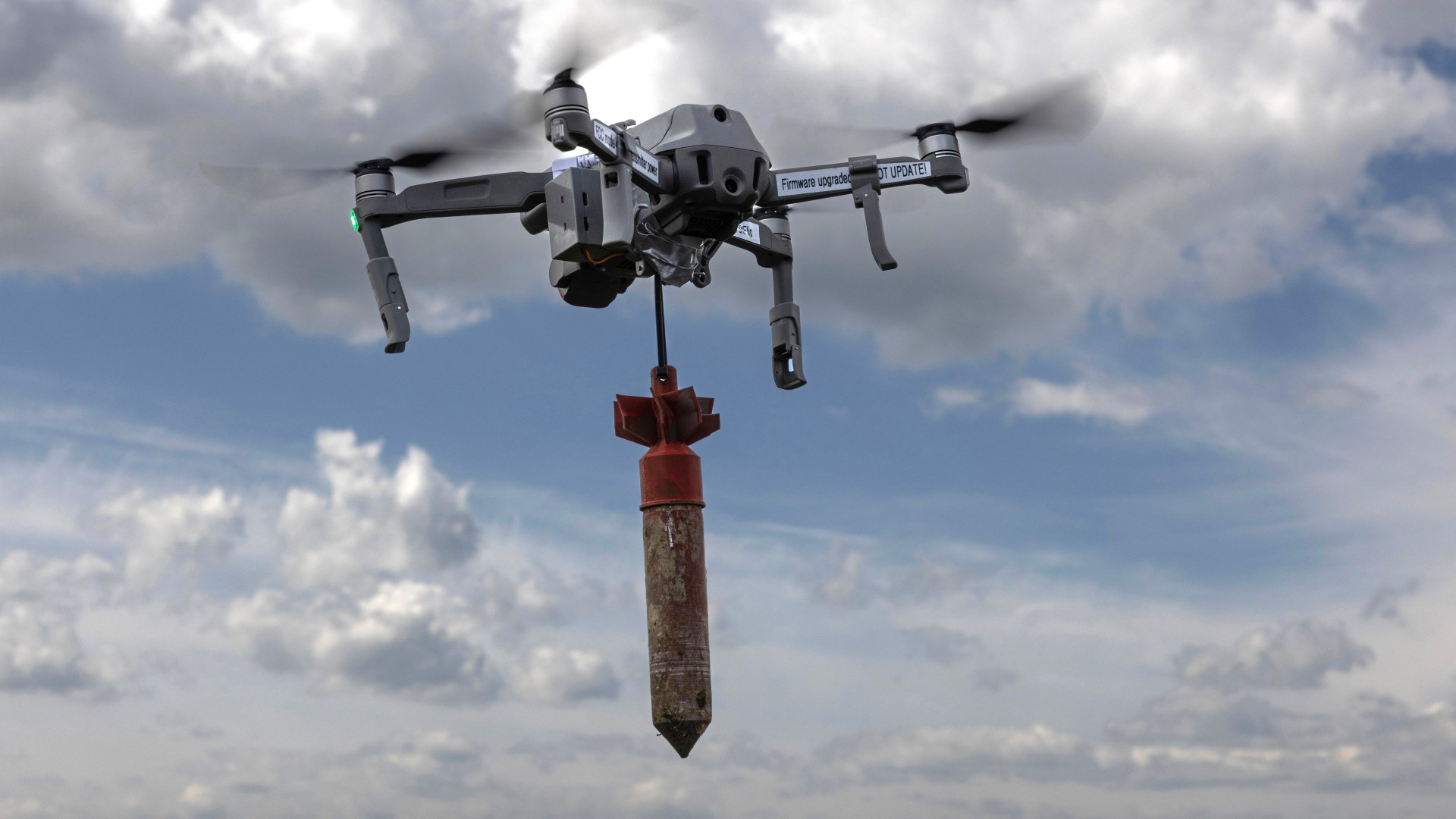
THE risk of a devastating drone attack in the UK is “growing every day”, experts have warned. Drones are a common sight in UK skies for police work, filming, surveys and even deliveries – but there are fears they could be used in a future terror wave on our shores. Ukrainian military learn to fly drones with bombs attached in Lviv (Stock picture) Credit: Getty The Russian drone attack at Leipzig Airport highlighted the power of drones as weapons Credit: Reuters Experts warned drones could be used to drop bombs, harmful powders, as kamikaze “suicide” weapons, or even chillingly to “herd” crowds towards danger. It comes as it was revealed hundreds of drones of unknown origin have menaced British military sites, according to a Freedom of Information request. Sign up for The Sun newsletter Thank you! Last month’s suspected Russian drone attack on Leipzig Airport further highlighted the threat, as security experts told The Sun Britain is “behind the curve” in stopping a similar attack here. One former British intelligence officer told The Sun it’s “only a matter of time” before terrorists or rogue states like Russia or Iran use drones in a UK attack now they’re cheaper, more readily available and capable of carrying bigger payloads like explosives, powder or poison. Debris from a Saudi-backed drone after it was downed by Houthi forces in Yemen this month Credit: Getty Experts have told The Sun drone pilots planning terror attacks “do not care what the law is” Credit: AP Another expert said “weaponised drones” can be built by anyone who can turn an off-the-shelf quadcopter into an airborne improvised bomb. The warnings come despite one defence chief recognising last year that drones “are a real weapon and resource of the future” and “something we all have to take account of”. Pilots in the UK need official ID to fly drones if they’re over a certain weight, and according to drone laws introduced this year, the Civil Aviation Authority bans flying them above 120m, near airports and crowds or out of your own eyesight. But security analysts say more needs to be done to protect the UK from drones because “any attacker who wants to use one for terror doesn’t care what the law is”. Most read in The Sun The UK’s national terror threat level was raised to “severe” earlier this year after the anti-semitic Golders Green attack. Military intelligence expert Philip Ingram MBE said: “The threat of attack is high and growing on a daily basis – it has been ever since drones became the centre of attention in Ukraine.” Drones are already used to smuggle phones and drugs into UK prisons Credit: Getty The UK has been learning from Ukraine and its battle tactics in using drones against Russia Credit: Peter Jordan Outlining some of the chilling methods terrorists could use for a drone attack in Britain, he added: “There could be the dropping off of flamable petrol bombs from a drone into a crowded space – a concert or sports ground – a white powder which people don’t know what it is, which would cause panic, to dropping explosives or even a suicide drone to a crowded place or politcal space. “Suicide drones with explosives could even be flown in with FPV goggles, in the same way Ukraine or Russia are currently using – that’s very easy.” Ingram also didn’t rule out terrorists copying Ukraine’s “spider web drone attack”, where drones with explosives are smuggled into a country, unwittingly transported to a target and detonated. And most alarmingly, he said it’s even possible that drones could be used to push crowds “like sheep” towards an improvised explosive or gun-wielding terrorist. Police monitor specialist anti-drone equipment at Gatwick Airport after the 2018 disruption Credit: Getty Security experts say cheap, readily-available drones would make perfect weapons for terrorist Credit: Getty In previous written evidence submitted to the House of Commons Defence Committee, Dr James Rodgers said nuclear power plants, HS2 or Eurostar trainlines, schools, military bases, banking districts and prisons are all possible attack targets for drones. The UK has experienced drone chaos before – most famously when a suspected sighting at Gatwick shut down one of the UK’s busiest airports for two days in Christmas 2018. Despite a lengthy, £1m police investigation, no culprit was ever prosecuted – and experts say the ease of avoiding detection makes drones even more appealing to terrorists. Professor David Dunn, who provided evidence and wrote recommendations in 2019 for the Government in tackling drone threats, said Britain doesn’t have clear rules and protocols on how to engage with a hostile incident involving the aircraft. He said: “There’s a new raft of imaginative ways in which drone tech is being developed. Batteries are more efficient, so give greater range, greater durability and there is better tech to avoid them getting jammed.“There are quadcopters and drones with jet-powered engines, even balloons launching drones to give a greater range – they’re floated into the atmosphere and then the engines start. Britain's anti-drone countermeaures Despite fears from experts about Britain's preparedness, ministers and authorities say the UK has various anti-drone countermeasures. The RAF say they have a “layered” defence which includes technology for taking over drone communications, a counter-drone system for detection and tracking, and a lightweight missile system. Royal Air Force typhoon aircraft are also equipped with low-cost anti-drone missiles – although these are currently only for operations in the Middle East. The Sun revealed last month how Britain’s biggest airports are also deploying cutting-edge technology to stop hostile drones. Operators at some airport hubs will be able to jam or even launch a mid-air cyber attack to seize control of rogue aircraft. The Army, meanwhile, say they’ve deployed “Halo Shields” – a counter-drone detection system for defending their bases. Defence chiefs also this week revealed their latest anti-drone countermeasure. The “Terrahawk Raptor” is a remote weapon station designed to sit on top of vehicle so it can blast drones out the sky. The UK has also not spent enough on defending against drones and doesn’t have the right resources to bring down a quadcopter, drone or similar aircraft if they were central to an attack, he said. Prof Dunn added: “The SDR talked about the need to address drones and their threats – what the government isn’t good at is the funding of resources. “The air defence of the UK is configured for different sorts of threats – we have aircraft with very expensive missiles to respond to bombers in our airspace -but when you’ve got small, cheap drones, that resource is inappropriate. “It’s not cost-effective to take out something costing £4,000 with something which costs hundreds of thousands. We are not in a position to respond in an adequate way.” Criminal use of drones is not a new problem for police and authorities. Police forces are desperate to crack down on drone smuggling incidents in UK prisons – which surged to more than 1,700 incidents of drugs and weapons being sent behind bars between April 2024 and March 2025. Keir Starmer’s government outlined a raft of defence measures to tackle drone threats in Labour’s Strategic Defence Review (SDR) last year. A new security drive this year saw the UK take lessons from Ukraine’s battle-tested tactics in fighting prison incidents. The Ministry of Defence said in the SDR that in Ukraine, drones ‘kill more people than traditional artillery’. The Sun revealed last year how Britain’s “weak defences” mean our stockpile of drones “would run out within hours of war starting”. The Government said supporting Ukraine’s drone warfare is key to keeping up with the technology. Minister pledged £350m in supporting drone technologies in 2025/26, having committed nearly £400m in 2024/25. Prof Dunn said drones are changing the face of warfare across the world. The Government has said it wants to recruit gamers in the Armed Forces as the UK’s new “cyber military recruits” who can help pilot drones.Prof Dunn added: “Techniques from drone racing 10 years ago are now also part of how they’re operated. “Warfare is becoming gamified. Soldiers in Ukraine are given points by how many people they can kill, as a way of incentivising it. “Warfare has changed from being infantry soldiers fishing across trenches, now there’s a demilitarised zone where it’s just a kill zone for unoccupied vehicles like drones and ground vehicles, where all the supplies and ammunition are supplied by drones.” Comment now
Will Britain be attacked by DRONES? Warning UK must brace for strike from sky by terrorists or rogue states
Full Article
Original Source
Read the full article at Thesun →KhanList aggregates and links to publicly available news content. We do not host full articles from third-party sources. Always verify important information with original sources.