
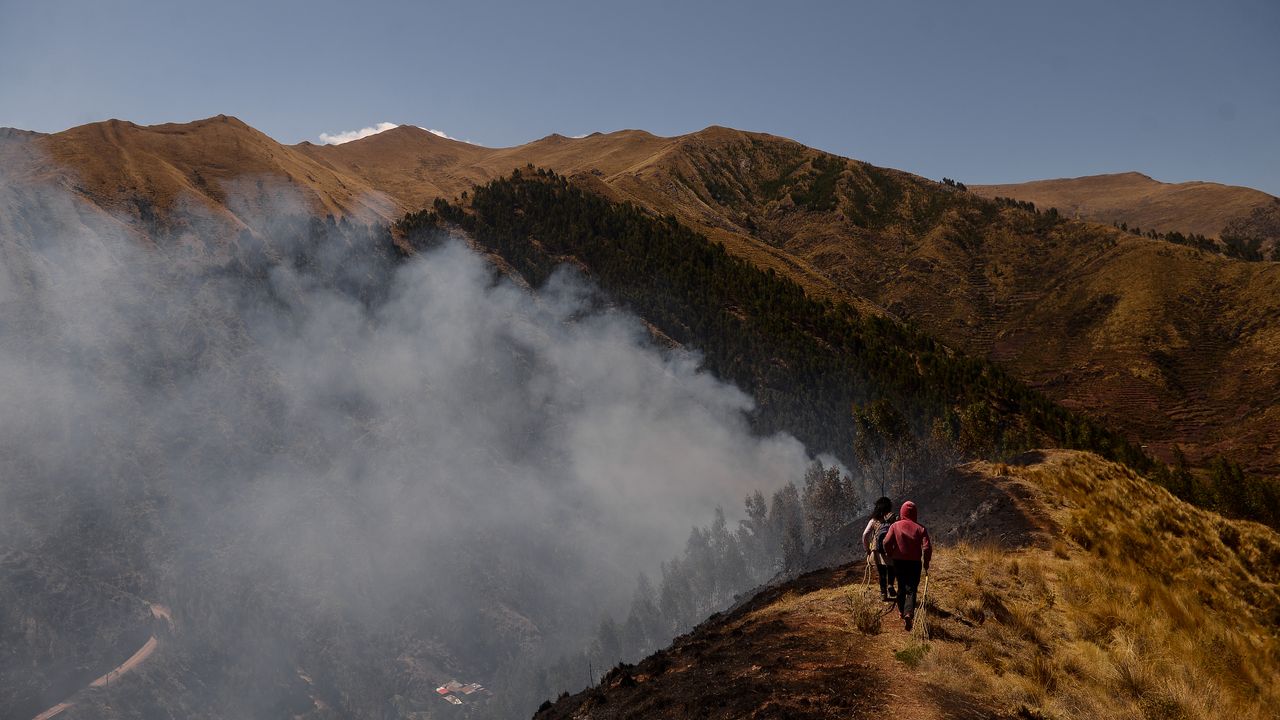
In Peru’s mountainous southern region, dozens of wildfires have destroyed tens of thousands of acres of land in the past few weeks and left at least five people dead.Although this region regularly sees wildfires, the blazes this fall have been more intense and dangerous than usual. “Wildfires in the Cusco region occur regularly when farmers clear their land in preparation for the next planting season and strong winds cause the fires to spread beyond control,” says Pedro Barraza, managing director of South America at andBeyond.In 2026, higher-than-normal temperatures and drier conditions in Peru’s Andean highlands caused by El Niño have shifted “the timing and behavior of seasonal wildfires,” according to Barraza, making them more difficult to control than usual.Local authorities are sending firefighters, army personnel, and a specialized water plane to the region in hope of containing the quickly spreading flames, according to Peru’s agricultural minister on X, though residents and social media users say the response has been slow.Here’s a look at what travelers need to know about the evolving wildfires in Peru.What is the current situation and are tourist sites affected?Should travelers cancel trips to Peru due to the wildfires?How is the local community impacted—and how can travelers help?What is the current situation and are tourist sites affected?The Cusco region, a mountainous area in southern Peru, has seen several larger-than-normal fires in recent weeks. “There have been significant fires in the region over the past month, and there have been casualties in remote areas,” says Marisol Mosquera, founder of Aracari. “No tourists or tourist sites have been affected," referring to major sites like Machu Picchu. (The Cocalmayo hot springs in Santa Teresa, which some travelers visit at the end of a trek to Machu Picchu, are currently closed due to a precautionary road shutdown.)Although the Cusco region is home to some of Peru’s most famous attractions, the fires have so far been contained to more remote highland areas. “Cusco is a vast region, and the presence of a wildfire in a particular area does not necessarily mean that nearby tourist destinations have been directly affected,” says Barraza.In fact, the region’s popular attractions are still open to the public and operating as usual. “The fires have not spread to Machu Picchu or to any tourist sites in the Sacred Valley,” Mosquera says. “There were fires in the Sacred Valley, but they occurred in higher mountain areas, away from hotels and attractions. At the moment, there is only one active fire in the Sacred Valley, in the Calca area, and another in La Convención, which is far away.”Should travelers cancel trips to Peru due to the wildfires?As the fires aren’t currently near tourist areas, access to the region is not restricted for tourists, and “tourism activities are running normally,” according to Mosquera.Treks and visits through the area are still possible, with a few basic precautions, according to Mosquera. “Stick to the traditional tourist circuit in Cusco, avoid exploring the higher areas of the Sacred Valley, and keep an eye on updates from your local operator,” she advises.Air quality in parts of Cusco has a "poor" rating, according to Accuweather, which means the air could be unhealthy for sensitive groups. If you experience symptoms such as difficulty breathing or throat irritation, the site advises to reduce time spent outside.If you are part of a sensitive group and have an active trip booked, chat through any questions with your travel providers to navigate accordinglyAlthough reports of wildfires can feel nerve-racking, local tourism experts say that travelers don’t need to cancel their plans due to the current situation. “At this time, there is no reason to change travel plans solely because of these localized fires, provided conditions remain as they are,” Almario says. Your hotel concierges, travel specialists, and tour operators can continue to advise on any developments; local outlets like El Comercio can also be a point of reference for staying in the loop while on the ground.How is the local community impacted—and how can travelers help?Even if tourism areas are operating as usual, communities near the fires in the mountain highlands are directly affected. Firefighting efforts have been underway for weeks, and still, multiple fires continue to burn and spread through the region.“Local authorities and volunteer firefighters are actively working to contain the fires,” says Almario. “The local community is also coming together to support those working on the ground, with many residents donating food and essential supplies for the volunteers directly involved in firefighting efforts. It is a challenging situation for the communities closest to the fires, and we are grateful to everyone working to protect the region and its people.” Organizations like Peru Pendiente are organizing monetary donations for relief efforts, and the Servicio Nacional Forestal y de Fauna Silvestre (SERFOR) is collecting essential items like clothing, unopened hygiene products, and non-perishables in both Lima and Cusco this week (you can find hours and locations on social media, or ask your hotel concierge for more information).Travelers can also continue to visit the Cusco area if they feel comfortable doing so. Trips to the region continue to bring needed tourism dollars. “Tourism plays a vital role in the local economy, supporting thousands of families, small businesses, guides, drivers, artisans, and hospitality providers throughout the Cusco region,” Barraza says. “When conditions allow, responsible travel can continue to provide meaningful economic support to these communities.”
Wildfires Are Sweeping Across Peru’s Cusco Region: What Travelers Should Know
Full Article
Original Source
Read the full article at Cntraveler →KhanList aggregates and links to publicly available news content. We do not host full articles from third-party sources. Always verify important information with original sources.