
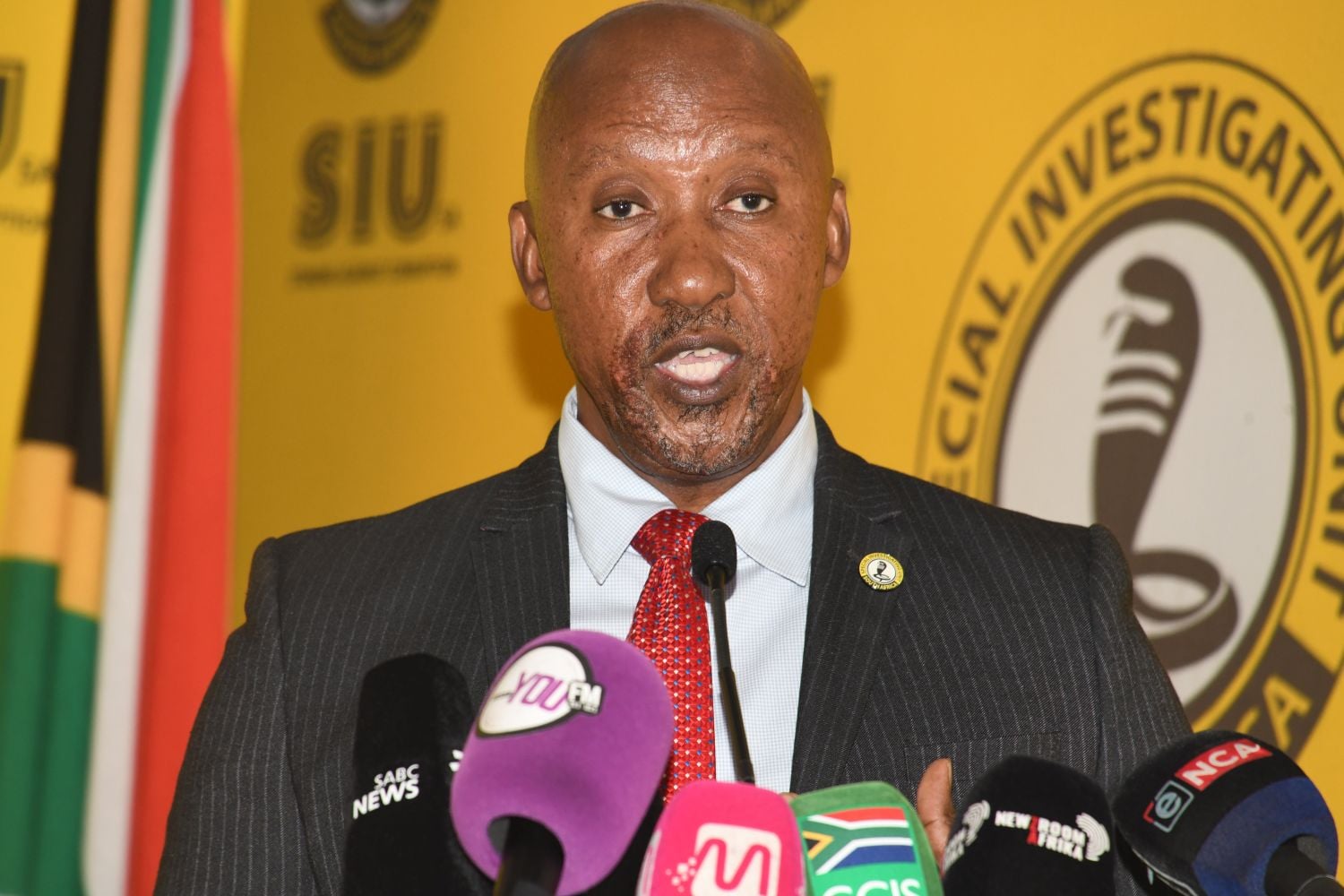
The SIU said the practice is common to avoid open competitive tenders. The splitting of government contracts to circumvent competitive tender processes is not an isolated procurement irregularity but a common trend identified in investigations by the graft-busting Special Investigating Unit (SIU). Tender splitting is common – SIU This comes after the SIU confirmed that government departments and state entities frequently use requests for quotations (RFQs) for procurements below R500 000 to allegedly manipulate supply-chain management processes and avoid open competitive tenders. “This is a common trend we have observed in our investigations,” SIU spokesperson Selby Makgotho said. He said the practice was often accompanied by the splitting of orders. The admission comes against the backdrop of The Citizen’s revelations that Auditor-General Tsakani Maluleke has raised questions over R6.795 million in livestreaming and media services procured by the Department of Transport through seven separate RFQs. The Citizen has exposed how each of the seven contracts was below the R1 million threshold that triggers an open competitive bidding process, with successful quotations ranging from R830 000 to R997 050. According to the Auditor-General (AG), the recurring nature of the services meant the department should have consolidated its requirements and followed an open competitive bidding process. The department has since rejected suggestions that the contracts were deliberately split, arguing that they related to separate events and campaigns with different scopes, deliverables, timing and technical requirements. Procurement needs more scrutiny However, the SIU’s response suggests the procurement pattern identified by the AG warrants wider scrutiny. In its investigation into massive corruption at Tembisa Hospital, the SIU found that officials deliberately kept transactions below the R500 000 threshold, enabling them to use the three-quotation system instead of more rigorous competitive tender processes. The SIU said the Tembisa investigation identified at least 15 current and former officials allegedly involved in corruption, money laundering, collusion and bid-rigging. It had prepared 116 disciplinary referrals against 13 officials at the time of its September 2025 update. The AG’s transport department audit found that the department’s 2025-26 procurement plan had estimated broader media-related requirements at R9.34 million. It also found expenditure involving the identified suppliers of R5.964 million during 2025-26 and R7.311 million in the preceding financial year. The AG subsequently recommended that the department determine the full extent of irregular expenditure and consider consequence management for officials responsible for the splitting of procurement requirements. Red flags for tender splitting The latest findings raise a broader question: how many other government departments may be using technically separate RFQs to procure what are effectively recurring or related services? For investigators, one of the key challenges is distinguishing legitimate separate procurements from deliberate threshold avoidance. Patterns such as repeated purchases of similar goods or services, transactions issued within short periods, the same suppliers repeatedly winning contracts and expenditure accumulating just below procurement thresholds can provide important red flags. The Tembisa Hospital probe demonstrated how such vulnerabilities could be exploited on a much larger scale, with the SIU revealing that officials and suppliers used multiple transactions and other procurement irregularities to facilitate a wider corruption network. The Transport Department has, however, maintained that its transactions were separate and that the broader media procurement requirement evolved over time. However, the SIU’s latest warning puts the controversy into a wider context: staying below a procurement threshold may be lawful when transactions are genuinely separate, but deliberately structuring related requirements to remain below that threshold can undermine the competitive procurement system.
Widespread ‘tender splitting’ in government procurement flagged by SIU
Full Article
Original Source
Read the full article at Citizen →KhanList aggregates and links to publicly available news content. We do not host full articles from third-party sources. Always verify important information with original sources.