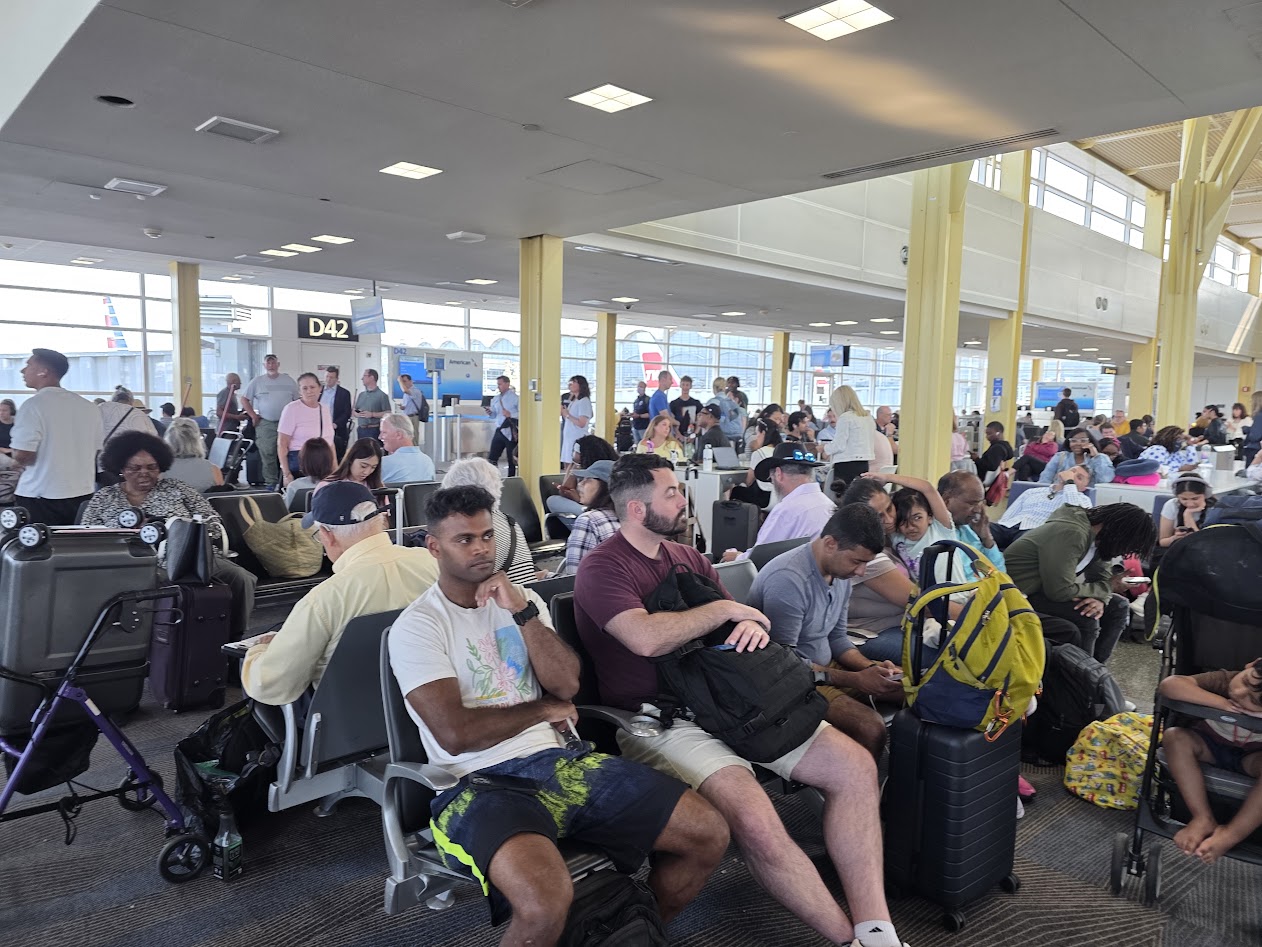
Weather wreaks havoc with airline operations, but it can also become an excuse. There may be clear skies where you are, where you’re flying, and everywhere in-between but earlier in the day the same place you’ll be on was affected by weather and your flight delay is treated as weather-related (and so the airline owes you nothing). While weather is an excuse-all, it often really is an excuse. Passengers shouldn’t want an airline to try to fly when it’s dangerous. Lightning will shut down the ramp. But some airlines are better in weather than others, and better recovering from weather than others. Delta used to run a great operation. Much of the time they can still be marginally more on-time than peers, but when major events hit they struggle more than others with recovey. That’s largely been pinned on their pilot contract and how they have to sequentially contact pilots to pick up open trips in a way that takes too long to actually get flights out. I flew American Airlines out of Washington’s National airport last week when the airport’s operations were shut down due to weather. Our inbound aircraft diverted to Baltimore, and when the airport re-opened it (and many other flights) had to get back into the air. That caused a three hour delay that wasn’t American’s fault. It was all attributable to weather, but we experienced another hour-long delay after the plane was on the ground and the previous passengers had deplaned. We were missing one flight attendant to operate the flight. They never showed up, and were eventually replaced by another crewmember that American had on reserve. I had gotten to the airport a couple of hours before my flight because I was done for the day, and I hit the Capital One Landing which remains my favorite bank ‘lounge’ by far. After sitting there awhile, I moved to the American Airlines Admirals Club on the E concourse. This remains my favorite Admirals Club space. It was semi-busy, because of the weather disruption, and the sign out front that lounge day passes were suspended almost made sense. But I noted a few days ago seeing this sign out front of Philadephia A West around noon when that place was completely empty. I saw a similar ‘no day passes’ sign out in front of the Admirals Club in the Philadelphia airport B-C connector before 8 a.m. when that place was largely deserted as well. In my experience these signs are just left there and can reasonably be ignored. Just go up to the desk and ask to use a day pass – you may or may not be welcomed, but that’s largely independent of whether the sign is out. This matters because day passes are now marketed to both Citi Executive and AAdvantage Globe cardmembers. It wouldn’t be an airport, of course, without an emotional support dog checking into a lounge right after me. And just as the Philadelphia Flagship’s soda dispenser wasn’t functioning last weekend, the Coke Freestyle machine here wasn’t either (it only dispensed water). The hour-long delay waiting for crew was actually more frustrating than the three hour delay waiting for a plane. That’s because American did not post the delay until around the original departure time. And there was no indication of when they might show up, we kept getting told they were on the ground and would be there any minute. So everyone stood around the gate for an hour (some pople sat, but there aren’t close to enough seats on the concourse). That delay was crew. And at root it’s because American doesn’t have all of its flight attendants travel together across a sequence of flights. When a single flight delays into a hub, that can cause delays across several more flights. That plane will be operating another flight So will pilots who go their separate way And flight attendants disperse When planes and crew travel together, one delayed flight delays the next one. When they don’t, delays multiply. It isn’t easy to keep everyone – flight attendants and pilots together completely – they have different maximum legal and contractual duty periods. But skewing in that direction is better for reliability. Legacy American (prior to being taken over by US Airways) often favored keeping crews, and sometimes crews plus aircraft, together for reliability, but this wasn’t universal. Here’s a crew-pairing paper from decades ago on keeping crews with aircraft as long as practicable. Twenty years ago American said it had “increased crew co-pairing with the aircraft” to improve dependability. US Airways tended to disperse planes, pilots and crew much more broadly. However, in 2021 American began selectively reversing the dispersion. 97% of cockpit and cabin crews transiting DFW from 10 a.m. – 7 p.m. were connecting together. Alaska Airlines has actually been “teaming” keeping pilots and flight attendants together for multiple segments about a third of the time. It generally makes the most sense to keep tails and crews together across hubs, especially during heavy congestion periods, late in the day, and during periods likely to be disrupted by weather (like summer evenings in the Northeast). Topics on this page
Why Your Flight Is Still Delayed Long After The Weather Clears—How Splitting Up Planes And Crews Makes Disruptions Multiply
Full Article
📰 Original Source
Read full article at Viewfromthewing →KhanList aggregates and links to publicly available news content. We do not host full articles from third-party sources. Always verify important information with original sources.